Hormuz mines: Iran tells ships to coordinate passage
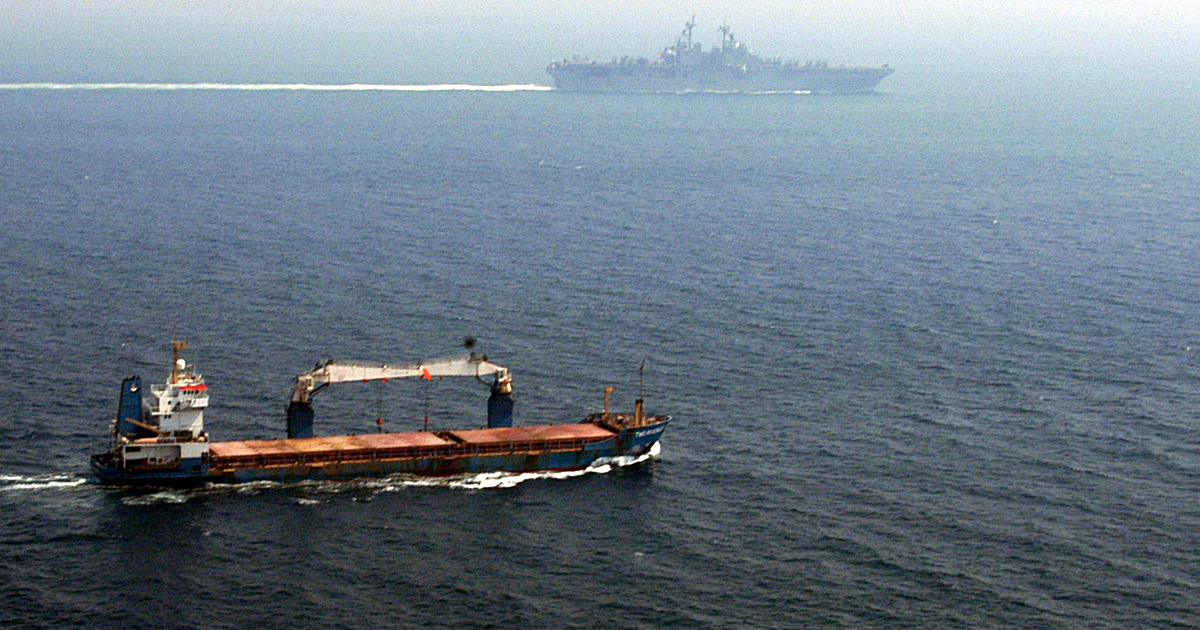
Iran's Revolutionary Guards Navy says two oil tankers struck naval mines in the Strait of Hormuz in the early hours of Wednesday, Nov. 25, and caught fire in their engine rooms. In a separate statement the same day, Iran's Army spokesman, Brigadier General Mohammad Akraminia, told shipowners that vessels must coordinate with the Iranian armed forces for a safe passage, and said ships that had transited without that coordination had faced greater risks and struck mines in recent weeks. The United Kingdom Maritime Trade Operations center has not issued a notice confirming a mine strike on those claims. Its most recent verified Hormuz warnings, published on Nov. 24, describe three eastbound tankers struck by unknown projectiles on Nov. 22. No official or national authority has publicly confirmed any of the mine claims.
What Iran says happened
- Monday night, Nov. 23. In a statement carried by Tasnim, the IRGC Navy said three oil tankers suffered explosions and extensive fires after hitting naval mines, one near the southern coast and two in the eastern part of the strait. It said the three vessels were sailing under U.S. military air cover and escort that failed to prevent the incidents, and warned that U.S. protection cannot replace compliance with instructions from the IRGC Navy's maritime traffic control center.
- Early Tuesday, Nov. 24. The Iranian Navy, in a separate statement also carried by Tasnim, said two oil tankers entered a prohibited zone in the eastern part of the strait after switching off their identification and navigation systems, struck mines, caught fire and could not move. The Navy said the waterway would never reopen until Iran's objectives and demands are achieved, and that tanker owners must coordinate with the Iranian armed forces to ensure safe passage.
- Early Wednesday, Nov. 25. The IRGC Navy said two oil tankers were struck by mines in the southern and eastern coastal areas of the strait, with explosions and fires in their engine rooms. It said the tankers had tried to pass along what it called a fabricated route, and the IRGC Navy's Strait of Hormuz Traffic Control Center warned crews that turn off their navigation and positioning systems: "Be careful not to let the lies of American officials lead you into explosions and fires caused by naval mines."
None of these statements named a ship, a flag or an owner.
On Wednesday, Akraminia, speaking to Army Air Force commanders, said that under a directive from Army commander General Amir Hatami, tighter control and surveillance were being imposed on the strait, according to statements carried by Tasnim and Mehr News Agency. "We reiterate that, for a safe passage through the Strait of Hormuz, vessels must coordinate as required with the Armed Forces of the Islamic Republic of Iran," he said, according to Mehr. He also said the military had introduced new systems and improved existing ones.
Reuters reported from Dubai on Nov. 25 that Tehran has told Washington it will not restore normal shipping until its demands are met, including the lifting of a U.S. naval blockade of Iranian ports and an end to the war on all fronts, and that Tehran offered, in a proposal conveyed through Qatari mediators, to reopen the waterway within 48 hours of Washington meeting its conditions. Reuters did not say who described the offer. No Iranian, Qatari or U.S. official statement retrieved for this account confirms the 48-hour offer, and it is not in the Tasnim and Mehr statements cited above.
What the maritime notices confirm
UKMTO's verified warnings do not describe mines.
On Nov. 24, UKMTO published an updated Warning 219-26 plus Warning 220-26 and Warning 221-26. They record three separate attacks in the Strait of Hormuz on Nov. 22, at 20:25 UTC, 20:32 UTC and 20:42 UTC. Each says a tanker transiting eastbound was struck by an unknown projectile, continued its transit, and that all crew have been accounted for. Damage and environmental effects were unknown. An earlier version of Warning 219-26 had dated a single report of three vessels to Nov. 23; the update says it was re-issued to reclassify the incident as three separate attacks.
No UKMTO warning retrieved for this account confirms the IRGC or Navy mine claims of Nov. 23, Nov. 24 or Nov. 25, or names a ship in those claims.
JMIC Advisory Update 116, covering the period to 1 p.m. UTC on Nov. 22, listed three outbound tanker attacks near Khasab, Oman, on Nov. 20 and Nov. 21 (UKMTO Warnings 214-26, 215-26 and 216-26), all described as unknown projectiles. It said: "Iranian claims of mine strikes on tankers have not been confirmed by any official or national authorities." That cutoff is before the Nov. 22 evening attacks and before the mine claims of Nov. 23, Nov. 24 and Nov. 25. No later JMIC advisory was found on UKMTO's product pages.
Oil traffic and prices
Al Jazeera, citing data from the ship-tracking platform Marine Traffic, reported on Nov. 24 that 226 vessels entered or exited the Gulf in the week of Nov. 1 through Nov. 7, compared with 125 vessels in the week of Nov. 17 through Nov. 23, "a drop of more than 40 percent." Al Jazeera noted that AIS counts only vessels with transponders on, so the figures are not a complete count of traffic.
Oil prices fell despite the attacks. CNBC reported that on Tuesday, Nov. 24, Brent futures dipped to $89.20 a barrel and U.S. West Texas Intermediate crude fell to $80.10, down from an October high of nearly $105.
On Nov. 23 the U.S. Treasury announced new sanctions under Operation Economic Outcast on over two dozen Iranian exchange houses, front companies and key personnel. Treasury Secretary Scott Bessent said Iran's economy is "underwater" and that its shadow banking system is "the last financial lifeline of a bankrupt regime."
What remains unconfirmed
The names, flags and condition of any tanker Iran says hit a mine on Nov. 23, Nov. 24 or Nov. 25, and whether any sank, are not confirmed. Whether those claims refer to the same ships as UKMTO's projectile warnings is not confirmed. No CENTCOM public release retrieved for this account addresses the mine claims of Nov. 23, Nov. 24 or Nov. 25.
Sources: IRGC Navy and Iranian Navy statements carried by Tasnim, Nov. 24 and Nov. 25; Army spokesman Mohammad Akraminia, Tasnim and Mehr News Agency, Nov. 25; UKMTO Warnings 219-26 (updated), 220-26 and 221-26, published Nov. 24, and the earlier text of Warning 219-26; JMIC Advisory Update 116, information cutoff 1 p.m. UTC, Nov. 22; U.S. Treasury press release SB0699, Nov. 23; Reuters, Nov. 25, for the 48-hour offer and the demand list; Al Jazeera, Nov. 24, for Marine Traffic vessel counts; CNBC, Nov. 24, for crude prices.