Iran says it hit a US radar in Bahrain twice. Here is what is confirmed
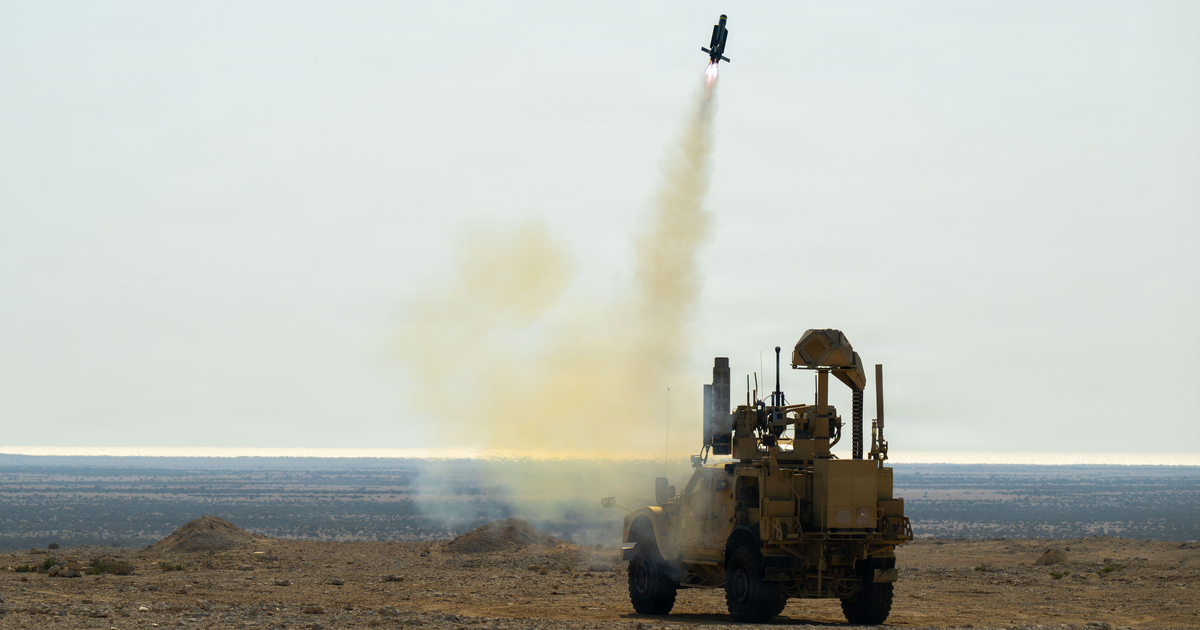
Iran's Revolutionary Guards (IRGC) say they struck a US radar in Bahrain on Friday, Nov. 13, and again on Sunday, Nov. 15. US Central Command (CENTCOM) says the first attempt was two drones that US forces shot down, with no injuries or damage. Bahrain says its air defenses stopped the second. No government, shipping monitor or news outlet cited here has confirmed that any radar was hit.
Two claims, two denials
- Nov. 13. In a statement carried by Tasnim, the IRGC said its Aerospace Force "targeted and destroyed the early-warning radar of the invading Americans on the island of Bahrain," in response to what it called an enemy air attack on a telecommunications tower in Sirik, in southern Iran. CENTCOM answered on X at 7:54 a.m. ET that the IRGC "launched two one-way attack drones toward Bahrain and both were shot down by U.S. forces. There were no injuries or damage."
- Nov. 15. The IRGC said six of its drones targeted a US air defense radar at the Al-Riffa helicopter base, in what it called the second phase of its response. Bahrain's Interior Ministry posted threat alerts on X at 4:32 a.m. and 6:50 a.m. local time, telling residents to go to the nearest safe location. Bahrain's military said its air defenses intercepted and destroyed the attacks "before they could achieve their objectives," the BBC reported. As of 8:05 a.m. ET on Monday, Nov. 16, CENTCOM had not commented on the Nov. 15 claim on its X account.
The BBC called Friday's drones Iran's first attack on a Gulf country since September. Bahrain's foreign ministry said it "condemns in the strongest terms the continued brutal Iranian attacks on its territory and holds Iran fully responsible for their consequences," according to the BBC.
No government has confirmed who hit the tower in Sirik. The Guardian described it as a US airstrike. Iran's state news agency IRNA, citing official sources, said Sirik was hit by an "enemy" strike, a term Iranian authorities often use for the United States and Israel, Anadolu reported. None of the sources cited here reports a US or Israeli acknowledgment of a strike there.
The mine claims at sea
Since Nov. 13 the IRGC Navy has issued a string of statements saying ships hit its naval mines while using what it calls unauthorized routes through the Strait of Hormuz:
- Nov. 13. A liquefied petroleum gas carrier hit a mine after relying on US fighter jet cover, the IRGC Navy said in a statement carried by Tasnim. Anadolu reported a separate IRGC Navy statement the same day saying two oil tankers, one of them a supertanker, struck mines and caught fire.
- Nov. 15. The IRGC said a supertanker "carrying over two million barrels of crude oil" sank in the southern waters of the Persian Gulf, AFP reported.
- Nov. 16. The IRGC Navy said two more tankers struck mines, bringing to six the number of vessels it says have caught fire and sunk since Sunday, The National reported.
None of these statements named a ship, a flag or an owner.
What the maritime notices confirm
The bodies that issue formal shipping notices describe a narrower picture.
- UKMTO Warning 205-26 (Nov. 15). UKMTO said it was aware of a report by Indian shipping authorities of an attack on a tanker in the Gulf, heading east before entering the Strait of Hormuz. The crew were safe; damage was unknown. AFP reported that it was unclear whether this was the incident Iran described.
- JMIC Advisory Note Update 114. Covering the 72 hours to 13:00 UTC on Nov. 15, the Joint Maritime Information Center said "no confirmed attacks or disruptions were reported" in the Strait of Hormuz, and reported one attack in the Gulf in that window: the Nov. 15 incident above.
- UKMTO Warning 207-26 (Nov. 16). At 05:58 UTC a tanker transiting outbound in the Strait of Hormuz was struck by an unknown projectile, causing an engine-room fire. No casualties were reported and all crew were accounted for. UKMTO did not say who fired.
No notice cited here confirms a mine strike or a sinking. CENTCOM, for its part, posted on Nov. 14 that "more than 1.7 billion barrels of crude oil have been shipped through the Strait of Hormuz by Gulf partners with U.S. protection." The JMIC note put US-assisted transits at about 28 a day over its 72-hour window, citing US naval shipping data.
Why this lands now
The drone claims came in the same week Washington stepped back from talks. President Donald Trump said he had asked Vice President JD Vance to end his interest in negotiating a new deal with Iran, the Guardian reported. Iran's Assembly of Experts called for a review of Iran's membership of the nuclear non-proliferation treaty, and the UN nuclear watchdog said, "We do not know the exact location of the Isfahan uranium enrichment facility or whether it contains nuclear materials," according to the Guardian.
US officials told CBS that US forces carried out limited strikes on Iran's Qeshm Island earlier in the week after the IRGC fired on a US aircraft, the BBC reported. The USS Theodore Roosevelt entered CENTCOM's area on Sunday, joining two other US aircraft carriers in the region, The National reported.
Taken together, small drone salvos on Bahrain and unconfirmed mine claims at sea raise the risk for ships using the US-escorted route, whether or not any hit is confirmed. Neither government has said the war has resumed at full scale.
What is not established
- Whether any radar in Bahrain was damaged on Nov. 13 or Nov. 15.
- Who struck the telecommunications tower in Sirik; no government has confirmed it.
- The names, flags or fate of any tanker Iran says hit a mine, and whether any sank.
- Whether the tankers in the UKMTO notices of Nov. 15 and Nov. 16 match any IRGC claim.
Sources: IRGC and IRGC Navy statements carried by Tasnim, Nov. 13 and Nov. 15; CENTCOM posts on X, Nov. 13 and Nov. 14; Bahrain Interior Ministry posts on X, Nov. 15; UKMTO Warnings 205-26 and 207-26 and JMIC Advisory Note Update 114; BBC, Nov. 15; AFP via CNA, Nov. 15; Anadolu, Nov. 13; The Guardian, Nov. 13; The National, Nov. 16.