Middle East / Energy · Public record
Oil transfers off Oman have hit their limit. LSEG puts supertanker rates at a record $1.27 million a day.
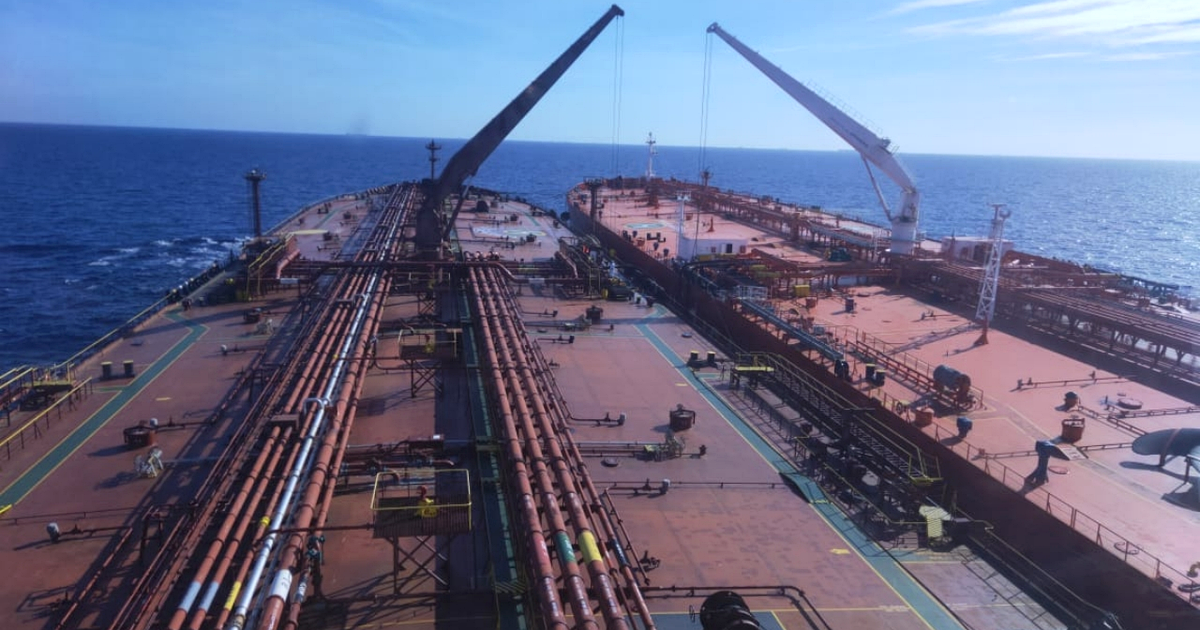
Ship-to-ship transfers in the Gulf of Oman for crude from inside the Strait of Hormuz have reached their limits after Saudi Arabia diverted exports from the Red Sea, Reuters reported on 25 September 2026, citing trade sources and analysts. State-run Saudi Aramco has sold more than 60 million barrels of crude for transfer off Sohar, Oman, this month and next, Reuters reported, since the 13 September attack on its East-West pipeline halted exports from the Red Sea port of Yanbu. The demand for supertankers drove the daily time-charter rate for a very large crude carrier (VLCC) carrying oil from the Middle East to China to a record $1.27 million on Monday 21 September, according to LSEG data cited by Reuters. Saudi Aramco declined to comment to Reuters.
Yanbu is the port where exports stopped; the bottleneck is the ship-to-ship step in the Gulf of Oman that now carries part of those barrels.
Why it matters
When Saudi crude cannot load and sail from Yanbu, buyers still need barrels. Shuttling those barrels out through Hormuz for ship-to-ship transfer in the Gulf of Oman soaks up VLCC time and raises delivery cost. A reported capacity ceiling plus a record day rate is a checkable signal that the workaround itself is strained — even if Hormuz attack headlines and Red Sea defence deployments get more attention.
What is reported
- Reuters (25 Sep 2026), citing trade sources and analysts: Gulf of Oman ship-to-ship transfers for oil from inside Hormuz have "reached their limits"; Saudi Aramco has sold more than 60 million barrels of crude for transfer off Sohar this month and next since the 13 September pipeline attack; Aramco declined to comment.
- LSEG data, as reported by Reuters: the daily time-charter rate for a VLCC carrying oil from the Middle East to China hit a record $1.27 million on Monday 21 September.
- Kpler (21 Sep): Gulf of Oman ship-to-ship capacity is "approaching its practical limits", with shore-side support at Fujairah and Sohar reported to be operating at or close to maximum capacity.
Inference (not a finding)
The most plausible reading is a temporary but severe logistics bottleneck: the Yanbu outage pushed Saudi barrels onto Gulf of Oman STS, and that workaround is now capacity-constrained at a record VLCC hire. The evidence does not show that the East-West pipeline has reopened, that normal Yanbu loadings have resumed, or how long October cargoes will keep using Oman transfers.
Uncertainty
- The capacity and 60-million-barrel figures come from unnamed trade sources and analysts speaking to Reuters; Saudi Aramco declined to comment.
- Exact cargo counts, loading dates and the share of total Saudi exports using Oman STS remain unknown.
- The $1.27 million figure is LSEG's daily time-charter rate for one route, Middle East to China, on 21 September, as reported by Reuters; how long rates stay at that level is not known.
- Whether October barrels return to Yanbu-linked routes depends on Houthi pressure, French/Saudi defensive cover and commercial insurance decisions that remain unsettled.
What happens next
- Whether Saudi October cargoes continue using Gulf of Oman STS rather than returning to Yanbu-linked routes.
- Whether LSEG's Middle East–China VLCC rate stays near or above $1 million a day through early October.
- Whether insurers, Gulf exporters or Asian refiners publish delayed loadings, reroutes or premium changes tied to the Oman transfer queue.
- The 4 October meeting of seven core OPEC+ producers, including Saudi Arabia and Oman, for any discussion of export logistics or regional security that names shipping constraints.