US indictment alleges Iran-backed operatives steered the RAF Fairford vans, partly from a New York jail
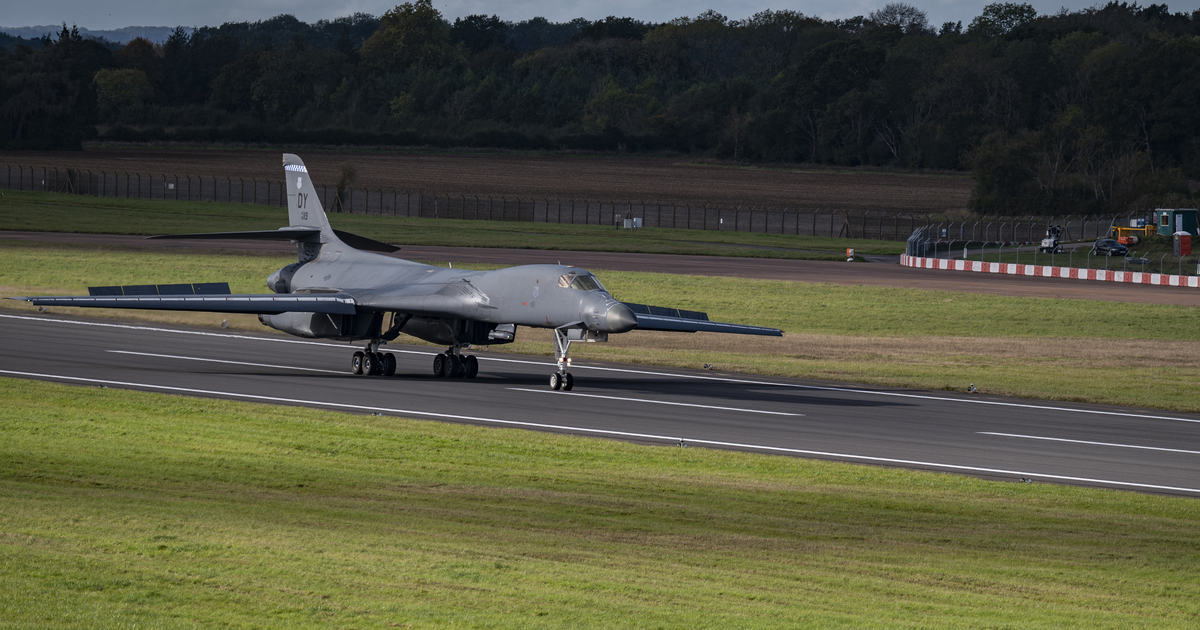
US prosecutors allege that an Iraqi operative working with Iran's Revolutionary Guard directed three vans toward RAF Fairford on Sept. 26, when the English base hosted US bombers, while a co-defendant held in a New York jail passed coded instructions through relatives. The eight-count superseding indictment, unsealed in Manhattan federal court on Nov. 10, sets out allegations only; all three defendants are presumed innocent.
The Justice Department's account names the people it alleges were behind the Fairford incident. British courts have yet to rule on any part of the case. WatchfulEye's earlier report on the arrests and the UK government's attribution to Iran's Islamic Revolutionary Guard Corps (IRGC) is here.
Who is charged
- Mohammad Baqer Saad Dawood al-Saadi, a dual Iranian-Iraqi national the Justice Department describes as a longtime IRGC and Kata'ib Hizballah operative. He was first charged in May over attacks in Europe and an alleged attempt to bomb a synagogue in New York, and has been in federal custody since his transfer to the United States. He is the only one of the three in custody.
- Mohsen Mohajeri, an Iranian national the department describes as an IRGC operative.
- Mohammad Ali al-Hassani, an Iraqi national. The Guardian reported on Nov. 13 that he is 35 and had lived in Britain.
The Justice Department says al-Hassani and Mohajeri were in Iran at the time of the Fairford plot and relied on contacts in the United Kingdom. Two sources told CBS News that neither is in custody, the BBC reported on Nov. 11. The counts include conspiring to provide material support to Kata'ib Hizballah and to the IRGC, both designated by Washington as foreign terrorist organizations, along with attempted acts of terrorism transcending national boundaries and financing terrorism.
What the indictment alleges about Fairford
According to the Justice Department:
- Aug. 22: al-Hassani paid an individual to surveil the base perimeter and later received videos of the surrounding area.
- September: he tasked and paid several people to obtain vans and barrels of fuel, research the purchase of chemical accelerants, and buy metal objects that could be used as explosive shrapnel. Decals were made to give the vans the look of a fuel delivery business and a swimming pool supply business.
- Sept. 24: on a call from jail, al-Saadi asked his family about "Ali" and told them to "give him money so we can do it."
- Sept. 26: al-Hassani tasked people to drive three vans to the base, "some of which were later determined to contain barrels of fuel." At least two met a security roadblock and were turned away from their route. He stayed in contact with the drivers before and after the checkpoint.
- Early Sept. 27: UK authorities recovered three white vans bearing the fuel-company logos and arrested the occupants.
The same release describes a separate spring campaign of about 18 attacks in Europe, seven of them in Britain, claimed by a group the department calls a front for Kata'ib Hizballah. Those attacks involved arson and, in at least one case, according to the department, an improvised explosive device thrown during an attack on a London synagogue. That account concerns the spring attacks, not the vans at Fairford.
What was in the vans
- The Guardian, Sept. 27: reported that armed officers found explosives on the three vans and that investigators' initial view was that materials found were consistent with improvised explosive devices.
- UK Counter Terrorism Policing, Sept. 29: Assistant Commissioner Laurence Taylor said the vehicles had been examined with military and forensic support and that "no improvised explosive devices were found. However, a quantity of petrol was recovered."
- CNN and the BBC, Nov. 10 and 11: CNN reported that the men arrested in September were released on stringent conditions after no explosives were found; people briefed on the matter told CNN the plan was to use the fuel-filled vans as vehicle-borne bombs. The BBC reported that no explosive materials were found and that petrol was seized. The War Zone also reported that no explosives were found.
- The Justice Department, Nov. 10: alleges fuel barrels in some of the vans, the purchase of metal objects that could serve as shrapnel and research into accelerants. It does not state that explosives were recovered from the vans.
The UK case
Two 24-year-old British men from Westminster, London, were charged under the 2023 National Security Act on Oct. 27, according to Counter Terrorism Policing. Mohmed Ahmad Abdulkarim is charged with assisting a foreign intelligence service, which police said they believe to be Iran. Nouman Essghir is charged with entering a prohibited place for a purpose prejudicial to the UK, over activity police said took place on Aug. 22; he was first arrested at the scene in Gloucestershire on Sept. 27. Police said five other men arrested in the investigation remain on bail. The Guardian reported on Nov. 13 that both men await trial and have not entered pleas.
Westminster magistrates' court heard in October that the men in the vans had been directed by a handler called "Ali," the Guardian reported, and the paper said the US indictment was the first time investigators had given that handler a full name.
Mildenhall: what is and isn't linked
The War Zone reported on Nov. 10 that at least 12 KC-135 tankers and three CV-22 Ospreys left RAF Mildenhall over two days, amid what The Wall Street Journal reported was an unspecified threat from Iran. Security at Mildenhall and RAF Lakenheath was raised to FPCON Charlie, the second-highest US alert level. US Air Forces in Europe declined to comment on intelligence, and The War Zone said it could not independently confirm the Journal's reporting.
The War Zone noted that the Mildenhall departures came about a month after US bombers left Fairford following the September incident. Neither the indictment nor any official statement cited here links the Mildenhall threat to al-Saadi, Mohajeri or al-Hassani.
What is established and what is not
- Established: A US grand jury has charged three men over an alleged Iran-backed campaign that includes the Fairford plot; only al-Saadi is in custody; prosecutors allege coded instructions from a New York jail and fuel barrels in some of the vans. Two London men face UK National Security Act charges.
- Attributed, in conflict: The Guardian's Sept. 27 report that explosives were found, against the Sept. 29 police statement that no improvised explosive devices were found and later reporting by CNN, the BBC and The War Zone.
- Not established: That any defendant is guilty; any link between the Mildenhall threat and this network.
Open questions
- Will the UK prosecution of the two London men draw on the US evidence about al-Hassani?
- Where are al-Hassani and Mohajeri now? The Justice Department places both in Iran at the time of the plot.
- Will the remaining UK suspects on police bail be charged or released?
Sources: US Department of Justice, Office of Public Affairs, Nov. 10 (primary; superseding indictment allegations); UK Counter Terrorism Policing statements, Sept. 29 and Oct. 27; BBC (Jack Burgess, Henry Moore), Nov. 11; CNN (Hannah Rabinowitz, Holmes Lybrand, Kara Scannell), Nov. 10, full text via ABC17; The Guardian (Jamie Grierson, Vikram Dodd, Helena Horton), Sept. 27; The Guardian (Dan Sabbagh), Nov. 13; The War Zone (Howard Altman), Nov. 10; Il Post, Nov. 11, Italian-language summary of the US charges.