Israel seals off Hebron and orders a West Bank lockdown after a checkpoint attack, days before its election
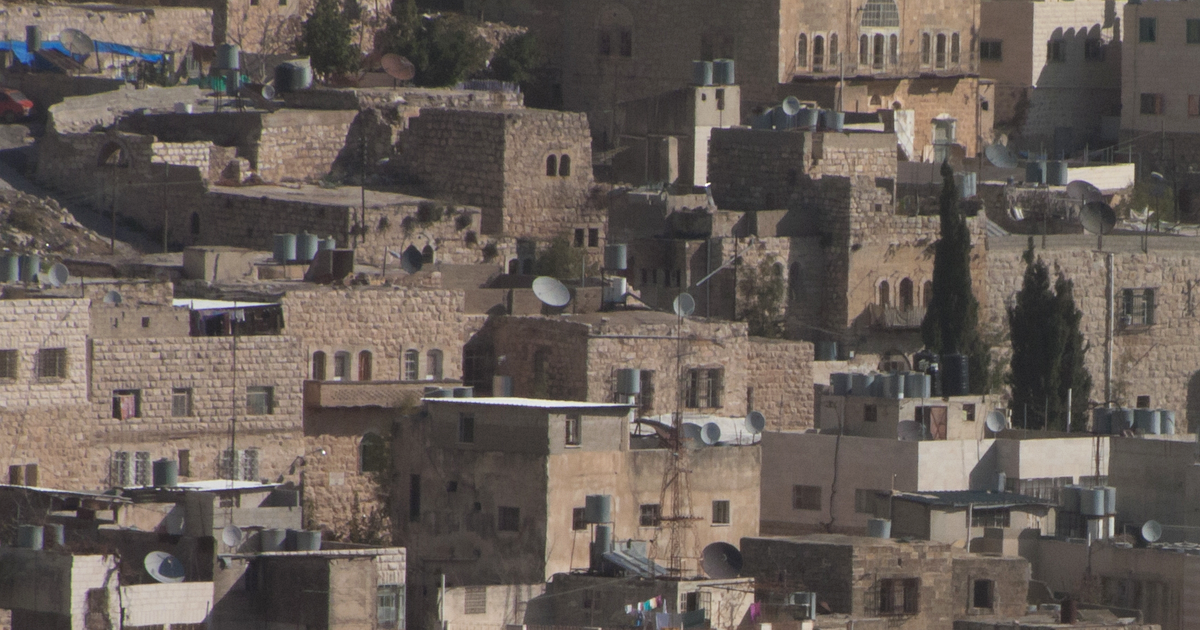
Israeli forces closed the West Bank city of Hebron and began a multi-day military operation there on Friday 23 October, after two Palestinian gunmen opened fire at an army checkpoint at the city's northern exit. Prime Minister Benjamin Netanyahu said he had told the military "to impose an immediate closure on the city of Hebron and to prepare for a full lockdown on all of Judea and Samaria starting today", using the Israeli government's name for the West Bank, in a statement translated by Ynet; The Jerusalem Post carried the same order. His office gave no further details on the planned closure of the territory, NBC News reported. By Saturday, Hebron's mayor told Al Jazeera that about 2,200 people had been forced from their homes; Reuters, citing a Palestinian official, put the number at around 1,200. Israelis vote on Tuesday 27 October.
What happened
- The attack: two gunmen in a car opened fire on soldiers at Judea Junction, near Hebron and the settlement of Telem, early on Friday. The Israeli military said two soldiers, Staff Sgt. Ron Yonatan Roytman, 23, and Sgt. Yuval Shai Svilem, 20, were killed and three were lightly wounded, and that both gunmen were shot dead, The Jerusalem Post reported. Netanyahu blamed Hamas, NBC News reported.
- The Hebron operation: late on Friday the military and the Shin Bet security service said they had launched an operation in the Hebron area that is "focused and limited to the area from which the terrorists operated and is expected to continue for several days", according to their joint statement as quoted by Ynet. Residents inside the operation zone may leave through "three designated exit points, following questioning and security screening", the statement said. Before that, the statement said, troops had mapped the gunmen's homes and placed a cordon around Hebron and neighbouring Halhul.
- What the prime minister promised: in Hebron, Netanyahu said: "We will evacuate the residents, we will go from house to house, we will also seize the weapons there, and all the terrorist infrastructure will be dealt with and destroyed," according to his office, as reported by RTÉ, drawing on Reuters. He said he and the defence minister were considering a West Bank operation "such as has not been carried out since the Six Day War", adding: "we will set the timing, but it is on the way." Defence Minister Israel Katz wrote that "the Jenin refugee camp model is on its way to Hebron".
- People forced from their homes: the figures given on Saturday differed by source and by outlet. Reuters reported that around 1,200 people had been made to leave their homes, citing a Palestinian official, and Mayor Yousef al-Ja'bari told Reuters that about 1,300 more faced losing their homes. The municipality told The Guardian that about 1,500 people, or about 300 families, had been evicted from the Ein Deir Baha district by Saturday afternoon. Al-Ja'bari told Al Jazeera that about 2,200 people had been forced out of the al-Jalda and Ein Deir Baha neighbourhoods. Defence Minister Israel Katz told the public broadcaster Kan that "about 2,000" people had been displaced and would not be allowed back "until we've finished dealing with all the Hamas issues in Hebron", Al Jazeera reported. No UN count has been published.
- Demolitions: Israeli forces demolished a three-apartment building in Farsh al-Hawa on Friday, the Palestinian news agency WAFA reported. Local officials told the BBC that homes and businesses had been demolished, mainly in the Ein Deir Baha and Farsh al-Hawa areas. Finance Minister Bezalel Smotrich said he had ordered "the immediate demolition of a wide row of illegal Arab structures adjacent to the attack site", The Guardian reported. Residents told Reuters that many of the people expelled had no connection to the gunmen.
- Arrests across the West Bank: Israeli forces arrested about 70 Palestinians on Friday and Saturday, the Palestinian Prisoners' Society said, according to Al Jazeera and Reuters. Israeli officials did not comment on the arrests, Reuters said. Al Jazeera's correspondents reported raids in at least 15 areas, including Jenin, Nablus, Ramallah and Bethlehem.
- Movement: Hebron residents can neither enter nor leave the city, the mayor told Al Jazeera on Saturday. Israeli troops kept the city sealed off from the rest of the territory for a second day on Saturday, closing gates and checkpoints to Palestinian drivers, according to an Associated Press report published by ABC News. Across the West Bank, Israel has blocked the entrances to most Palestinian cities and towns, Reuters reported. The Israeli military said it had operated in 40 areas of the West Bank on Friday and Saturday. It said that from Sunday Palestinians would "not be permitted to enter Israeli communities in Judea and Samaria and the Jordan Valley for work", and that all land crossings would be closed on election day, AFP reported. Al Jazeera reported that nearly 1,000 checkpoints and gates would be closed under the lockdown. No Israeli or UN source has confirmed that figure.
How each side describes it
The Palestinian Authority called the measures "collective punishment" and urged international intervention, according to WAFA as cited by Al Jazeera. Hebron activist Issa Amro told Al Jazeera that the governorate's roughly 800,000 Palestinians were "now under siege, with all entrances and exits closed". Israeli rights group B'Tselem warned of "collective punishment and acts that could constitute war crimes", and Mayy El Sheikh, a spokesperson for the UN human rights office, called the lockdown "yet another episode in a never-ending stream of suffocating measures", Al Jazeera reported. Israeli ministers went further than the military's "limited" wording. National Security Minister Itamar Ben-Gvir called for the Palestinian Authority to be dismantled, NBC News reported, and Smotrich called for a campaign "exactly like in Gaza and Lebanon", The Guardian reported.
The election and the wider calendar
Israel votes on Tuesday 27 October. Israel had already been planning to lock down the West Bank during the election, The Times of Israel reported, as cited by Al Jazeera. The new order began that closure days earlier. Netanyahu said that he had "warned several weeks ago about our enemies' attempts to harm us... ahead of the elections", NBC News reported. Al-Ja'bari told Reuters the operation was aimed at winning settler votes, and Amro told The Guardian he could not tell "whether it is only election propaganda or if it's a serious plan" for after the vote.
The US midterm elections follow on 3 November. Al Jazeera, citing The New York Times and unnamed US officials, reported that the US and Israel have drafted plans for a new campaign against Iran after those elections. No official has connected that report to the West Bank operation, and WatchfulEye has not established any link.
Why it matters
WatchfulEye's read: two official messages are running side by side, and they do not match. The military describes an operation "limited" to the gunmen's area and lasting "several days". The prime minister and his ministers describe evacuating whole neighbourhoods, applying the Jenin camp model, and an operation bigger than anything since 1967. In the Jenin and Tulkarem camps, 33,362 displaced refugees had still not been allowed to return as of July, according to UN figures cited by RTÉ. Which message turns out to be true will show in three things that can be checked: whether residents of al-Jalda and Ein Deir Baha are allowed back, whether the West Bank-wide closure lifts after Tuesday's vote, and whether the larger operation Netanyahu announced actually starts. Politicians on both sides have tied this week's events to the vote, but the timing alone does not prove motive.
What is confirmed, and what is not
- On the record: the attack and the deaths reported by the Israeli military; the prime minister's closure order; the joint IDF and Shin Bet statement on a "several days" operation with three screened exit points; demolitions in Hebron; Palestinian Prisoners' Society arrest figures, reported by two outlets.
- Figures that differ: the number of people displaced, given by Palestinian officials as around 1,200 (Reuters), about 1,500 (The Guardian) or about 2,200 (Al Jazeera), and by Israel's defence minister as "about 2,000". No independent or UN count has been published.
- Not established: how long the West Bank-wide lockdown will last after election day, and what it covers beyond the measures the military announced on Sunday; the figure of nearly 1,000 closed checkpoints, which is reported only by Al Jazeera; any link to the Iran planning reported in the US.
Open questions
- Will displaced Hebron families be allowed home when the "several days" are up, or are the demolitions permanent?
- Does the West Bank closure end after the 27 October vote, or stay in place?
- Does the larger West Bank operation Netanyahu announced begin, and when?
- When will the UN publish its own figures on displacement and closures in Hebron?