The deadline expired. The tankers had already stopped.
WatchfulEye ·
The conventional narrative is a deadline. The August 17 data show a waterway that did not reopen.
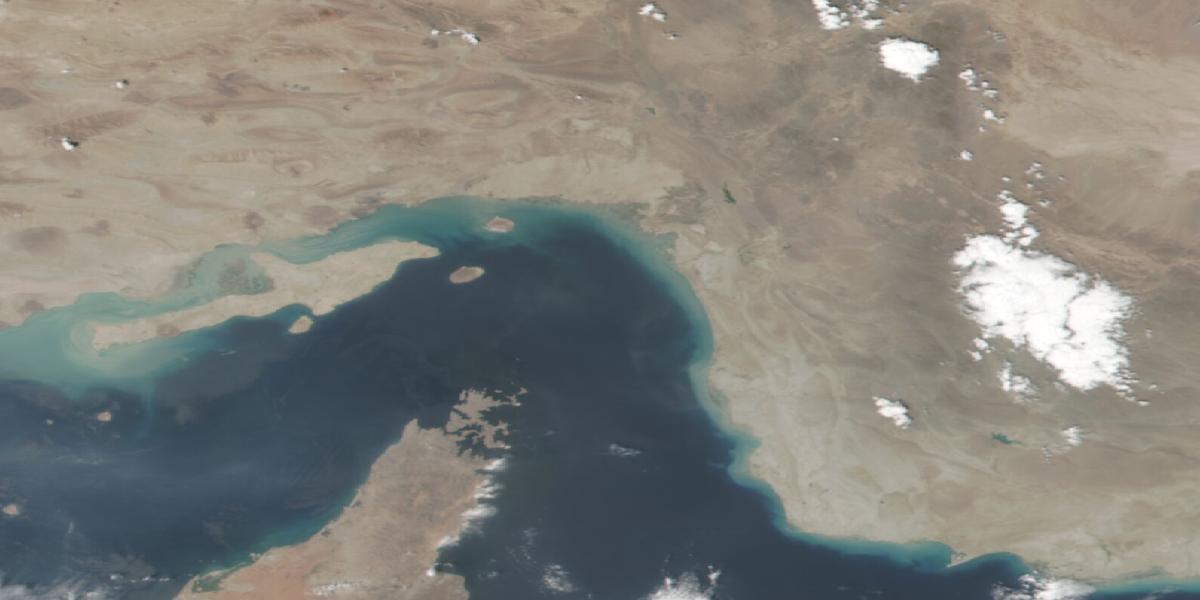
Strait of Hormuz, 16 August 2026. NASA Worldview / VIIRS SNPP true-color (public domain). The waterway, not a tanker count.
## What changed
A 60-day U.S.-Iran window expired on Monday, 17 August 2026. News agencies wrote it as a diplomacy story: talks stalled, ceasefire ending, no extension.
The physical fact underneath the deadline is older than the deadline. Traffic through the Strait of Hormuz is already in single digits. Iran is finalizing a separate transit arrangement with Oman. The United States is still blockading Iranian ports. On April 15, the reading was that peace had been priced as if the strait were already open. Monday's data are the test of that sentence.
CNBC, citing Kpler: three vessels transited on Sunday. Pre-conflict daily average: about 130. Recent five-day average: 12. The U.S. blockade of Iranian ports is still in place. Informal talks, if they exist, are with the Revolutionary Guard. President Trump said the U.S. is in no rush, that Iran must forgo nuclear weapons in any form, and that Omani interference would be met with force.
Reuters, citing Kpler: five commodity vessels on Saturday, none registered for Sunday, against 31 the prior weekend. Some ships may pass undetected with transponders off. The same Reuters report says the UAE reported attacks on three vessels operated by the Abu Dhabi National Oil Company the previous week, and that Iranian Foreign Minister Abbas Araghchi said Washington must meet Iran's conditions on the strait before shipping can resume. Reuters reported on 13 August that the Houthis said they had attacked a Saudi Aramco refinery in Jazan with two drones.
CNBC and Reuters disagree on Sunday. Three ships is not zero. Zero is not three. A single outlet is a single outlet. The shared claim is the one that matters: visible Hormuz traffic has collapsed into the single digits, far below the pre-war run-rate, as the calendar deadline arrives.
AP, on 17 August: Iran said it is working to finalize a joint statement with Oman on managing ship transit through the strait. Full commercial reopening has been a stated U.S. demand. Tehran has conditioned participation on compensation and sanctions relief. It is not clear the arrangement would satisfy Washington.
Reuters, same day: before the war the strait handled a fifth of the world's shipments of crude oil and liquefied natural gas. At Bab el-Mandeb, where the Houthis declared a naval blockade on Saudi Arabia on 20 July, Kpler tracked no Saudi oil shipments over the weekend. This is more than a one-day tanker count.
CNBC, same day: the 30-year Treasury yield rose above 5.31 percent, the highest since June 2007. The 10-year was 4.724 percent. The 2-year was 4.182 percent. The same piece has WTI above $84 and Brent above $90 as the deadline expired. Barclays, in that piece, put the yield move primarily on the deficit, issuance, and AI-related borrowing, with energy as a second pressure.
WatchfulEye market mood the same afternoon: S&P 500 at 7,773.35, Dow 53,552.87, NASDAQ 26,742.52. Neutral. The 30-year is named as a headwind. That is a mood reading, not a forecast.
On April 15, Oil is up. It is not spiking. recorded day 3 of the blockade: crude up, not spiking, equities making a first close above 7,000. The claim was that markets were pricing a new energy order, not a crisis, and that a later "peace" session had priced the strait as if it were already open. Tankers moving is not the same thing as a statement that they will.
## Sources
CNBC, 17 August 2026, citing Kpler. Three vessels on Sunday; pre-conflict about 130 a day; five-day average 12. U.S. blockade of Iranian ports still in place. Trump: no rush; Iran must forgo nuclear weapons in any form; Omani interference would be met with force.
Reuters, 17 August 2026, citing Kpler. Five commodity vessels Saturday, none registered Sunday, against 31 the prior weekend. Some ships may pass undetected with transponders off. UAE: three ADNOC-operated vessels attacked the previous week. Araghchi: Washington must meet Iran's conditions on the strait. A fifth of world crude and LNG shipments before the war. Houthi naval blockade on Saudi Arabia since 20 July; no tracked Saudi oil shipments at Bab el-Mandeb.
Reuters, 13 August 2026. The Houthis say they attacked a Saudi Aramco refinery in Jazan with two drones.
AP, 17 August 2026. Iran working to finalize a joint statement with Oman on managing ship transit through the strait.
CNBC, 17 August 2026. 30-year Treasury above 5.31 percent, highest since June 2007. 10-year 4.724 percent. 2-year 4.182 percent. WTI above $84, Brent above $90. Barclays: deficit, issuance, and AI-related borrowing first; energy second.
## How it is being framed
Deadline frame. The war is one calendar expiry from resolution or collapse. CNBC's headline is ceasefire expiry. That is a clock.
Traffic frame. The waterway is already barely moving. The Reuters headline is a slowdown. That is a count.
Side-door frame. AP's lead is Iran and Oman writing a joint statement. That is a claim that someone other than Washington can reopen the lane.
Crisis-premium frame. Oil up, yields at 19-year highs, "Hormuz risks persist." That is a price.
Those four jobs are not the same story. The deadline frame will keep traveling. The count is the one that can be checked against it.
What the deadline frame leaves out: the June window was supposed to reopen the strait. News agency reports do not show a reopening that then failed on Monday. They show traffic that was already dead when the clock ran out.
What the traffic frame leaves out: dark ships, shuttle tankers, and an Iran-Oman channel that may move barrels without a U.S. signature.
What the side-door frame leaves out: a transit fee or Iranian control clause is exactly the object Washington has rejected. A joint statement is not a tanker.
## Reporting versus inference
Reporting is: a 60-day U.S.-Iran window expired on Monday 17 August 2026; CNBC, citing Kpler, reported three vessels on Sunday against a pre-conflict average of about 130 and a five-day average of 12; Reuters, citing Kpler, reported five commodity vessels on Saturday and none registered for Sunday against 31 the prior weekend; CNBC and Reuters disagree on Sunday; AP said Iran is working to finalize a joint statement with Oman on managing transit; Reuters said the strait handled a fifth of the world's crude oil and LNG shipments before the war; CNBC reported the 30-year yield above 5.31 percent, WTI above $84, and Brent above $90; Barclays, in that CNBC piece, put the yield move primarily on the deficit, issuance, and AI-related borrowing; Trump said the U.S. is in no rush and that Omani interference would be met with force; Araghchi said Washington must meet Iran's conditions on the strait before shipping can resume; on April 15, the reading was that peace had been priced as if the strait were already open.
Inference, labeled as such: if peace was priced as if Hormuz were open, a deadline that expires after traffic has already gone to single digits is not a sudden closure. It is evidence the memorandum never controlled the waterway. Threatening the mediator, and writing a parallel Oman channel, are both claims of ownership. The object is who commands passage, not whether Monday's date was circled.
The yield move may be mostly fiscal, as Barclays has it in the CNBC piece. Energy can still sit in the term premium without being the whole story. Those can both be true. They are not a WatchfulEye price target.
## What may follow
Reasoning, not a forecast.
If the traffic frame is the right one, the next fact that matters is not another deadline. It is whether visible crossings stay in single digits, whether dark-mode volume is actually moving oil, and whether an Oman-Iran statement produces a lane Washington will not shoot at.
If the side-door frame is the right one, the next fact is whether China and other buyers use that lane, and whether the United States treats it as a violation of the blockade.
If the deadline frame is the right one, someone extends the clock. News agency reports do not show that happening on Monday afternoon.
The April 15 question was whether a deal includes physical transit or only a sentence that the strait will not be closed. That question is still open. Monday's reporting does not close it.
## What remains unresolved
Sunday's Kpler count: three (CNBC) versus none registered (Reuters). How much oil is moving dark. Reuters notes that some ships may pass undetected with transponders off. CNBC's three includes at least some identified traffic. We do not have a primary Kpler table. Whether the Iran-Oman joint statement exists as text, or only as an announcement that one is being finalized. How much of the 30-year at 5.31 percent is deficit issuance and how much is the Gulf. Whether other Gulf producers' exports are holding. The pieces cited here do not say.
## Corrections
If a source, a frame, or an inference on this page is wrong, we correct it here. contact@watchfuleye.us.
See how the story is framed, why it matters, and what happens next.