They hit three tankers. One was near Kharg.
WatchfulEye ·
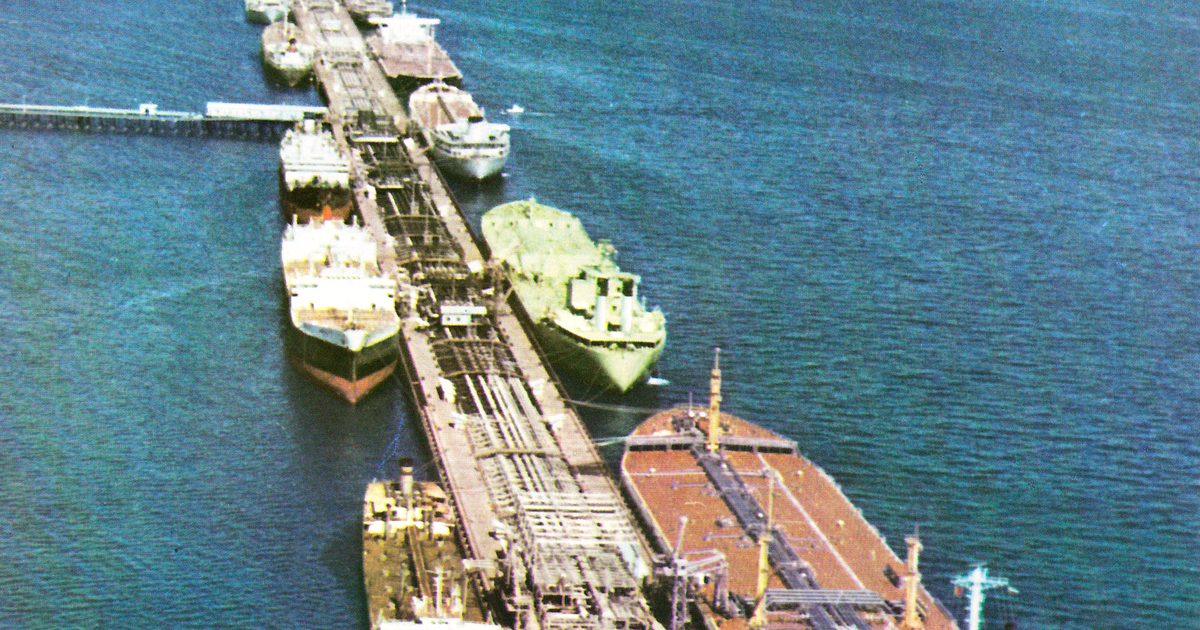
Tankers at the Kharg oil loading terminal, 1967. Photograph: National Iranian Oil Company. Public domain (PD-Iran).
What changed
On 5 September 2026, US Central Command said American forces struck three Iran-linked oil tankers after Iranian forces targeted US Navy warships earlier that day. BBC, CNBC and AP reported it the same day, all citing CENTCOM: two tankers permanently disabled, one near Kharg Island. BBC and AP said a third was destroyed in the Gulf of Oman, and reported Iranian state media confirming the strikes and saying Iran answered by targeting three oil tankers and three US-affiliated vessels. BBC reported the IRGC said those tankers were on an "unauthorised" route through Hormuz. No American personnel were reported harmed.
At least one of the tankers was hit near Kharg Island, Iran's main oil loading point. The US cited the targeting of a carrier and a destroyer as its reason.
The Saturday strikes sit inside a six-month US-Iran conflict that had seen relative calm before fighting flared again about a week earlier. Weekend markets were muted. The strikes were aimed at Iran's oil tankers; there was no new claim of a channel sweep.
Sources
BBC, 5 September 2026: US hits three Iranian oil tankers after saying its warships were targeted. Strikes after renewed fighting; relative calm broken about a week earlier.
CNBC, 5 September 2026: U.S. attacks 3 Iranian oil tankers after missiles target Navy warships. Three Iranian crude carriers hit near Iran's key oil export hub, Kharg Island, as reported by US Central Command.
U.S. Central Command statement, 5 September 2026: three Iranian tankers struck, one of them, the Downy, disabled off Kharg Island, after IRGC ballistic missiles targeted two U.S. Navy warships.
Al Jazeera / Guardian / Fortune same-day corroboration of the three-tanker US action and warship-targeting claim.
National Iranian Oil Company, 1967: tankers loading at Kharg Terminal (Commons File:Kharg_oil_loading_terminal.jpg). Public domain (PD-Iran).
Al Jazeera, 6 September 2026: Iran touts military response as US maintains blockade, hits tankers. It cites CENTCOM: three Iranian crude tankers near Kharg Island, Jask, and the Gulf of Oman - two permanently disabled, one sank; IRGC claimed projectiles at US vessels; CENTCOM said missiles were evaded.
BBC, 6 September 2026: Parliament Speaker Mohammad Bagher Ghalibaf warned of "a faster, heavier, and more painful response" to U.S. attacks.
AP, 6 September 2026: Central Command spokesman Capt. Tim Hawkins called Iran's claim to have struck an uncrewed U.S. vessel "a total lie."
ABC News (This Week), 6 September 2026: Energy Secretary Chris Wright said "there may not be a nuclear agreement" with Iran; instead, "it may be simply destroying their capabilities to do it."
How it is being framed
The US is hitting Iran's oil exports. CENTCOM and US outlets put three Iran-linked tankers out of service in one day and name Kharg for at least one disablement. The aim is to cut shadow-fleet revenue and put pressure on the export hub.
The US presents the strikes as retaliation. The US says the tankers followed Iranian targeting of a carrier and a guided-missile destroyer the same day. Iran's state media confirms tanker hits and claims a six-ship IRGC answer.
Some coverage warns of escalation. Fortune and others write "higher economic cost" and a possible transformation of the war. That is different from a confirmed sweep of the shipping lanes or a reported change in Oman-channel rates.
The strikes ended a period of calm. BBC: fighting flared again after weeks of relative calm.
These accounts differ. Kharg as the export hub can be checked against the CNBC/CENTCOM line. A claimed six-ship Iranian answer is still Iranian state media until a second source names the ships.
Reporting versus inference
Reporting is: US forces struck three Iran-linked oil tankers on 5 September 2026 after stating that Iranian forces had targeted US warships; BBC and CNBC report that sequence; CNBC places the action near Kharg Island as CENTCOM-reported; Iranian state media confirmed tanker damage and claimed a six-ship response including US-affiliated vessels; no US personnel casualties were reported in that coverage; reporting describes this as the first reported US destruction of three Iranian oil tankers in a single day in the current conflict, separate from prior launcher/mine-laying coverage.
Inference, labeled as such: a three-tanker day is not yet a sustained Kharg export collapse; Iranian six-ship claims are not yet independently named hulls; weekend oil prices are not a verdict on a full week's volume. The US action and the Kharg location are confirmed in multi-outlet reporting.
What may follow
On Sunday, 6 September, Ghalibaf said the era of proportionate responses had come to an end; Wright publicly lowered odds of a near-term nuclear deal. Neither names a new hull nor a channel rate. Watch Kharg and alternate Iranian terminal loadings over the next week - a sustained drop would show whether interdiction bites exports. Watch Iranian state media and any IRGC exclusion-zone language in the next 72 hours for whether the claimed six-ship answer becomes named hulls or a wider Hormuz inspection regime. Watch Chinese MFA and tanker-routing notes for whether Beijing treats the exchange as containable or as a supply-risk event. A spike without Iranian concessions would leave another inconclusive maritime round; measurable shadow-fleet revenue decline would be the US leverage test.
This is a research analysis of public reporting, not a forecast.
Corrections
If a source or an inference on this page is wrong, we correct it here. contact@watchfuleye.us.
See how the story is framed, why it matters, and what happens next.