Serbia election results: Student List wins a majority as Vučić concedes
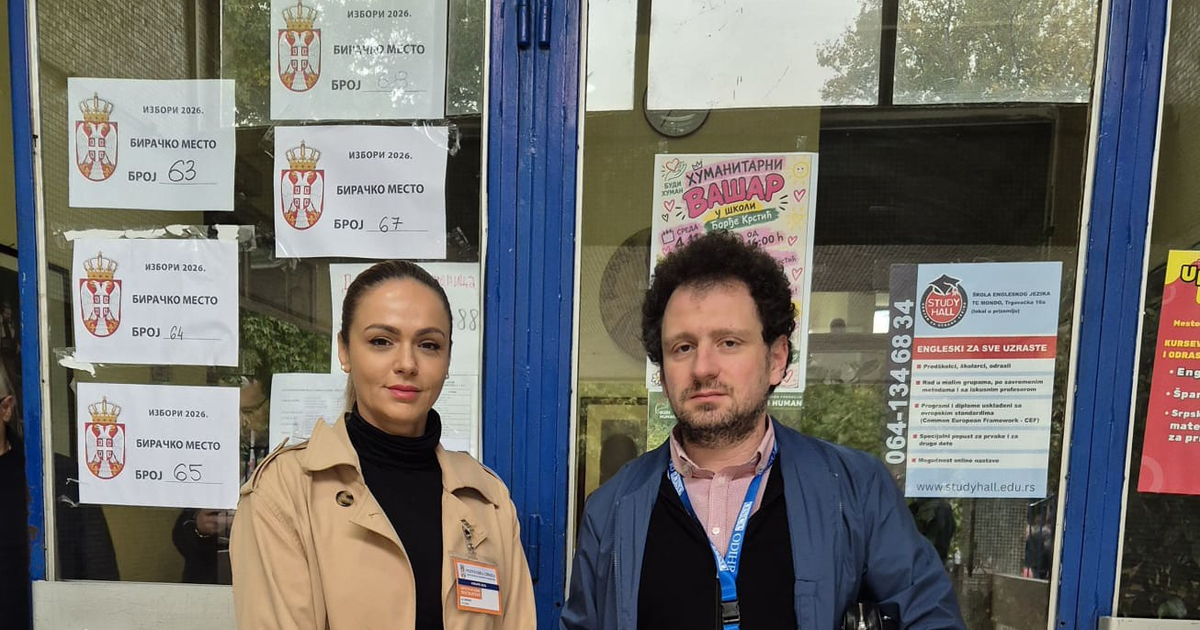
The Student List, the slate built by the student-led protest movement, has won Serbia's snap parliamentary election, ending Aleksandar Vučić's 12 years at the top of Serbian politics. In the preliminary count of the Republic Electoral Commission (RIK), stamped 2:05 p.m. Belgrade time on Monday, October 26 (9:05 a.m. ET), with 8,143 of 8,392 polling stations processed, the Student List had 2,247,516 votes, or 52.64%. Vučić's United Serbia list had 1,674,435, or 39.22%.
Vučić conceded on Sunday night, before the official count was complete. "It is clear that we have lost these elections, the Student List has won," he said in a televised speech, Reuters reported. He said the students would have between 135 and 140 of the 250 seats and his Serbian Progressive Party (SNS) 105, based on preliminary results.
The RIK count
All figures below are from the RIK preliminary results for the October 25 parliamentary election, stamped 2:05 p.m. Belgrade time on October 26, 2026. RIK states vote shares as a share of ballots found in the ballot boxes.
- Polling stations processed: 8,143 of 8,392 (97.0%). The 249 still out include all 93 stations abroad and 26 in Belgrade.
- Student List: 2,247,516 votes (52.64%).
- United Serbia (Aleksandar Vučić): 1,674,435 votes (39.22%).
- Ivica Dačić, Stability Factor (Socialist Party of Serbia and partners): 92,591 votes (2.17%).
- Every other list: below 1%. The largest were Authentic Right (Miloš Jovanović) with 38,327 votes and the Alliance of Vojvodina Hungarians with 34,757.
- Voters: 4,271,858 people voted, 68.82% of the 6,206,993 registered at the stations processed. Serbia has 6,451,292 registered voters in all.
- Ballots: 4,269,259 in the boxes, of which 4,214,122 were valid and 55,137 (1.29%) invalid.
The Student List's lead is 573,081 votes. The stations not yet processed have 244,299 registered voters. If they vote at the same rate as the rest of the country, they would cast about 168,135 ballots, fewer than the gap. The outcome cannot change on the remaining count, even if every one of those ballots went to United Serbia.
Why early numbers pointed the other way
RIK's first published count, from 203 polling stations on Sunday evening, had United Serbia ahead with 54.69% to the Student List's 36.04%, Tanjug reported. The first stations to report are not a sample of the country. Vučić said he was conceding on the basis of a sample, not the official count. Every projection Ipsos and CeSID published from their sample of polling stations, starting with the first at 51.1% of the sample, had the Student List ahead, RTS reported. On Sunday night their projection gave the Student List 52.9% and 141 seats, and United Serbia 38.8% and 103, the Guardian reported. The monitoring group CRTA projected 51.2% and 134 seats.
Who wins seats, and how many
Seats are shared out among lists that pass a threshold of 3% of the people who voted, using the D'Hondt method across 250 seats, under Articles 128 and 129 of the Law on the Election of MPs. Amendments passed in May 2026 did not change those rules. Lists with national-minority status do not need to pass the threshold, and their totals are weighted up by 35% when seats are divided (Article 140). Nine of the 18 lists on the ballot have that status, according to RTS and ZA media reports of RIK's decisions.
On the 2:05 p.m. count, the threshold is 128,156 votes. Only two lists clear it: the Student List and United Serbia. Dačić's list is 35,565 votes short.
Applying the law to the RIK count, our own projection gives:
- Student List: 140 seats.
- United Serbia: 104 seats.
- Minority lists: 6 seats. Alliance of Vojvodina Hungarians 2, Albanian Coalition 2, and one each for Rasim Ljajić's list and SDA Sandžak.
This is our projection from RIK's partial count, not an official allocation; RIK has not assigned any seats. Ipsos and CeSID's latest projection, published on Monday from 96% of their sample rather than from RIK's count, matches ours for the Student List at 140 but gives United Serbia 103 and the Alliance of Vojvodina Hungarians 3, Balkan Insight reported. The last seats in our projection are close: on RIK's count, Usame Zukorlić's list is 286 votes short of a seat and the Hungarian alliance 918 votes short of a third, so ours can still move as the last stations are counted. It also assumes the minority lists keep their status. In September the leader of the Roma Party said he would take the status of Rasim Ljajić's list to the courts, including the Constitutional Court, srpske.rs reported. If that list lost its status, its one seat in our projection would go to another list. A government needs the votes of 126 MPs. On this count the Student List would have 14 more than that on its own. It would be 27 short of the 167 votes needed to change the Constitution.
What these numbers cannot show: RIK publishes totals by polling station, not who individual voters were. The figures show the opposition vote gathered behind one list: the two biggest lists took 91.9% of ballots, and the European Serbia list of former opposition leaders Marinika Tepić and Zdravko Ponoš got 12,045 votes (0.28%). They do not show how many Student List voters were first-time voters, past SNS voters or past opposition voters.
Turnout
Turnout at the stations processed is 68.82%. Reuters reported that pollsters and the commission put turnout close to 70%, the highest since the breakup of Yugoslavia in 1992. DW reported the same. The Guardian said it was the highest since the first election in 1990. Long lines formed outside polling stations, and Vučić himself waited nearly two hours to vote in Belgrade, Reuters said. The final national figure will depend on the 249 stations still out.
What the leaders said
The Guardian quoted Vučić at more length: "We still do not have final results... On the basis of a sample … it is clear that we have lost these elections, the Student List has won, they will have between 135 and 140 seats and we will have 105." He told supporters: "Some businessmen, some people will leave us but our structure is firm, we are very united, very strong, we are used to being in the opposition," Reuters reported.
DW reported that Vučić blamed independent media for the loss and alleged interference by unnamed European countries and the "American deep state." RIA Novosti reported that he promised not to obstruct the winners and did not rule out that a new government could impose sanctions on Russia in March or April.
Radomir Saičić, a Belgrade University professor speaking for the students at their headquarters, said: "Dear Serbia, tonight the voice of the people is being heard. Tonight we celebrate victory, tomorrow we build the future." The list's lead candidate, cardiologist Ilija Srdanović, told BBC Serbian: "This will be a free state." Reuters reported that it is still unclear who the Student List will put forward as prime minister.
Dačić said he was not satisfied with the result and congratulated the winners. "More than 100,000 people voted for our list in these conditions," he said, RTS reported. That is more than the 92,591 votes RIK had counted for his list at 2:05 p.m.
Reactions abroad
- European Union: Commission President Ursula von der Leyen and Council President António Costa said in a joint statement: "Today, the people of Serbia turned out in record numbers to shape their country's future. Congratulations to the Student List on its victory in the parliamentary elections. We stand ready to support reforms on the rule of law, media freedom, the fight against corruption and strong democratic institutions, and to work together to advance Serbia's future in the European Union."
- EU enlargement commissioner Marta Kos wrote on X: "A new chapter can begin for Serbia. The door to the EU is open, and we are ready to move forward together."
- Council of Europe Secretary General Alain Berset said: "We welcome former President Vučić's acceptance of the result and commitment to a peaceful democratic transition."
- Neighbors: Hungary's prime minister Péter Magyar was the first EU national leader to congratulate the Student List, the Guardian reported. Montenegro's prime minister Milojko Spajić and president Jakov Milatović also sent congratulations. Milorad Dodik, the pro-Russian Bosnian Serb leader, congratulated the Student List and wrote that "Republika Srpska and Serbia continue forward together," Reuters reported.
- Russia: On October 26, Kremlin spokesman Dmitry Peskov praised Vučić and said Moscow hoped the new government would keep up ties. "We greatly appreciate the contribution that Mr Vucic has made to the development of our bilateral relations," he told reporters in Moscow, according to Reuters' report on the Kremlin's reaction. He said he hoped "these new political forces will understand that cooperation with Russia is in Serbia's interests, because it benefits Serbia," and added: "For our part, we intend to continue to do everything we can to foster the development of our relations with Belgrade. But, as you know, it takes two to tango."
- China: Foreign Ministry spokesman Guo Jiakun said on October 26 that "China always maintains non-interference in other (countries') internal affairs and respects the independent choices of the people," and that Beijing was ready to work with Serbia's new government, Anadolu Agency reported.
What others report
- Reuters described a historic election that ends Vučić's long grip on power, and said analysts expect a purge of Vučić allies in the police, security services and ministries.
- The Guardian reported that independent monitors recorded cases of ballots being photographed, attempted vote-buying and "carousel" voting on election day. CRTA's Raša Nedeljkov said "a large number of irregularities continue to be recorded."
- The BBC reported that RIK's preliminary figures showed 64.9% had voted by 6:00 p.m. local time, two hours before polls closed.
What comes next: analysis
This section is analysis. It rests on the Constitution, the election law and the sources named, not on decisions that have already been made.
The count becomes final. RIK still has to process 249 stations, publish the final results and assign seats. The law gives it 10 days from the overall results report to hand out mandates. Complaints from lists or monitors could add time.
Parliament sits. Under Article 101 of the Constitution, the first sitting is called by the speaker of the outgoing parliament and must take place no later than 30 days after final results are proclaimed. That speaker is Ana Brnabić, a close Vučić ally who is also acting president. The new parliament is constituted once two-thirds of MPs have their mandates confirmed. With about 140 seats, the Student List would have the votes to elect the new speaker without help.
A government. Under Article 127, the president proposes a candidate for prime minister after hearing the elected lists. The government is elected by a majority of all 250 MPs, so 126 votes. Under Article 120, the speaker stands in for a president who has left office, for no more than three months. Our reading: once the new parliament elects its speaker, that person, very likely from the Student List, becomes acting president and proposes the prime minister. That would leave the choice of prime minister with the winners, not with Vučić's allies. The Student List has not named its candidate.
A presidential election. Vučić resigned the presidency to run for prime minister. Article 120 requires the speaker to call a presidential election to be held within three months of the office falling vacant, which the Guardian reported means before the end of the year. Vučić's camp would go into that vote off a 13-point defeat, and the Student List would have to pick a candidate while also forming a government.
Limits of a majority. About 140 seats is enough to govern alone but not to change the Constitution, which needs 167. Any constitutional change would need United Serbia's votes: even with all six minority MPs in our projection, the Student List would be 21 short.
Russia, China and the EU. Reuters noted that the students have been quieter about foreign policy than about corruption and schools and, like Vučić, will have to balance China, a major investor, Russia, Serbia's main gas supplier, and the EU, its largest trading partner. Brussels has made its offer public. Moscow's first response praised Vučić and said close ties would also depend on the new government; Beijing said it was ready to work with it. The idea of sanctions on Russia comes from Vučić; the Student List has not said it will impose them.
What we don't know
- The final count for the 249 remaining stations, including all votes cast abroad, and the final turnout.
- The final seat allocation, and whether Dačić's list stays below the threshold.
- Whether any list or monitor files complaints, and whether they affect any stations.
- Whether any court challenge to a list's minority status changes the seat count.
- Who the Student List will propose as prime minister, and who it will put forward for speaker and for president.
Context
When Vučić resigned to run for prime minister: Serbia's Vučić resigns the presidency.
Sources
- Republic Electoral Commission (RIK), preliminary results, parliamentary election of October 25, 2026, stamped 2:05 p.m. Belgrade time on October 26, 2026: rik.parlament.gov.rs. Polling-station file: export-results/680072/2.
- Law on the Election of MPs (Zakon o izboru narodnih poslanika), Official Gazette 14/2022, Articles 128, 129, 130 and 140: parlament.gov.rs. Amendments, Official Gazette 47/2026, which leave those articles unchanged: parlament.gov.rs.
- Constitution of the Republic of Serbia, Articles 101, 120, 127 and 203: rik.parlament.gov.rs.
- Reuters, Ivana Sekularac, Aleksandar Vasovic and Edward McAllister, "Serbia's Vucic concedes defeat in historic election win for student protest movement", October 25, 2026, via ThePrint: theprint.in.
- The Guardian, Ashifa Kassam, "Serbian leader Aleksandar Vučić ousted by student movement in seismic election", October 25, 2026: theguardian.com.
- The Guardian, Jakub Krupa and Jon Henley, Europe live, October 25, 2026: theguardian.com.
- BBC News, André Rhoden-Paul and Jaroslav Lukiv, "Serbia's veteran ruler Vučić concedes election to student-led protest movement", October 25, 2026: bbc.com.
- BBC News, Nick Thorpe, "Early reports suggest record high turnout in Serbia elections", October 25, 2026: bbc.com.
- DW, "Serbian strongman leader Aleksandar Vucic concedes defeat to student-led movement", October 25, 2026: dw.com.
- RTS, "Ipsos i Cesid: Studentska lista 52,7 odsto, Ujedinjena Srbija 38,9 odsto", October 25, 2026: rts.rs.
- Tanjug, "RIK: Na osnovu 203 obrađena biračka mesta...", October 25, 2026: tanjug.rs.
- Reuters, "Kremlin hails defeated Serbian ally Vucic as student election win adds to its geopolitical woes", October 26, 2026, via The Straits Times: straitstimes.com.
- Reuters, compiled by Aleksandar Vasovic, "Reactions to election victory of Serbia's Student List", October 26, 2026, via Internazionale: internazionale.it.
- Anadolu Agency, "China says ready to work with Serbia's new government after Vucic concedes defeat", October 26, 2026: aa.com.tr.
- Balkan Insight, "Student List Wins Outright Majority in Serbian Parliamentary Polls", October 26, 2026: balkaninsight.com.
- RIA Novosti, "Вучич заявил о поражении своей коалиции на парламентских выборах в Сербии", October 25, 2026: ria.ru.
- RTS, "RIK utvrdio Zbirnu izbornu listu na kojoj je 18 izbornih lista sa 2.418 kandidata", October 9, 2026: rts.rs. ZA media, "RIK utvrdio Zbirnu izbornu listu", October 9, 2026, and Srpske.rs, "RIK priznao Ljajićevu listu", September 16, 2026, on which lists RIK recognized as minority lists: zamedia.rs, srpske.rs.
- Photograph: OSCE Parliamentary Assembly, OSCE PA Flickr, source page, CC BY-SA 4.0.
Vučić's list lost by more than half a million votes, on a turnout Reuters and DW reported as the highest since 1992. The Student List can govern on its own but cannot change the Constitution alone, and it still has to name a prime minister.