Europe · Public record
Serbia's President Aleksandar Vučić resigns to run for prime minister. A parliamentary election is set for 25 October.
Aleksandar Vučić resigned as president of Serbia on Sunday 27 September 2026 to lead his Serbian Progressive Party (SNS) into an early parliamentary election on 25 October, the Guardian reported. "I am resigning the duty of the president of the republic," Vučić said, reading the text of his resignation. The constitution bars him from a third presidential term, and his second five-year term would otherwise have ended in May next year, the Guardian said.
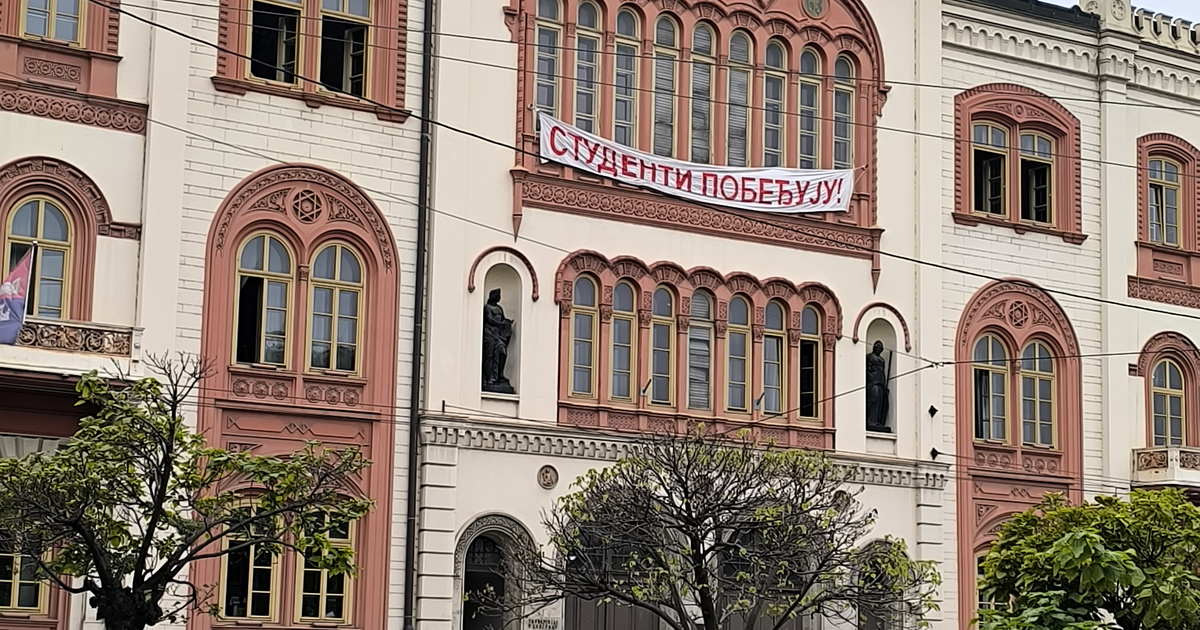
The Guardian said the vote will test his rule after nearly two years of student-led protests. The protests began after a concrete canopy collapsed at the railway station in Novi Sad on 1 November 2024, killing 16 people, Al Jazeera reported. The movement is contesting the vote under the banner "Students Win," Al Jazeera reported.
Parliament Speaker Ana Brnabić, a close Vučić ally and former prime minister, becomes acting president, the Guardian, the BBC and Al Jazeera reported.
Why it matters
Vučić has dominated Serbian politics as prime minister or president since 2014, according to Al Jazeera. The Guardian put the SNS in power for 14 years. Barred from a third presidential term, he is now seeking to extend his hold on power through the parliamentary vote, Al Jazeera said. The Guardian noted that the prime minister is formally more powerful than the president in Serbia, though Vučić dominated government as president. Analysts cited by the Guardian say the student group and Vučić are polling closely.
The vote will also be watched across the Western Balkans, where Belgrade has close ties with Serbian communities in Bosnia and Herzegovina, Montenegro and Kosovo, Al Jazeera reported.
What is reported
- The Guardian (Associated Press report, 27 September; first published 19:09 UTC, updated 21:59 UTC):
- Vučić is resigning to lead the SNS in the 25 October ballot.
- Once a new parliament is elected, its speaker will take over from Brnabić, appoint the prime minister and schedule a presidential vote.
- Vučić told state broadcaster RTS on Sunday that foreign powers and unidentified people in the country planned to stir unrest on election night. The report said he has accused opponents and critical media, without offering evidence, of intending to destroy the state under unspecified foreign influence.
- Serbia's independent Bureau for Social Research has filed a complaint alleging that Vučić abused a public institution as president to promote his party. He has dismissed the complaint.
- BBC (Vicky Wong, 27 September, 20:04 UTC):
- Vučić addressed supporters outside the presidential building in Belgrade and said his administration had preserved peace and stability.
- Under the constitution, a presidential election must be held no more than three months after his resignation. Serbians will therefore vote twice before the end of the year.
- Vučić said the presidential election would take place more than a month after the parliamentary vote.
- He pardoned 49 people, including 23 students and party loyalists suspected of offences related to the protests, according to the public broadcaster RTS.
- The SNS faces the student-led Students Win movement and a coalition of pro-Western opposition parties called European Serbia.
- Al Jazeera (Armin Aljovic, 27 September, 20:29 UTC):
- Vučić is on the SNS ballot and is seeking the prime minister's post.
- The student list has 250 candidates, mostly university professors and professionals. Its platform calls for investigations into allegedly ill-gotten property, action against corruption and political interference in public institutions, and more transparency in public spending.
- A few hours before resigning, Vučić told CNN that if the opposition won, he would acknowledge the result and congratulate his opponents that evening.
- Some polls suggest the student-backed movement could pose a serious threat to the SNS, though Al Jazeera said the methodology of some polls is hard to verify independently.
What we don't know
- The presidential election date. None has been set in the reporting.
- Who the SNS puts forward for president. No candidate has been named in the reporting.
- Whether the vote will be seen as fair. Protesters and opposition groups accuse the government of corruption and of taking control of state institutions, which Vučić and his party deny. No election-monitoring mission has been announced in the reporting.
- How reliable the polls are. Analysts cited by the Guardian describe a close race. Al Jazeera cautioned that some polls are hard to verify.
Inference (not a finding)
Resigning to run for prime minister gives Vučić a route to remain Serbia's most powerful politician without a third presidential term. That depends on the SNS winning a parliamentary majority on 25 October. The student movement has turned from street protest to an electoral list, so the result will measure how far the protests have changed votes, not just crowds.
What happens next
- 25 October: parliamentary election.
- Within three months of the resignation: presidential election, to be scheduled by the new parliament's speaker.