They said the oil was back. Qatar extended the gas.
WatchfulEye ·
The conventional narrative is that Hormuz oil is coming back. On Friday, a gas contract got longer and a vessel count got shorter.
What changed
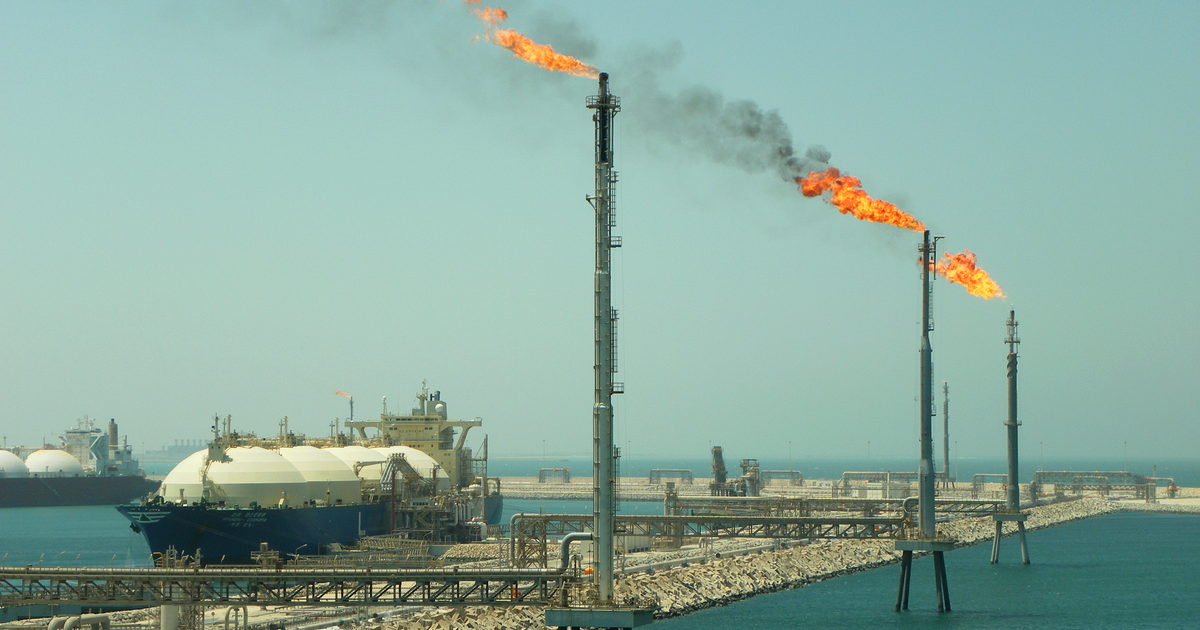
On Friday 28 August 2026, Bloomberg reported that Qatar extended force majeure on liquefied natural gas supplies to European and Asian buyers by another month, amid uncertainty over the full reopening of the Strait of Hormuz. QatarEnergy told Pakistani buyers that cargo cancellations would continue into October, and force majeure on supplies to Bangladesh was extended beyond September, traders told Bloomberg.
The same morning, Reuters reported that seven commodity vessels transited the Strait of Hormuz on Thursday, down from 17 a day earlier and below the 10-day average of 15, according to preliminary data from ship tracker Kpler. Four were exiting the strait and three entering. The figures could change because some ships switch off their transponders, Reuters said. In the Bab el-Mandeb, 17 commodity vessels transited, six entering and 11 exiting.
Oil traders' estimates reported by Bloomberg on 27 August put crude shipments through the strait at about 6 to 8 million barrels a day. Separately, Goldman Sachs analysts said in a note that total exports of crude and oil products from the Persian Gulf had risen to 15 to 16 million barrels a day, around two-thirds of pre-war levels, Bloomberg reported. "The rise in dark crossings by specialized shippers, and in ship-to-ship transfers shows that producers and shippers are adapting to the Mideast conflict," Goldman said.
On 27 August, traders who asked not to be named told Bloomberg that Kuwait and Qatar had got shipments back to 70 percent of pre-conflict levels, and that around 7 to 8 million barrels a day of oil was exiting Hormuz.
Bloomberg reported the extension as another month, amid uncertainty over the full reopening of the Strait of Hormuz. The oil and shipping figures are not independently confirmed. The vessel counts are preliminary Kpler data as reported by Reuters; the 6 to 8 million barrels a day is a traders' estimate reported by Bloomberg; the two-thirds figure is Goldman Sachs's estimate for all Gulf exports of crude and oil products, as reported by Bloomberg. Nothing in the reporting cited here gives the exact LNG volume under force majeure, or shows that oil barrels and LNG contracts move together.
Sources
Bloomberg, Stephen Stapczynski and Priscila Azevedo Rocha, 28 August 2026, Qatar Extends LNG Force Majeure as Hormuz Traffic Remains Halted. Force majeure on supplies to European and Asian buyers extended by another month. Traders: Pakistani cargo cancellations into October; Bangladesh beyond September.
Reuters, Emily Chow, 28 August 2026, Shipping traffic via Strait of Hormuz slips below 10-day average, data shows. Preliminary Kpler data: seven commodity vessels through Hormuz on Thursday, against 17 a day earlier and a 10-day average of 15. Bab el-Mandeb: 17 commodity vessels.
Bloomberg, Alex Longley, Julian Lee and Yongchang Chin, 27 August 2026, Hormuz Oil Flows Rising as Gulf Giants' Ramp Up Gathers Pace. Oil traders' estimates: about 6 to 8 million barrels a day of crude shipped through Hormuz.
Bloomberg, Yongchang Chin, 27 August 2026, Goldman Says Gulf Oil Exports at Two-Thirds of Pre-War Level. Goldman Sachs: Gulf exports of crude and oil products 15 to 16 million barrels a day, around two-thirds of pre-war levels. Traders: about 6 to 8 million barrels a day of crude transiting Hormuz.
Bloomberg, Yongchang Chin and Alex Longley, 27 August 2026, Kuwait and Qatar Add to Growing Oil Flows Getting Through Hormuz. Traders: Kuwait and Qatar shipments back to 70 percent of pre-conflict levels; around 7 to 8 million barrels a day exiting Hormuz.
How it is being framed
Force majeure: another month. European and Asian buyers. QatarEnergy. Bloomberg.
Halt: uncertainty over the full reopening of the Strait of Hormuz. Bloomberg.
Count: seven vessels on Thursday, against a 10-day average of 15. Kpler data reported by Reuters.
Restore: traders told Bloomberg about 6 to 8 million barrels a day of crude was crossing Hormuz. Goldman Sachs put Gulf exports of crude and oil products at around two-thirds of pre-war levels.
These accounts tell different stories. A reader who sees only the restore figures reads barrels coming back. A reader who sees the force-majeure extension reads a gas contract that got longer while the vessel count got shorter. Those statements were made. Nothing confirms that the oil figures and the LNG contract describe one market.
Reporting versus inference
Reporting is: Bloomberg published a 28 August piece that Qatar extended LNG force majeure to European and Asian buyers by another month, amid uncertainty over the full reopening of the Strait of Hormuz; Reuters reported preliminary Kpler data showing seven commodity vessels through Hormuz on Thursday 27 August against a 10-day average of 15; traders told Bloomberg about 6 to 8 million barrels a day of crude was transiting the strait; and Goldman Sachs estimated, as reported by Bloomberg, that Gulf exports of crude and oil products had recovered to around two-thirds of pre-war levels.
Inference, labeled as such: the crude restore figures and the LNG force-majeure extension are being sold in the same hour as one Hormuz recovery story. A reader who sees only seventy percent crude reads progress. A reader who sees the gas extension reads a contract that still cannot clear. The reports were published. The LNG tonnage under force majeure is not confirmed, and neither is the claim that alternative oil routes also move LNG.
What may follow
Reasoning, not a forecast.
If the force-majeure reading is right, the next fact to check is a QatarEnergy update that names volumes or a named European or Asian buyer that declares commercial shortage. If the count reading is right, the next fact is Kpler data that holds above or below the 15-vessel average for a full week. If the restore reading is right, the next fact is a named oil-flow number that survives a second tracker. If the halt reading is right, the next fact is a security protocol that insurers accept.
What remains unresolved
Exact LNG volume under the latest extension. Percentage of QatarEnergy exports now under force majeure. Whether oil barrels leaving via alternative routes can substitute for LNG contracts that still need the strait. Whether the seven-vessel Thursday count is a one-day dip or a new baseline.
Corrections
If a source, a reading, or an inference on this page is wrong, we correct it here. contact@watchfuleye.us.
See how the story is framed, why it matters, and what happens next.