Iran · Public record
81 US aircraft lost or damaged in the Iran war: at least 63 lost, most of them drones
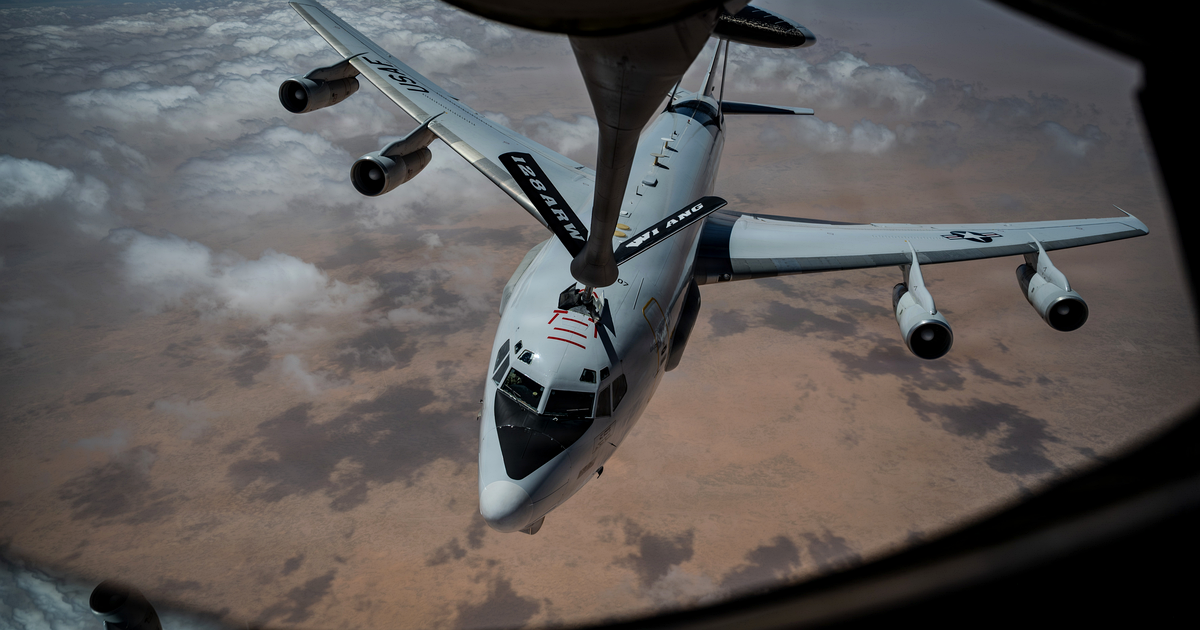
The Congressional Research Service (CRS) updated its count of US military aircraft losses in the war with Iran on Monday, 5 October 2026. It lists 81 aircraft "reportedly lost or damaged" since 28 February, up from 42 in its May version. Headlines split: Stars and Stripes said the US "has lost up to 81 aircraft and drones"; Military Times said "lost or damaged". CRS warns: "Some damaged aircraft may have been returned to active service."
We sorted the 81 entries by what CRS and the Pentagon's Lead Inspector General (IG) report of 14 September say happened to each.
What the 81 are
- At least 63 lost. 45 MQ-9 Reaper drones ("at least 45", according to an August news report citing three US officials; no circumstances given), 3 MQ-1 drones downed by Iran, 1 MQ-4C Triton drone crash, 4 F-15Es (3 to friendly fire over Kuwait, 1 to enemy fire over Iran), 1 A-10 hit by enemy fire that crashed, 1 KC-135 that crashed in Iraq, killing all six crew, 2 MC-130Js and 4 AH-6 Little Birds destroyed by US forces during a rescue mission, 1 AH-64 Apache shot down over the Strait of Hormuz and 1 MH-60 that crashed over the Arabian Sea.
- 18 listed as damaged. 8 F-15s with light damage in an Iranian strike on Muwaffaq Salti Air Base, Jordan, in September, which CRS says "were returned to service"; 1 A-10 "severely damaged" there; 1 F-35A hit by ground fire; 5 KC-135s hit on the ground at Prince Sultan Air Base, Saudi Arabia; a second KC-135 that made an emergency landing after the March crash incident (the IG lists it as damaged); 1 E-3 Sentry; and 1 HH-60W rescue helicopter.
- Drones are most of the losses. Drones are 49 of the 81 entries, and all 49 are among the 63 losses: nearly four in five.
- Few crewed losses were to enemy fire. Of the 14 crewed aircraft lost, three were shot down or hit by enemy fire, three by friendly fire, six were destroyed by US forces and two crashed. Central Command said the KC-135 crash was "not the result of hostile or friendly fire", Military Times reported.
What the cost estimates cover
The Congressional Budget Office (CBO) estimated on 15 September that the war cost the Pentagon about $38 billion through 1 August, including $1.9 billion for equipment lost in battle, or $3.3 billion if the Pentagon replaced all of it. Stars and Stripes reported this as "the cost of the lost and damaged aircraft". CBO's table is narrower: 42 aircraft plus a THAAD radar costed at $500 million. It counts 24 Reapers, not 45, and 2 KC-135s, not 7. The aircraft damaged in Jordan, the MQ-1s and the MH-60 are not in it. Part of the gap is timing: CBO counted to 1 August, before the Jordan strike.
In June the White House asked Congress for $87.6 billion in emergency funding, $67.1 billion of it for the Pentagon, CBO said. Congress has not approved it, Military Times reported.
The small fleets
- E-3 Sentry. The Air Force had 16 E-3s before the war, and six were deployed to Prince Sultan, Military Times reported. CRS says Congress may assess whether losses in "high-demand platforms that are aging and limited in number, such as the E-3 Sentry, create capability gaps".
- MQ-9 Reaper. An Air Force official told Congress in May that 135 Reapers remained, down from 351 in fiscal 2022, CRS reported on 23 September. The Air Force requested no new Reapers for fiscal 2027; the production line is closed and would take 2-3 years to restart, a company official told CRS.
- KC-135. The Air Force had 373 KC-135s and 103 KC-46As in early March, the Government Accountability Office (GAO) said in June. The fleet did not meet the Air Force's availability and capability standards from fiscal 2019 through fiscal 2025.
What we infer (not a finding)
- The equipment bill is already behind the count. At CBO's own $30 million unit cost, the 21 Reapers missing from its table would add about $630 million.
- One E-3 weighs more than seven tankers. One E-3 is about 6 per cent of a 16-aircraft fleet; the seven KC-135s are about 2 per cent of 373.
- 45 Reapers is a third of 135. Some of those losses came before the May count, and not all may be Air Force aircraft, so the current fleet size is not public.
What is uncertain
- The E-3. CRS and the IG list it as damaged; CRS cites a report of "a direct hit". Air & Space Forces Magazine reported it is likely unrepairable, Military Times said. CBO's table counts it as a battle loss.
- The five KC-135s on the ground. CRS says damaged; the IG table says "damaged or destroyed".
- The HH-60W. CRS counts one damaged helicopter, but Military Times reported that General Dan Caine described two helicopters in the rescue flight taking fire.
Open questions
- How many E-3s and Reapers are flying today?
- Will the Pentagon ask Congress to replace the lost Reapers, and with what?
Sources
- Congressional Research Service, "U.S. Aircraft Combat Losses in Operation Epic Fury: Considerations for Congress", IN12692, updated 5 October 2026 (and 13 May 2026 version)
- Department of Defense (Department of War) Inspector General as Lead Inspector General, "Lead Inspector General Report to the United States Congress", Operation Epic Fury, April 1-June 30, 2026, published 14 September 2026, Table 5
- Congressional Budget Office, "Estimating the Cost of Combat Operations Against Iran", letter to Rep. Brendan F. Boyle, 15 September 2026, Table 2
- Government Accountability Office, "Aerial Refueling Tankers: Air Force Needs More Focused Metrics and a Risk-Based Mitigation Plan to Improve Sustainment", GAO-26-109154, 10 June 2026
- Congressional Research Service, "Air Force MQ-9A Reaper: Background and Issues for Congress", IF13318, 23 September 2026
- Military Times (Michael Scanlon), "US aircraft lost or damaged in Iran war nearly doubles in latest congressional report", 7 October 2026
- Stars and Stripes (Gary Warner), "US has lost up to 81 aircraft and drones in war with Iran", 7 October 2026
- Defense News, "Congressional report tallies 42 US aircraft lost or damaged in Operation Epic Fury", 22 May 2026
The 81 is a count of aircraft lost or damaged, not of aircraft gone. For the small fleets, what matters is how many are left, and no public report says.