Middle East / Energy · Public record
Iraq's devaluation gives Baghdad more dinars per oil dollar. It does not add a barrel.
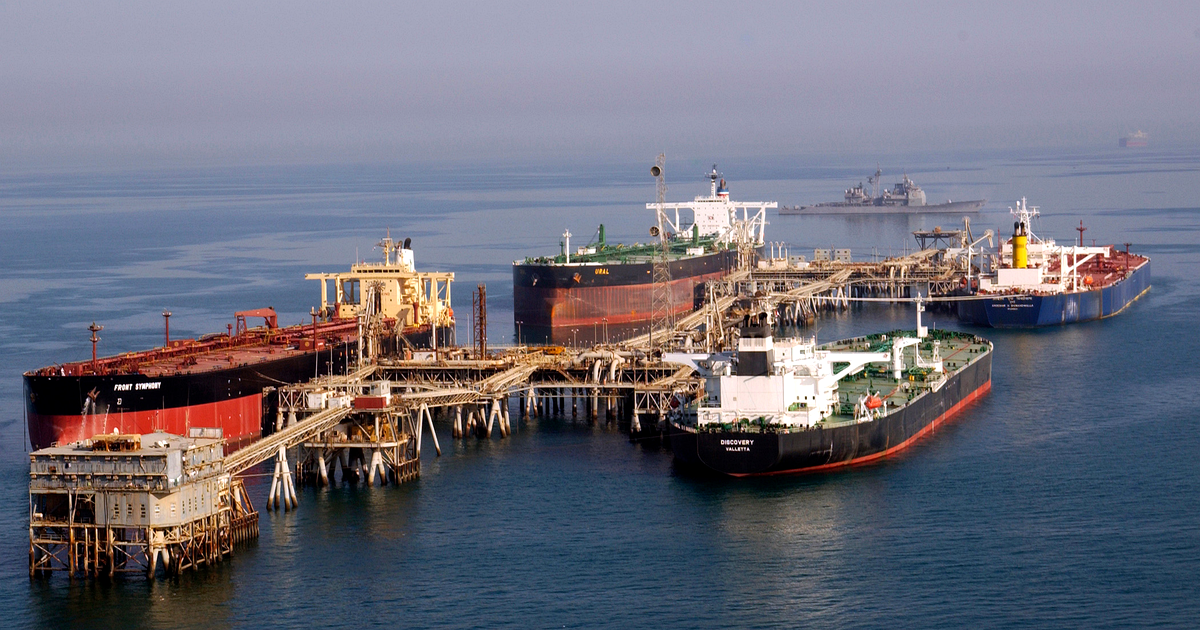
Iraq weakened its currency on Wednesday, 7 October 2026. The official price of a dollar for the public is now 1,520 dinars, up from 1,320, under a Central Bank of Iraq document published by the Iraqi News Agency. The cabinet approved the change at its 22nd session on Tuesday. The new rates took effect at the start of Wednesday's business day.
Economists quoted by Reuters tied the move to the disruption of Iraq's oil sales by the US-Israeli war on Iran; AP and AGBI pointed to disrupted shipping through the Strait of Hormuz. The new rate means each oil dollar the state sells brings in more dinars, helping Baghdad meet domestic spending such as salaries, AGBI reported. It does not raise the number of barrels Iraq can export, which in August was still more than a third below pre-war levels. Reuters, AP and AGBI all reported that the cost falls on importers and on consumer prices.
What changed
- Three new rates. The central bank will buy dollars from the Finance Ministry at 1,500 dinars, sell them to banks at 1,510, and the price of a dollar for the public is 1,520, the document says. It cites the Central Bank of Iraq Law No. 56 of 2004 and tells institutions to drop the previous rate "effective from the start of the business day".
- The old rates. The rates being replaced were set in February 2023: 1,300 dinars per dollar for purchases from the Finance Ministry, 1,310 for sales to banks and 1,320 for sales to the public, the central bank announced at the time. That 2023 change strengthened the dinar from 1,460. Before it, the central bank had devalued the dinar in December 2020, to 1,460 per dollar for banks, Shafaq News reported at the time. AGBI called Wednesday's move "the first devaluation since 2023", but the 2023 change went the other way.
- How it was decided. The cabinet acted on an urgent submission by the finance minister and the central bank governor, Rudaw reported. Earlier on Tuesday, Dhia al-Tai, a representative of the Association of Exchange Companies in Iraq had said there was no confirmed plan to change the rate. AGBI reported that the cabinet acted despite government denials in recent months.
Which percentage is right
- Like for like. At the public rate, 1,320 to 1,520 means a dollar now costs 15.2 per cent more dinars, and a dinar buys 13.2 per cent fewer dollars. At the Finance Ministry rate, 1,300 to 1,500 means 15.4 per cent more dinars for each dollar the ministry sells.
- The 14.5 per cent figure. Reuters described the new rate as "roughly 14.5% below the previous official rate". That figure matches a comparison of the new public rate, 1,520, with the old Finance Ministry rate, 1,300. It mixes two different rates, so we do not use it.
- AP's comparison ("from around 1,300 Iraqi dinars to the dollar to 1,500") uses the Finance Ministry rate on both sides.
Why Baghdad did it
- Fewer barrels. Iraqi exports fell to about 2.34 million barrels per day in August, from more than 3.6 million before the war, Reuters reported. AGBI said the effective closure of the Strait of Hormuz, Iraq's main route to world markets, hit exports hard, although levels have begun to rise again. AP reported that Iraq has been shipping some oil overland through Syria, a route that costs more and works less well.
- Cheaper barrels. Basrah Medium and Basrah Heavy crude are being sold at $34.50 and $37 below market prices this month, AGBI reported, citing London investment company CSC Commodities. Buyers must collect the oil in Iraq and sail through Hormuz. AGBI put Iraqi crude at around $65 a barrel when the Dubai benchmark was near $100.
- A widening gap. The budget deficit grew by nearly $6 billion to about $22 billion (ID29 trillion) in the first seven months of 2026, AGBI reported, citing Finance Ministry figures. Rudaw gave the gap as more than 29 trillion dinars ($22.4 billion). Nabil Al-Marsoomi, an economics professor at Basra University, told AGBI that over those seven months "oil revenues covered only around 76 percent of those wages and social aid".
- The plan for next year. Lawmakers on parliament's finance committee told Reuters the draft budget assumes oil at $58 a barrel, spending of 217 trillion dinars (about $166 billion), a deficit of more than 40 trillion dinars and exports of around 4 million barrels per day, including from the Kurdistan region. AGBI, citing the official gazette, said the spending plan is for 2027.
- The stated reason. The central bank's document says the cabinet adjusted the rate "to meet relevant financial, economic, and monetary requirements". "It gives the government more dinars for each dollar of oil revenue, but raises import costs and reduces households' purchasing power," Iraqi analyst Mohammed al-Saffar told Reuters.
Who pays
- The street rate moved first. Exchange markets in Erbil and Sulaimani were trading at around 162,000 dinars per $100 on Tuesday, Rudaw reported. AP said the unofficial rate rose above 1,600 dinars before the announcement and jumped to more than 1,700 after it, and that many exchange shops in Erbil closed.
- Importers. "People owe us in Iraqi dinars, and we owe people in China in dollars," Ali al-Bahadili, a Baghdad businessman who sells clothes imported from China, told AP.
- Everyone else. "It will surely boost dinar revenues but at the same time it will cause consumer price increases. This will affect not only the poor but all Iraqis," said Manar Al-Obaidi of the Iraq Future think tank, AGBI reported. Al-Marsoomi said the change "will allow it to pay salaries, but it will lead to a rise in prices".
What we infer (not a finding)
- More dinars, the same barrels. At the same oil price, August's 2.34 million barrels a day now buy as many dinars as about 2.7 million did at the old rate (2.34 × 1,500 ÷ 1,300). That is still well short of the 3.6 million Iraq shipped before the war. The rate change offsets part of the lost volume in the budget's own currency. It does nothing for the volume itself.
- The discount is bigger than the devaluation. If Basrah crude sells near $65 while the benchmark is near $100, as AGBI reported, each barrel earns about 35 per cent fewer dollars than the benchmark price. The new rate adds about 15 per cent more dinars per dollar. The rate change does not cover the discount.
- Salaries keep their dinar value, not their dollar value. A wage fixed in dinars buys 13.2 per cent fewer dollars at the official rate. Goods priced in dollars, from imported clothes to anything bought abroad, are likely to cost more in dinars.
- The gap narrowed but did not close. Before the change, the street rate in Erbil and Sulaimani (about 1,620) was about 23 per cent above the official 1,320. After it, AP's street figure of more than 1,700 was still more than 11 per cent above the new 1,520.
- The budget's dollar figures may be out of date. The dollar equivalents for the 217 trillion dinar spending plan given by Reuters ($166 billion) and AGBI ($167 billion) match the old rate of about 1,300 dinars. At the new Finance Ministry rate of 1,500, the same spending is about $145 billion in oil dollars. We could not find which rate the draft budget uses.
What is uncertain
- Whether the central bank can supply enough dollars at 1,520 to pull the street rate down. AP's report of a street rate above 1,700 came after the announcement.
- How fast consumer prices will rise. None of the sources we read gives an official estimate of the price effect.
- Whether exports can reach the 4 million barrels a day the draft budget assumes while tankers loading in Iraq must still sail through Hormuz.
Open questions
- Which exchange rate does the draft budget use?
- Will the cabinet or the central bank move the rate again if exports stay low?
- Will public-sector wages or social payments be raised to offset higher prices?
- How much of the 4 million barrel target depends on shipments from the Kurdistan region, and by which route?
Sources
- Iraqi News Agency (INA), "CBI sets Dollar selling rate at 1,520 Dinars", 7 October 2026 (publishes the Central Bank of Iraq document; INA English economy section)
- Central Bank of Iraq, announcement of the new official rates, 7 February 2023: https://cbi.iq/news/view/2229
- Reuters, "Iraq Devalues Dinar to 1,520 Per US Dollar, State News Agency Says", 7 October 2026 (as carried by U.S. News): https://money.usnews.com/investing/news/articles/2026-10-07/iraq-devalues-dinar-to-1-520-per-us-dollar-state-news-agency-says
- AP, "Iraq devalues its currency as US-Iran war disrupts oil shipping routes", 7 October 2026: https://apnews.com/article/iraq-currency-devaluation-oil-hormuz-3a6ffba435ac71a667b8a60ea77fff11
- AGBI, "Iraq devalues dinar to help meet spending commitments", 7 October 2026: https://www.agbi.com/finance/2026/10/iraq-devalues-dinar-to-help-meet-spending-commitments/
- AGBI, "Gulf sellers discount oil to win back buyers", 7 October 2026: https://www.agbi.com/analysis/oil-and-gas/2026/10/gulf-sellers-discount-oil-to-win-back-buyers/
- Rudaw, "Iraq cabinet approves dinar devaluation to 1,520 per dollar", 7 October 2026: https://www.rudaw.net/english/categories/economic/1079618
- Shafaq News, "After approving new measures, CBI sells more than +$89 million in forex", 8 February 2023: https://shafaq.com/en/Economy/After-approving-new-measures-CBI-sells-more-than-89-million-in-forex
The new rate changes how many dinars Baghdad gets for each oil dollar. It does not change how many barrels leave Basra.