Middle East / Iran · Public record
They said no fuel, no tickets. The UAE stopped the flights.
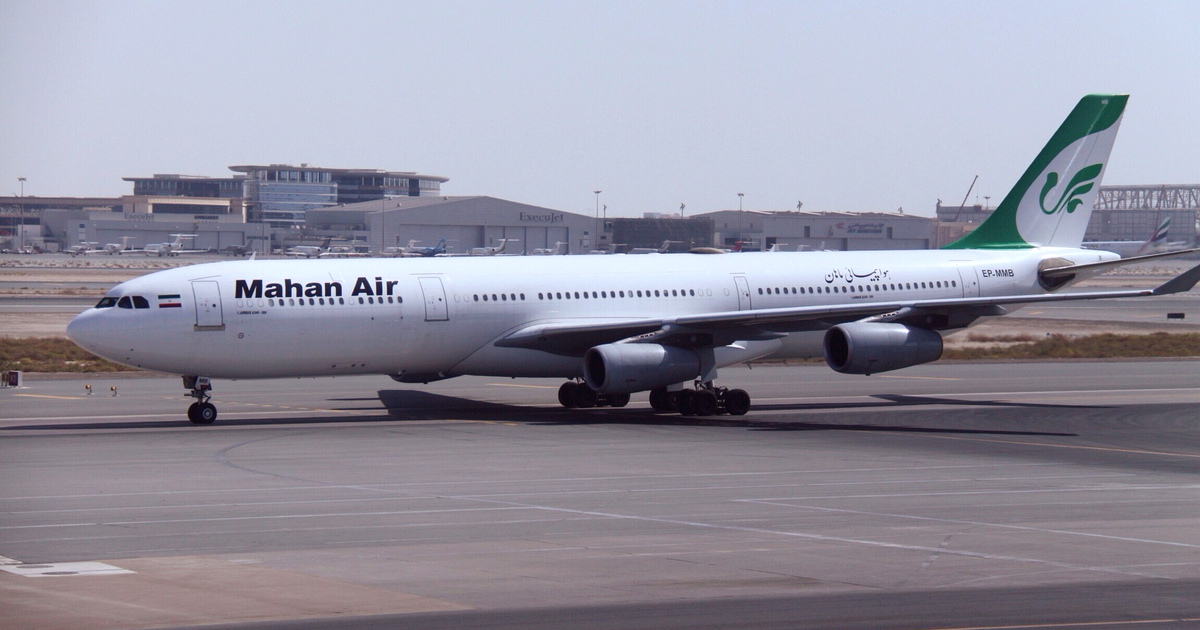
On Thursday 24 September 2026, the United Arab Emirates' General Civil Aviation Authority suspended all flights by Iranian airlines to and from the country until further notice. In a statement carried by the state news agency WAM, the authority said the decision was made "in light of the US ban imposed on Iranian airlines from using airports in various countries around the world." The National reported that no conditions or time frame were given for lifting it.
Reuters described it as the first big impact of Washington's shift to sanctioning companies in third countries that deal with Iran. Iranian airlines were barred the same day from neighbouring states including the UAE and Oman. Citing Iran's Tasnim news agency, Reuters said flights had also been shut down to Georgia, Azerbaijan and the Iraqi capital, Baghdad. Bloomberg reported that Iranian flights to the UAE had been halted as the sanctions began to bite into Tehran's already limited links with other countries.
The mechanism is ground service, not airspace. On Monday 21 September, Treasury Secretary Scott Bessent told CNBC, as quoted by Al Jazeera and The National, that when Iranian carriers land, "you cannot provide them with fuel, you cannot provide them with landing services, you cannot sell them tickets, or you will be knocked out of the dollar system." Washington had said that any company servicing Iranian airlines after 23 September would face secondary sanctions, with the stated aim of grounding Iran's civil fleet worldwide.
Why it matters
Until this week, the U.S. aviation measures against Iran were designations on paper. On 24 September they became a closed door at the Middle East's largest travel hub. Reuters reported that Tehran's Imam Khomeini Airport listed flights on Thursday to Afghanistan, Armenia, China, Iraq, Pakistan, Tajikistan and Turkey, and none to or from the nearby Gulf states. Those states have long been among Iran's most important business and travel links. The effect lands on civilians and on air freight, including medical imports, at a time when a U.S. naval blockade already constrains Iran's southern ports.
What is reported
- UAE General Civil Aviation Authority, via WAM (24 Sep): all flights by Iranian airlines suspended until further notice from Thursday, citing the U.S. ban. Carried by The National, Arab News, Reuters and Middle East Monitor.
- Reuters (24 Sep; Federico Maccioni, Eman Abouhassira, Timour Azhari): Iranian airlines barred from the UAE and Oman. Per Tasnim, flights also shut to Georgia, Azerbaijan and Baghdad, with Iranian authorities trying to reroute Iraq flights to Najaf. No Gulf flights appeared on Imam Khomeini's Thursday schedule. Reuters also reported that on Wednesday a senior Iranian official, whom it did not name, threatened to make airports "unusable" in any regional country that complies with the U.S. ban.
- Bloomberg (24 Sep): Iranian flights to the UAE halted as U.S. sanctions bite Tehran's network.
- Arab News (24 Sep): Treasury sanctioned 27 Iranian airlines on 8 September, within a wider set of 36 aviation-linked entities and individuals. Iranian media said UAE flights were cancelled from midnight, including an Iran Airtour service from Tehran to Dubai.
- Al Jazeera (22 Sep): Majid Akhavan, spokesman for Iran's Civil Aviation Organization, told Tasnim that Baghdad and Muscat airports would stop accepting Iranian flights from midnight on Wednesday, and that Baghdad-bound flights would be directed to Najaf.
- Al Jazeera (23 Sep): after the wind-down period expired, all but a handful of Iranian flights to Türkiye, the UAE and China were cancelled. Oman, Azerbaijan and Georgia stopped providing services. Baghdad was off-limits, while Najaf flights still operated on Wednesday. Travellers were pushed overland, with heavy congestion reported at the Bazargan and Razi crossings into Türkiye and on routes to Yerevan. Cirium put Iran's international capacity in August 2026 at 49 percent below August 2025.
- Al Jazeera (23 Sep video; 24 Sep explainer): Mohsen Rezaei, secretary of Iran's Supreme National Security Council, told Iranian state television on Wednesday that "if a country cooperates with or embarks on adventures with the United States, its airports will no longer be able to operate flights" to Iran. Al Jazeera reported that he said Iran would ensure airports in countries stopping Iranian flights "cannot function", and that he did not say whether the response would be diplomatic, economic or military.
Inference (not a finding)
The most plausible reading is that secondary sanctions have done in a day what years of direct designations did not. Once the Gulf's fuel, handling and ticketing providers refused service, Iranian carriers lost the UAE hub, and the U.S. did not need to close any airspace. If the pattern holds, the next pressure point is the list of airports still open (Najaf, Istanbul, Chinese and Central Asian destinations) and whether any of their service providers are named. Rezaei's warning that airports in compliant countries "cannot function" raises the risk that the dispute moves from finance into civil aviation security. On this record, it is a threat, not an operation.
Uncertainty
- No Treasury or Federal Register text of the secondary-sanctions determination is on the public record used here. Its scope, waivers and legal effective time are known only through Bessent's remarks and news reports.
- The UAE decision has no stated end date or conditions. Whether it covers cargo and charter flights as well as scheduled passenger flights is not specified in the reporting.
- Oman, Georgia and Azerbaijan closures are sourced to Tasnim and Al Jazeera. Official statements from those governments are not on this record.
- Al Jazeera attributes the airport threat to Mohsen Rezaei, speaking on Iranian state television. Reuters reported a similar Wednesday threat ("unusable") from a senior official it did not name, and did not say whether it was the same remark. No specific airport or method was named. Rezaei did not say whether the response would be diplomatic, economic or military.
- Reported numbers differ in framing. Arab News gives 27 airlines within 36 aviation-linked entities and individuals designated on 8 September. Other accounts count designations differently.
What happens next
- Whether Treasury publishes a notice or FAQ naming the aviation services and providers covered, and any waivers.
- Whether Iraq keeps Najaf open to Iranian carriers, and whether Türkiye, China or Central Asian airports come under named U.S. pressure.
- Whether the UAE authority issues its promised update, and whether any Gulf state carves out cargo or humanitarian flights.
- Whether Iran acts on the airport threat, or answers through its Hormuz conditions instead.