US / Eurasia / Energy · Public record
Trump-Putin diesel deal: what the Treasury license allows
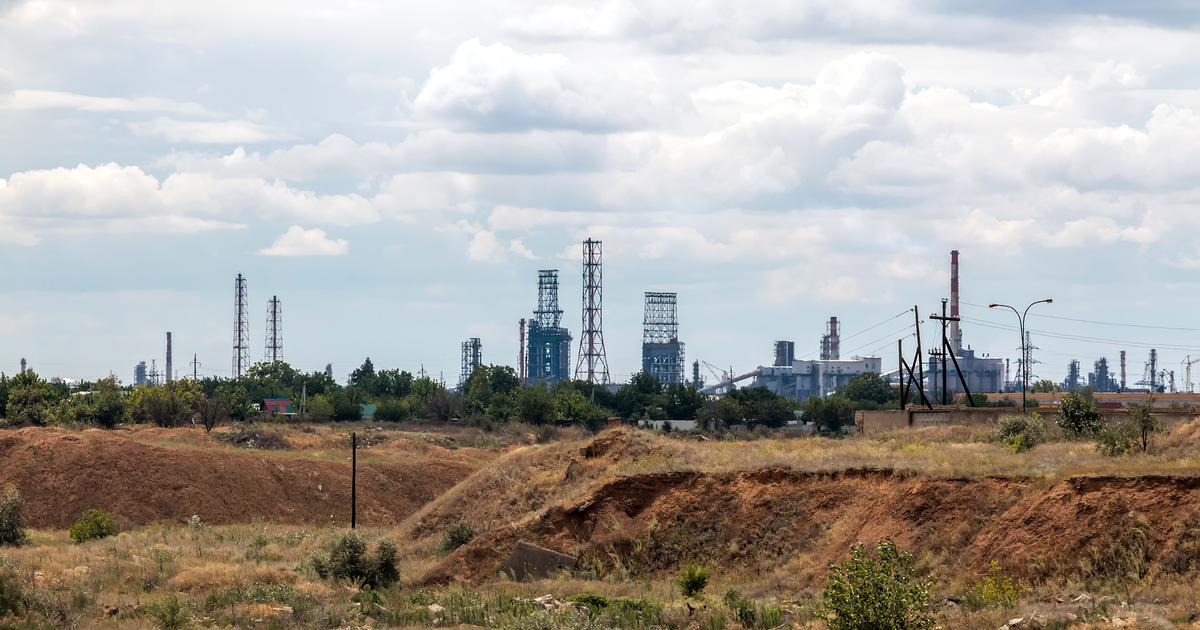
President Donald Trump said on Friday that Russian President Vladimir Putin had agreed, in a phone call, to send diesel "to the American and Global Marketplace" in stages. The Treasury Department's Office of Foreign Assets Control (OFAC) issued General License 135 the same afternoon. It authorizes the sale, delivery, offloading and importation of Russian-origin diesel, "including importation into the United States", until 12:01 a.m. Eastern time on 7 April 2027. The license was digitally signed at 2:43 p.m. Eastern time, minutes before Trump's post went up at 2:46 p.m.
AP called the move "a stunning reversal of years of U.S. pressure on Moscow over its war with Ukraine". It comes three weeks after Trump signed the Lindsey O. Graham Sanctioning Russia and Iran Act of 2026, which tells him to raise duties on Russian goods and to target the biggest buyers of Russian oil and gas. The Kremlin confirmed that Russia was willing to supply oil and petroleum products but gave no quantities. Ukraine's president, Volodymyr Zelensky, said the decision "plays into Russia's hands".
What was announced
- Trump's numbers. "Russia will immediately supply over 300,000 Tons of Diesel Fuel to the American and Global Marketplace, another 500,000 Tons during the month of November, and 1,000,000 Tons immediately thereafter," Trump wrote on Truth Social. "Additionally, based on the condition of their Diesel Refineries, Russia will then deliver, within a short period of time, 3,000,000 Tons of Diesel Fuel." Added together, that is more than 4.8 million tons. The post does not say how much is meant for the United States and how much for other buyers.
- The price claim. Diesel prices "will be COMING DOWN, IN RECORD NUMBERS, AND FAST!" Trump wrote. Later, asked about Zelensky's criticism, he told reporters: "We need oil for the world, and this is diesel, which is what we need, so we're very happy to get it."
- What Moscow said. In a statement released by the Kremlin, Putin said: "The Russian side confirmed its willingness to supply oil and petroleum products to the US market and global markets at large." Kirill Dmitriev, an envoy for Putin, wrote on social media that "Russia-US co-operation on diesel and energy will benefit the world," the BBC reported.
- Moscow's timetable. Deputy Prime Minister Alexander Novak told the state news agency TASS that Russia "immediately begins lifting restrictions on diesel exports ahead of the schedule." He said Russia was ready to supply 300,000 metric tons to the US and other partners as early as October, about 500,000 tons in November and 1 million tons in December, and that exports could later approach 3 million metric tons a month.
- Open questions at the White House. The White House did not immediately answer AP's questions about who was paying for the diesel and when it would become available. The BBC said it had asked the White House what Russia would get in return.
What the license says
- What it allows. General License 135 authorizes "all transactions prohibited by" two sets of U.S. sanctions regulations on Russia (31 CFR parts 587 and 589) that relate to the sale, delivery, offloading or importation of "diesel fuel of Russian Federation origin". It runs to 12:01 a.m. on 7 April 2027, 180 days from Friday.
- One carve-out. It does not authorize "any debit to an account on the books of a U.S. financial institution of the Central Bank of the Russian Federation, the National Wealth Fund of the Russian Federation, or the Ministry of Finance." The BBC reported that Russian assets such as those in American banks remain frozen.
- Diesel only. The license names diesel fuel. It does not cover crude oil, gasoline or jet fuel.
- No loading cut-off. The licenses OFAC issued earlier this year, after the Iran war began, were narrower. General License 134, signed on 12 March, covered Russian crude oil and petroleum products already loaded on ships by that date and expired on 11 April. A later version, General License 134B, covered cargoes loaded by 17 April and ran to 16 May. Neither mentioned importation. General License 135 sets no loading date and names imports into the United States.
- A first, AP says. AP reported that it is the first license to ease sanctions on diesel for longer than the standard 30-day window since the start of the Ukraine war. AP also reported that the license covers diesel "loaded onto tankers as of Friday". The published text contains no such condition.
- Its legal basis. The license cites only those two sets of regulations. It does not mention the Graham act.
How it sits with the new sanctions law
Trump signed the Graham act, Public Law 119-111, on 18 September.
- Duties on Russian goods. Section 112 says that within 30 days of enactment, that is by 18 October, the president "shall" raise the duty on all goods imported into the United States from Russia, including "petroleum products", "to a rate of up to 500 percent ad valorem". The words "up to" leave the rate to the president.
- Tariffs on big buyers. Section 113 orders duties of up to 100 percent on goods from countries that were among the five largest importers of Russian crude oil or natural gas and make new purchases after a 30-day grace period. The law defines crude oil and natural gas by their customs codes. The purchase test does not name diesel or other refined fuels.
- Waivers and lifting sanctions. Under Section 115, the president may waive the law's sanctions or duties, but he must first send Congress a written certification that the waiver is "in the national interests of the United States" and a report explaining why. Under Section 117, ending a sanction or duty on Russia under the law requires certifying that Russia has "signed a peace agreement that is accepted by the free and independent Government of Ukraine" and stopped hostilities, followed by a 30-day congressional review.
- The criticism. Senator Richard Blumenthal called the diesel move "directly contrary to Congress's intent in our bipartisan sanctions bill," CNBC reported. Senators Jeanne Shaheen, Chuck Schumer and Elizabeth Warren described it as "a total betrayal of Ukraine, our European allies and American national security," the Kyiv Independent reported. Peter Harrell, a visiting scholar at Georgetown University Law Center, wrote on X that the move "pretty much proves the point that the Graham Russia Bill was not going to force the Trump Administration to increase economic pressure on Moscow," CNBC reported.
- Our reading. The license and the law work through different channels. OFAC's license lifts sanctions barriers to the trade, while Section 112 is a trade-law instruction about duties at the U.S. border, due by 18 October. Nothing published on Friday says what duty, if any, would apply to Russian diesel imported under the license, or whether the administration will use the waiver in Section 115, which requires a certification to Congress first. AP reported that the move casts doubt on whether the White House will impose sanctions on Russia this month under the law.
Can Russia deliver it?
- Output is down. The International Energy Agency estimated in September that Russian diesel production had fallen by nearly 30 percent after Ukrainian drone strikes on refineries. It said Russia imposed its first ban on diesel exports on 8 July, a big change for a country that used to export roughly half of its diesel and gasoil output. The IEA expects Russian refinery runs to average 4 million barrels a day for the rest of 2026 and 2027, and said the Moscow refinery was reported to be offline until early 2027.
- The export ban. On 30 September the Russian government extended its ban on exports of diesel, marine fuel and gasoil by their direct producers to 31 October, TASS reported, quoting the cabinet's press service. A broader fuel export ban runs until 31 January 2027, according to TASS. On Friday, Novak said Russia was beginning to lift its diesel export restrictions early.
- The refineries. In September, Reuters reported that half of Russia's six biggest diesel refineries had sharply cut or halted output after drone strikes. It said Kirishi was fully shut and that the Volgograd and NORSI refineries were running at about a quarter of capacity.
- Normal volumes. A year earlier, Russia exported about 2.5 million metric tons of diesel a month, or 3.3 million to 3.4 million tons including lower-quality gasoil, Reuters reported, citing traders. Diesel exports fell below 1 million tons in June, before the ban. Turkey and Brazil had been the largest buyers.
- Our reading. The first three stages Trump described, 300,000, 500,000 and 1 million tons, are well below what Russia exported in a normal month a year ago. On volume alone they look within reach if the restrictions are lifted as Novak said, although Russia restricted exports in the first place to protect domestic supplies, the IEA said. Novak's figure of almost 3 million metric tons a month would exceed Russia's diesel exports a year earlier and approach its total including gasoil. Trump made his 3 million-ton stage conditional on the state of the refineries, and the IEA has said Russian refinery runs will struggle to recover meaningfully. Nothing announced so far says how much would go to the United States rather than to Russia's earlier buyers.
How much it is for the United States
- Demand. The Energy Information Administration's (EIA) weekly measure of U.S. demand for distillate fuel oil, the category that includes diesel, was about 3.65 million barrels a day in the week to 2 October. U.S. distillate stocks stood at about 105.1 million barrels.
- Prices. The EIA's average U.S. retail diesel price was $6.199 a gallon in the week of 5 October, down from $6.529 in the week of 21 September, the highest in the EIA's weekly series. AP reported that diesel futures dipped on Friday's news.
- The conversion. The EIA counts 7.46 barrels in a metric ton of distillate fuel oil. Novak gave his figures in metric tons. Trump's post did not say which ton he meant.
- Our reading (arithmetic). On those figures, the first 300,000 tons would be about 2.2 million barrels, roughly 0.6 of a day of U.S. distillate use. All of the more than 4.8 million tons Trump listed would be about 35.8 million barrels, or about 10 days of use, spread over several months and shared with other buyers.
- Analysts. Tim Armitage of Quilter Cheviot told the BBC the volumes were "relatively small": the first stage was about 2.25 million barrels against U.S. use of about 3.8 million barrels a day, "so it won't make a material difference to pump prices in the US". Patrick De Haan of GasBuddy said the deal could cut 10 to 20 cents a gallon in the short term but that Trump's import goals would be "difficult to achieve", USA Today reported.
- Imports. The United States has not imported Russian oil or gas since 2022, when the Biden administration banned it after the invasion of Ukraine, AP reported, citing the EIA.
Ukraine and the peace talks
- Zelensky. "Gifts to Putin will not bring peace or any benefit to the civilized world," Zelensky said in a social media post, CNBC reported. "Allowing Russia to sell petroleum products is an investment in a war that must be ended, not prolonged."
- The timing. Trump announced the deal while his envoy Steve Witkoff and son-in-law Jared Kushner were meeting Ukrainian officials about a proposal to end the war, AP reported. "I believe our team is simply being used as a smokescreen," Zelensky said.
- Refinery strikes. Zelensky defended Ukraine's attacks on Russian refineries as a response to Russian strikes on Ukraine's energy system. "Ukraine will not set Russian oil refineries on fire if Russia does not destroy our energy infrastructure," he said, the BBC reported. The Kyiv Independent reported, citing American and Ukrainian officials, that Russia is seeking sanctions relief in talks over a halt to attacks on energy infrastructure.
- Rostov terminal fire. A large fire broke out overnight into Saturday, 10 October, at an oil-loading terminal in Rostov-on-Don that handles petroleum products for export, including from the Novoshakhtinsk refinery, amid a reported drone attack, the Kyiv Independent reported. Russian regional authorities acknowledged a fire but did not confirm damage to the terminal, and Ukrainian military officials had not claimed responsibility, it said.
What we don't know (as of 07:50 ET on 10 October)
- How much comes to the United States, who is buying it, at what price, and when the first cargo would arrive. AP reported that the White House did not say whether the November volumes would arrive before the 3 November midterm elections.
- What duty applies at the border. Section 112's deadline falls on 18 October. The administration has not said how it will treat Russian diesel imported under the license, or whether it will issue a waiver under the law.
- What Russia gets in return, and whether the license is tied to the energy talks with Ukraine.
- Whether Russia's refineries can sustain the later stages. The 3 million-ton stage depends, in Trump's words, on "the condition of their Diesel Refineries".
- Which ton. Trump did not say whether he meant metric tons.
The license is in force now and runs to April. What it changes depends on three things not yet known: whether Russian refineries can produce the diesel, whether buyers in the United States take it, and how the administration squares it with the sanctions law Trump signed in September. The next date to watch is 18 October, when the law's deadline for higher duties on Russian goods falls.
Related coverage: record U.S. diesel prices, Trump's dyed-diesel tax deferral and the Irkutsk plague case, which AP said the Trump-Putin call had been expected to cover.
Sources
- Office of Foreign Assets Control, Russia-related General License 135, dated 9 October 2026: https://ofac.treasury.gov/media/937216/download?inline=
- Office of Foreign Assets Control, "Issuance of Russia-related General License", 9 October 2026: https://ofac.treasury.gov/recent-actions/20261009_33
- Office of Foreign Assets Control, Russia-related General License 134, dated 12 March 2026: https://ofac.treasury.gov/media/935191/download?inline
- Office of Foreign Assets Control, Russia-related General License 134B, dated 17 April 2026: https://ofac.treasury.gov/system/files/2026-04/russia_gl134b.pdf
- Donald J. Trump, Truth Social post, 9 October 2026, 2:46 p.m. ET: https://truthsocial.com/@realDonaldTrump/117412435306815143
- President of Russia (Kremlin), "Statement by President of Russia Vladimir Putin", 9 October 2026: http://en.kremlin.ru/events/president/news/80960
- Public Law 119-111, Lindsey O. Graham Sanctioning Russia and Iran Act of 2026, 18 September 2026: https://www.govinfo.gov/content/pkg/PLAW-119publ111/pdf/PLAW-119publ111.pdf
- The White House, "Congressional Bill H.R. 5334 Signed into Law", 18 September 2026: https://www.whitehouse.gov/briefings-statements/2026/09/congressional-bill-h-r-5334-signed-into-law/
- AP (via NPR), "Trump says U.S. to get diesel from Russia, relaxing pressure on Moscow to ease prices before midterms", 9 October 2026: https://www.npr.org/2026/10/09/nx-s1-5996912/trump-says-u-s-to-get-diesel-from-russia-relaxing-pressure-on-moscow-to-ease-prices-before-midterms
- BBC News, "Trump announces deal for Russian diesel as Zelensky calls it a 'gift to Putin'", 9 October 2026: https://www.bbc.com/news/articles/cm1dwgr666wno
- CNBC, "Trump's diesel agreement with Putin accused of contradicting Russia sanctions law", 9 October 2026: https://www.cnbc.com/2026/10/09/trump-putin-diesel-russia-sanctions-ukraine.html
- CNBC, "Trump strikes deal with Putin to supply Russian diesel to U.S. and global markets", 9 October 2026 (Spencer Kimball): https://www.cnbc.com/2026/10/09/trump-putin-russian-diesel-us-global-markets.html
- USA Today, "Trump says US to import Russian diesel, reversing pressure on Moscow", 9 October 2026: https://www.usatoday.com/story/news/politics/2026/10/09/trump-russia-putin-agreement-diesel-fuel-midterm-election/92175046007/
- Kyiv Independent, "Trump allows Russia to supply millions of tons of diesel to US, global markets", 9 October 2026 (Olena Goncharova): https://kyivindependent.com/trump-says-russia-agreed-to-supply-millions-of-tons-of-diesel-to-us-global-markets/
- Kyiv Independent, "Major fire reported at oil terminal linked to Russia's Novoshakhtinsk refinery after suspected drone strike", 10 October 2026: https://kyivindependent.com/major-fire-reported-at-oil-terminal-linked-to-russias-novoshakhtinsk-refinery-after-suspected-drone-strike/
- Anadolu Agency, "Putin says Russian diesel supplies to US, global markets will benefit world economy", 9 October 2026: https://www.aa.com.tr/en/eurasia/putin-says-russian-diesel-supplies-to-us-global-markets-will-benefit-world-economy/4084078
- TASS, "Russia begins lifting diesel exports restrictions immediately — deputy PM", 9 October 2026: https://tass.com/economy/2200087
- TASS, "Russia ready to supply 300,000 tons of diesel to world market this month — senior official", 10 October 2026 (Moscow time): https://tass.com/economy/2200095
- TASS, "Russia extends diesel export ban for producers by one month", 30 September 2026: https://tass.com/economy/2195135
- International Energy Agency, "Russian refining sector struggles amid intensifying Ukrainian attacks", 17 September 2026: https://www.iea.org/commentaries/russian-refining-sector-struggles-amid-intensifying-ukrainian-attacks
- Reuters (via Euronext), "Exclusive-Half of Russia's top diesel-producing refineries cut back output after drone strikes", 15 September 2026: https://live.euronext.com/en/financial-news/exclusive-half-russias-top-diesel-producing-refineries-cut-back-output-after-drone
- U.S. Energy Information Administration, weekly U.S. distillate fuel oil use (series WDIUPUS2): https://www.eia.gov/dnav/pet/hist/LeafHandler.ashx?n=PET&s=WDIUPUS2&f=W
- U.S. Energy Information Administration, weekly U.S. ending stocks of distillate fuel oil: https://www.eia.gov/dnav/pet/hist/LeafHandler.ashx?n=PET&s=WDISTUS1&f=W
- U.S. Energy Information Administration, weekly U.S. No. 2 diesel retail prices: https://www.eia.gov/dnav/pet/hist/LeafHandler.ashx?n=PET&s=EMD_EPD2D_PTE_NUS_DPG&f=W
- U.S. Energy Information Administration, international energy statistics units (barrels per metric ton): https://www.eia.gov/cfapps/ipdbproject/docs/unitswithpetro.php