Middle East / Red Sea · Public record
They named four Saudi cities. Seventy-three were wounded.
The conventional narrative is another Red Sea shipping scare. Tuesday’s public record is a coordinated Houthi strike wave across four named Saudi cities and oil facilities, with seventy-three wounded on the Saudi count — and a Saudi Energy Ministry line that fires forced temporary operational stoppages.
What changed
On 8 September 2026, The Guardian reported that Houthi forces launched drones and missiles against four Saudi cities and oil facilities. Saudi authorities said seventy-three people were wounded. Riyadh said it would “take all necessary measures to defend its sovereignty”. Reuters and CNN independently support the broad attack and the seventy-three wounded figure.
Two further facts are on the record. First, an official source at the Saudi Energy Ministry said in a statement carried by the Saudi Press Agency that energy facilities in the southern region were targeted, that the attacks caused fires at several locations and a temporary halt in some operations, and that field teams were assessing the damage. Second, the Houthis accuse Saudi Arabia of airstrikes in Yemen. Al Jazeera reported that on Monday the group said “Saudi attacks using aircraft and cruise missiles struck al-Jawf, al-Bayda, Marib and Taiz provinces”, and AP reported a Houthi accusation that a Saudi strike on a prison in Hazm, in Jawf province, killed seven people; Riyadh did not immediately comment. Yemen’s deputy defence minister, Maj. Gen. Samir Al-Sabri, said on state television that the government had decided to “retake Sanaa”, Al Jazeera reported. Houthi statements named Aramco facilities in Abha and Najran, the Economic City, Aramco in Jizan, and Khamis Mushait Air Base. Exact barrel losses and per-site outage duration remain unsettled.
The cities named in published reporting include Abha, Jizan (Jazan), Najran, and Khamis Mushait. That is a geographic footprint wider than a single Red Sea hull hit. It sits inside the wider Iran war pressure, not as a stand-alone Yemen footnote.
Sources
The Guardian, 8 September 2026: Houthis strike Saudi Arabian cities; Saudi statements on wounded and necessary measures. Corroboration of the broad attack and casualty claim: Reuters and CNN. Energy Ministry fires and temporary halt in some operations: Saudi Press Agency, 8 September 2026, statement from an official source at the Ministry of Energy, also carried by Al Arabiya English. Houthi accusations of Saudi airstrikes and the fighting in Yemen: AP, 7 September 2026 (Samy Magdy and Fatma Khaled: Houthi accusation of a Saudi strike on a prison in Hazm, Jawf province); Al Jazeera, 8 September 2026 (explainer by Usaid Siddiqui and live updates: Houthi accusations of Saudi strikes in al-Jawf, al-Bayda, Marib and Taiz; the Saudi-led coalition statement; Maj. Gen. Samir Al-Sabri on retaking Sanaa). Oil-price reporting the same day put Brent toward $100.
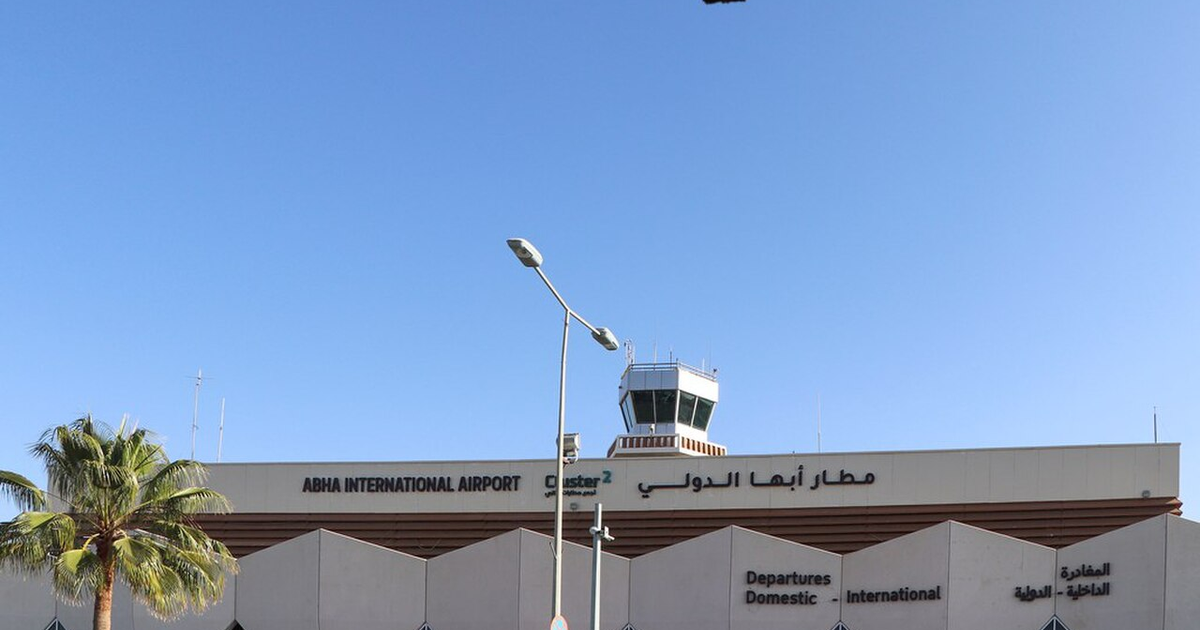
Photograph: Abha International Airport (Clemens Schmillen, 1 February 2026, CC BY-SA 4.0).
How it is being framed
The Guardian's lead is escalation: a significant widening of the Saudi-Houthi conflict under Iran-war pressure.
The targets were on land. Four named Saudi cities plus named Aramco and air-base sites — not only maritime harassment.
Saudi officials report seventy-three wounded, a figure carried by several outlets.
Energy sites stopped work. The Energy Ministry reported fires and temporary stoppages at southern energy sites. That is an official operational line, not yet a measured export loss.
Riyadh promises a response. The Saudi-led coalition said it would take all necessary operational measures to deter the Houthis. The airstrikes reported so far are Houthi accusations: the group accused Saudi Arabia of strikes on Monday, the day before its attacks, and Houthi-run media reported a Saudi attack in Marib on Tuesday. Riyadh did not immediately comment on the Monday accusations, Al Jazeera reported.
Oil prices rose. Brent moved toward $100 the same day. That is markets pricing supply risk. It does not show which sites were hit.
The named cities, the seventy-three wounded and the Energy Ministry's statement on halted operations can be checked.
Reporting versus inference
Reporting is: The Guardian on 8 September 2026 described a Houthi drone and missile wave against four Saudi cities and oil facilities; Saudi authorities reported seventy-three wounded and said they would take necessary measures; Reuters and CNN support the broad attack and casualty claim; Abha, Jizan/Jazan, Najran, and Khamis Mushait appear on the named-city list; Saudi Energy Ministry statements said fires and temporary operational stoppages at southern energy facilities; the Houthis accused Saudi Arabia of airstrikes in al-Jawf, al-Bayda, Marib and Taiz, and Yemen’s deputy defence minister said the government had decided to “retake Sanaa”; published reporting leaves exact per-site damage and barrel impact less certain than the named footprint and casualty figure.
Inference, labeled as such: a multi-city wave plus temporary operational halt is not yet a confirmed measured Saudi production outage, a formal Red Sea closure, or a lasting barrel loss. Houthi claims of “significant damage” and simultaneous accuracy remain Houthi claims. The named cities, the casualty figure and the Energy Ministry’s statement on fires and halted operations are on the record; the Saudi airstrikes are Houthi accusations, and the size and duration of any export shortfall are not confirmed.
What may follow
Reasoning, not a forecast.
If the halt is the key development, the next checkable fact is an Aramco or ministry “operations normal” / quantified outage line for a named site. If the fighting keeps escalating, a second Houthi wave names the same cities or Saudi officials publish a named Yemen death toll beyond the contested prison claim. If the oil premium sticks, Brent holds above the pre-wave level after the next session without a new attack. If Red Sea insurance and routing costs jump without a new hull hit, that is a separate shipping story.
What remains unresolved
Exact damage and outage duration at each named oil facility. Weapon counts and interception rates. Whether any Saudi export loading or refinery throughput changed in measured barrels. How far U.S. and allied air defense is pulled south.
Related
They counted the countries, not the missing barrels.
They named Larak. They did not name a sweep.
They hit three tankers. One was near Kharg.
Corrections
If a source or an inference on this page is wrong, we correct it here. contact@watchfuleye.us.
See how the story is framed, why it matters, and what happens next.