Middle East / Red Sea · Public record
Saudi-led jets back Yemen's offensive to retake the Bab al-Mandeb coast from the Houthis
Update, 16 October 2026 (Aden airport): Two missiles landed on the grounds of Aden International Airport on Friday night while a Yemenia Airways flight to Cairo was preparing to take off. The Aden Security Department blamed the Houthis and said it was the second attack on the airport in less than a week. No casualties were reported, Reuters reported. The Houthis later claimed responsibility, saying in a statement attributed to a military source that they had targeted "the Saudi forces' command headquarters in the Badr camp in Aden province" and a weapons depot, France 24 reported. Information Minister Moammar Al-Eryani said on X that the missiles landed about 100 metres from the midpoint of the runway and about 500 metres from the aircraft, flight IY612, and that passengers and crew were safe, Arab News reported. The same night, the Saudi-led coalition said it intercepted a ballistic missile headed for Yanbu, the Red Sea port Saudi Arabia uses to export oil without passing through Hormuz, and destroyed two cruise missiles over the Red Sea and three drones over Saudi Arabia's Southern and Riyadh regions. It did not say who launched them, Reuters reported. The airport strike came a day after the attack on the presidential palace complex in Aden, putting both the seat of the internationally recognised government and its civilian airport under fire within days.
Update, 15 October: The Houthis attacked the al-Maashiq presidential palace complex in Aden, used by Yemen's internationally recognised government, with missiles and drones on Thursday. Yemen's health minister said five people were killed and 16 wounded, France 24 and Al Jazeera reported; earlier official tolls were lower. The Houthis said they hit a military operations headquarters where the "Saudi enemy" was located. A government minister, speaking anonymously, told AFP that three missiles hit a command centre of the Saudi-led coalition and two hit the coalition forces' headquarters inside the complex, with Yemeni and Saudi casualties, The Guardian reported. It was the first attack on the complex since the war flared again in July, the Guardian said. The government said the prime minister and other officials were safe, Al Jazeera reported. Separately, pro-government forces said they were repelling a Houthi attack on the airport at Dhubab, on the Taiz coast near the Bab al-Mandeb strait, Al Jazeera reported.
WatchfulEye's read. In this round of fighting, the Houthis' long-range strikes have mostly been aimed at airports and oil sites inside Saudi Arabia, while their ground offensive pushed on Taiz. By both the Houthis' account and a government minister's, Thursday's strike hit coalition headquarters in Aden, bringing the coalition's own base inside that campaign. The coalition had not said publicly how it would respond in the reports available on Thursday.
Update, 12 October: Asked on Saturday whether he would support Saudi strikes on the Houthis, President Donald Trump told reporters at the White House: "We may do that; we'll look into it… We're moving very quickly," An-Nahar reported. The US has provided intelligence sharing, target identification and planning for the Saudi-led offensive but has so far held off on carrying out strikes itself, ABC News reported, citing AP and Reuters. On Monday, Houthi political bureau member Mohammed Al Bukhaiti told AFP that if the US became involved "there will be a swift and painful response targeting the US and all its interests in the region," and warned workers at Saudi oil facilities and airports to stay away because those sites "have become legitimate targets," The New Arab reported. The White House has not announced a decision.
Update, 11 October (evening): The IOM raised the death toll from the Djibouti shipwreck to at least 139, including 15 children, and said 84 people remained missing from a boat carrying 305 people that capsized near Guhere, north of Obock, overnight from Thursday to Friday, ABC News reported. The count includes only bodies buried by Djiboutian authorities; others buried by migrants will be added once verified, said Alexandre Coissac, the IOM's chief of mission in Djibouti, who said the boat sank soon after leaving "mainly because it was overcrowded".
Update, 11 October: At least 109 people, including 15 children, died and more than 116 were missing after a boat heading from Djibouti to Yemen capsized off Djibouti's coast near the Bab al-Mandeb strait, the UN migration agency IOM said on Sunday, Al Jazeera reported. More than 80 people survived, all of them Ethiopian. IOM said it had recorded "more than 20,000 incoming movements to Djibouti from Ethiopia" since 10 September, and Al Jazeera said migrants were still making the crossing despite the resumption of fighting in Yemen last month, while several thousand people have fled the other way, from Yemen to Djibouti. Reports differ on where and when the boat sank: Al Jazeera, citing survivors quoted by IOM, placed it near Guhere between Thursday night and Friday dawn, while DW said it capsized near Obock on Saturday night.
Update, 11 October 2026: The siege of Taiz is now reaching its hospitals. Yemen's government health ministry said on Saturday 10 October that medicines, intravenous fluids, medical supplies and fuel at health facilities in the city were "nearing depletion", and that emergency care, surgery, intensive care, dialysis and newborn incubators could stop if supplies do not get through, Yemen Monitor reported. The ministry blamed the Houthis for blocking the roads and asked the UN and aid groups to deliver medicines, oxygen and fuel. Nabil Jamil, who runs the government's planning office for Taiz province, told Al Jazeera that black-market petrol had tripled, from 30,000 to 90,000 Yemeni riyals for 20 litres, and said: "We are still waiting for a response or intervention on the ground." No Houthi response to the ministry's statement had been reported by Sunday morning, and no UN agency had published its own figures for supplies in the city.
Update, 10 October 2026 (night): Saudi Arabia's General Authority of Civil Aviation said Saturday's attack on Riyadh's King Khalid International Airport killed 12 people, including a US citizen, and injured 309, some of them critically. The Saudi-led coalition blamed the Houthis and promised a response, the Associated Press reported. After the attack, the head of the Houthi media office said on X that the group had "shut down Riyadh international airport," Reuters reported (Reuters, via The Straits Times). Asked whether the United States would join Saudi strikes on the Houthis, President Donald Trump said: "We may. We're going to look at it. We just found out about the recent attack. So we'll make a decision. We move very quickly," the Associated Press reported (AP, via Fortune). Full report: Riyadh airport attack kills 12; Houthis say airport shut down. On the ground, the Saudi ambassador to Yemen, Mohammed Al Jaber, said on Friday that Bab al-Mandab "has been cleared" of the Houthis; a Yemeni government military spokesperson, Waddah al-Dabish, said only half the area had been recaptured so far, and a Houthi spokesperson said the government forces had been targeted with ballistic missiles and artillery, The Guardian reported. The Guardian said accounts vary as to whether the push has been repelled. None of these claims has been independently verified.
Update, 9 October 2026 (Riyadh airport): Three Saudi citizens, including a Saudia pilot, were killed in two attacks on Riyadh's King Khalid International Airport on Thursday, Saudi Arabia's General Authority of Civil Aviation said on Friday. The authority said the first attack targeted airport facilities and the second a Saudia aircraft, and that other people were injured, with injuries ranging from minor to severe; it did not give a number. Saudia named the pilot as Captain Hamoud Ali Alkalthami and said one of its aircraft was damaged while parked, with no passengers on board. The Houthis claimed the attacks: a Houthi military spokesman said the group fired a ballistic missile at the airport, Al Jazeera reported, while Reuters reported that the group said it had used two cruise missiles. Hundreds of flights out of Saudi Arabia were cancelled on Thursday, according to aviation data firm Cirium, cited by CNBC; the aviation authority said on Friday that operations and air traffic had returned to normal. The Saudi-led coalition's spokesman, Turki al-Maliki, said its forces had destroyed three Houthi launch platforms and warned that attacks on civilians would be met with a firm response. Pakistan's foreign ministry said on Friday that Pakistan now has a "substantial number of forces as well as resources" in Riyadh, but that they would act in defence of Saudi territory and would not cross into Yemen to attack the Houthis, Al Jazeera reported. These are the first Saudi citizens reported killed in this week's airport attacks; the three people killed at Abha and King Khalid earlier in the week were foreign residents.
Update, 9 October 2026: The Giants Brigades and National Shield forces said on Friday that they had taken full control of the Bab al-Mandeb strait and Mayun (Perim) Island after an operation that began at dawn with Saudi-led coalition air support, the Yemeni news agency Khabar reported, citing a military source. The source said the forces took the al-Ardi military camp, coast guard observation posts and the mountain ridge overlooking the strait, that Houthi fighters had been driven off Mayun entirely, and that control was completed after a deadline given to Houthi fighters besieged in the area for days had expired. Saudi Arabia's ambassador to Yemen, Mohammed Al Jaber, wrote on X: "Bab al-Mandeb has been cleared of the remnants of the Houthi terrorist militia" (Anadolu Agency's translation). The Houthis denied it. Replying to the ambassador on X, Houthi spokesperson Ameen Hayyan wrote that "Bab al-Mandeb is pure from the filth of the filthy Saudi entity," Al-Monitor reported, and the group's military spokesman, Yahya Saree, said on Telegram that its forces had, "for the second time in hours," repelled "reinforcements belonging to the Saudi enemy" advancing "from the direction of Lahej toward Bab al-Mandab," the Hezbollah-run Al-Manar reported. Al Arabiya, citing military sources, reported that clashes with Houthi fighters were continuing in the nearby Dhubab area and that the Houthis had stepped up missile and drone attacks toward the strait overnight. In a speech on Thursday, before the government's announcement, Houthi leader Abdulmalik al-Houthi said the group's position around Bab al-Mandeb was strong, accused Saudi Arabia of turning the strait into a zone of confrontation that endangers international shipping, and said media coverage of the offensive had been exaggerated, the group's Ansarollah website reported. Neither side's account of the ground situation has been independently verified.
Update, 8 October 2026: Three people were killed and 36 injured in attacks on Abha International Airport and Riyadh's King Khalid International Airport on 6 and 7 October, Saudi Arabia's General Authority of Civil Aviation said on Wednesday. At Abha, two women, residents of Moroccan and Algerian nationality, were killed and 28 people were injured; at King Khalid, a Sudanese resident was killed and eight people were injured. The authority did not say who carried out the attacks. Houthi military spokesman Yahya Saree said the group fired ballistic missiles and drones at both airports in response to Saudi air strikes. The Saudi-led coalition said the attacks "will not go unpunished", that it had destroyed the launch platform used against Riyadh, and that it struck 82 Houthi military targets, including mountain-based ballistic missile sites, in Saada, Hodeidah, al-Jawf and Marib governorates, AFP and the BBC reported. The UN Secretary-General's spokesman, Stéphane Dujarric, repeated the UN's condemnation of the Houthis' cross-border attacks on Saudi Arabia on Wednesday, including those reported near Riyadh and its airport.
Update, 7 October 2026 (afternoon): More than 200,000 people have now been forced from their homes in Yemen since the fighting started, the UN migration agency IOM said on Wednesday: 201,217 people, or 33,776 households, up from 76,000 in mid-September and more than 145,000 at the end of the month. Nearly all of them, 197,755, have fled since 1 September. Ta'iz governorate is the hardest hit, with 114,708 displaced people, 57 per cent of the total, followed by Lahj with 42,264 and Aden with 20,814. More than 3,700 people have fled by sea to Djibouti, IOM said. By the end of September, a joint registration by the UN refugee agency UNHCR and Djibouti's refugee office had recorded 3,793 refugees from Yemen in the Obock region. The inter-agency refugee plan for Djibouti, published on 2 October, is built on 10,000 arrivals over six months and asks for $14.8 million. IOM said Yemen's humanitarian response plan is only 20 per cent funded and relief stocks are running low.
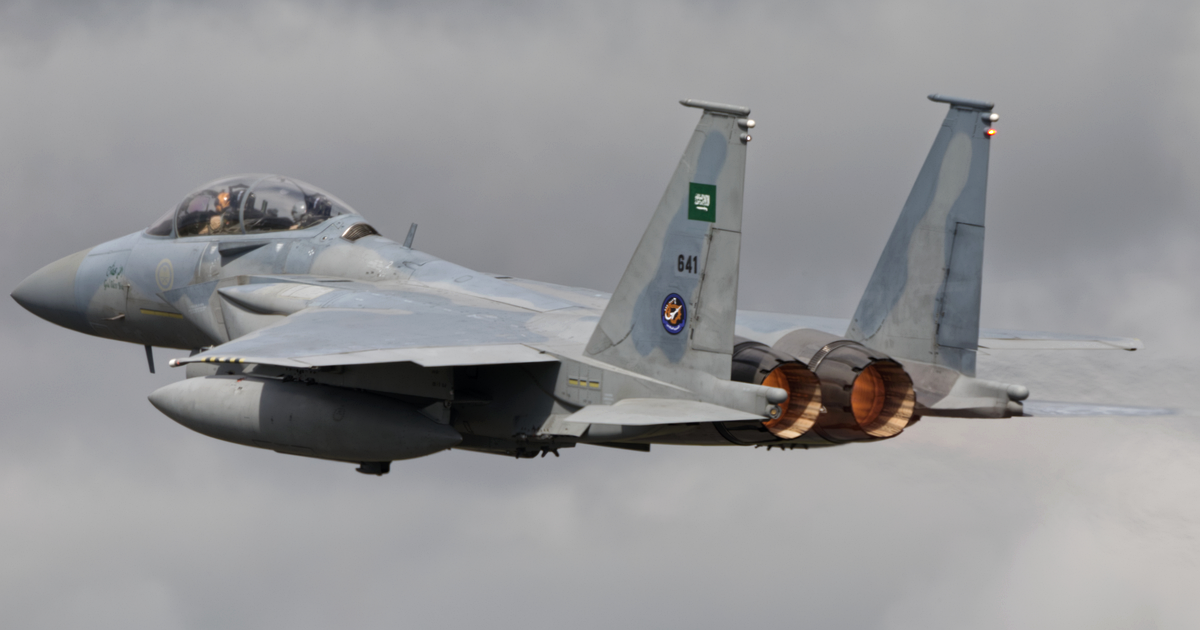
Yemen's internationally recognised government said on Monday 5 October 2026 that its forces had retaken Dhubab district on the Bab al-Mandeb strait, with air support from the Saudi-led coalition. The coalition's spokesman, Maj Gen Turki al-Maliki, said 100 fighter jets took part in the launch of the operation and that the coalition was providing air protection for the strait, according to Yemen's state news agency Saba and The Guardian. The Houthis said the government's claims were baseless, Reuters reported. Reuters and Al Jazeera said they could not independently verify the government's reported gains.
Rashad al-Alimi, chairman of the Presidential Leadership Council, announced the offensive on Sunday 4 October. On Monday he launched it under the name Operation Dawn of Yemen, Al Arabiya reported. Its stated aim is to retake all territory held by the Houthis, including the capital, Sanaa. The first reported ground gains are on the Red Sea coast around Bab al-Mandeb. The Houthis seized that coast between 10 and 12 September, according to the Joint Maritime Information Center (JMIC), which publishes shipping advisories through UKMTO.
What is reported
- The announcement. In a televised address on Sunday, al-Alimi said: "Today, I announce the start of military operations to retake the remaining territory of the republic and extend the authority of the state and its institutions across the entire national territory."
- The air campaign. AFP reported that al-Maliki said 100 jets flew at daybreak and were providing "round-the-clock air support for the Yemeni armed forces on the ground". Riyadh said it had attacked hundreds of targets to provide air cover for the strait and for Yemeni ground forces, Reuters reported. The Guardian reported air strikes in Sanaa and in Saada, the Houthis' northern stronghold.
- Dhubab. A military source told Saba that the National Shield Forces (also translated as Nation's Shield or Homeland Shield) and the Giants Brigades, backed by popular resistance forces, took Dhubab district and positions around the strait and cut roads and supply lines leading to it. Reuters reported that government forces had taken key positions, including an airstrip in Dhubab district at the mouth of the strait. Yemeni officials, speaking anonymously, said government forces had also captured the towns of Bab and Hadeid, and witnesses said they saw government tanks entering the towns, The Guardian reported.
- Mocha. Government forces reached the outskirts of Mocha late on Monday, four government sources told Reuters. Yemen's Defence Ministry said the city had fallen, Reuters reported. A military source quoted by Saba said government forces had taken control of the city, The National reported. The Houthis took Mocha in September.
- Sanaa. Government forces announced a "strategic offensive" on Sanaa, which the Houthis have held since 2014, according to Al Jazeera and AFP. The Houthi-run Al Masirah TV confirmed attacks on Sanaa, The National reported. The Houthi-run health ministry said two people were killed and seven wounded in strikes on the Sanhan and Sa'wan districts of Sanaa province, Reuters reported.
- The United States. Axios, citing US officials, reported on 2 October that the US had rebuffed Saudi requests to join the operation with air strikes, for the second time in recent weeks. One official told Axios that the US "is not going to take kinetic action for now". US officials told Axios the US is giving Saudi Arabia intelligence and targeting support. On Monday, Secretary of State Marco Rubio said the Saudis had come under attack and "they have a right to defend themselves". Asked whether the coalition had coordinated the action with the United States, he said Saudi Arabia and the US had a defense agreement but gave no more details, The Guardian reported.
- The defence pact. Saudi Arabia, Pakistan and Turkey agreed at an emergency meeting in Riyadh on Monday "to move immediately to the practical implementation of the collective defense commitments" of their Makkah Alliance for Defense, and to provide "the agreed military forces and capabilities and ensure their rapid deployment in the Kingdom", according to the joint statement published by Turkey's foreign ministry. The statement condemned "the attempted targeting of Makkah and Madinah" and attacks on Saudi cities. It did not name the Houthis, and it did not say which forces would go, how many, or where. Saudi Defence Minister Khalid bin Salman said the deployment was a response "to the attacks and all those responsible for them", Al Jazeera reported. The pact was signed on 7 August and treats an attack on one member as an attack on all. Al Jazeera reported that no action had been taken under it until now.
What is claimed but not verified
- Control of the strait. Government military spokesman Majed al-Nuzaili said the Giants Brigades and the National Shield Forces had taken control of Bab al-Mandeb, according to Arab News and The National. Information Minister Moammar al-Eryani told Reuters that government forces had secured effective control of the strait. Another government source told Reuters that fighting continued at a military base near the strait.
- Mayun (Perim) island. Al Arabiya, citing sources familiar with the developments, reported that Houthi fighters were surrounded on Mayun (Perim) island in the strait, according to Ahram Online and Arab News. We found no confirmed report that government forces hold the island.
- Houthi fighters cut off. Al-Nuzaili said hundreds of Houthi fighters were surrounded in Dhubab and called on to surrender, and that some fled by boat, The National reported. The Guardian reported that footage appeared to back up claims of Houthis retreating along the shore.
- Target and strike counts. The coalition said it destroyed 324 "high-value" targets, according to Saba. Yemen's military said it carried out more than 1,000 strikes, AFP reported. In a post on X cited by Arab News, al-Nuzaili gave a figure of 1,122 targeting operations. No independent damage count has been published.
- The Houthi account. The Houthis called the government's claims "completely untrue", Reuters reported.
Pressure from the other side
- Taiz. On Sunday the Houthis effectively encircled the city of Taiz after cutting the main supply route linking it to Aden, the government's interim capital, AFP reported. Five government military sources told Reuters that the Houthis had gained sections of a mountain road, leaving government forces in Taiz besieged. One government source denied that the road had been cut. Five government military sources told Reuters the Houthis had also advanced into the town of al-Turbah, on the road; another government source denied this. Taiz is Yemen's third-largest city, with a population of over half a million, Reuters reported. Sources from both sides told AFP that fighting in and around Taiz province killed more than 70 people in a day: government sources said 34 government troops were killed, and Houthi military sources said 39 of their fighters were killed, The Guardian reported.
- Saudi airspace. The Houthis' agency that liaises with airlines warned that Saudi airspace was not safe for civilian flights, as it "will be the theatre of operations of our armed forces", AFP reported. It made exceptions for the skies over Mecca and Medina.
- Saudi oil. The Houthis said they hit Aramco sites in Riyadh and the Khurais area on Sunday, the BBC reported. Saudi Arabia had not commented on that claim, the BBC said. A Saudi energy-sector source told AFP that an attack on Sunday had again halted pumping on the East-West pipeline to the Red Sea.
- Shipping. On 4 October a tanker reported multiple explosions close to it 60 nautical miles south of Al Mukha (Mocha), the UK Maritime Trade Operations centre (UKMTO) said. The crew were reported safe. The Joint Maritime Information Center's advisory note of the same day, issued before Monday's advance, rated the threat in the southern Red Sea and Bab al-Mandeb as "SUBSTANTIAL". It listed Mocha, Dhubab and Mayun/Perim as under Houthi control.
- Civilians. The UN migration agency said on Monday that 184,000 people had been displaced since the war resumed, Reuters reported.
What we infer (not a finding)
- This is a declared bid to reverse September, with Saudi air power in the open. A truce agreed in 2022 held until this summer and collapsed in July, according to Reuters and Al Jazeera. Since then, the Houthis have fired missiles and drones at Saudi Arabia and the Saudis have hit back with air strikes, Axios reported. In the reporting we reviewed, we found no earlier case since the truce of the government declaring an offensive to retake all Houthi-held territory, with coalition jets publicly flying in support. Its first target is the coast that gave the Houthis a hold on the strait.
- Holding the coast is not the same as safe passage. Reuters noted that even if the government retakes the coast near the strait, the Houthis could still attack ships with drones from positions further up the coast and inland. We expect ship operators and insurers to keep treating the strait as high-risk until there is a stretch without incidents, not just a change in who holds Dhubab. We found no new insurance pricing for this week.
- Saudi cities and oil sites are the likely Houthi reply. We reported on Houthi strikes on four Saudi cities on 8 September, and the Houthis have claimed strikes on Aramco sites this weekend. Al-Maliki has accused them of attacks on Riyadh, Abha, Khamis Mushait, Jazan, Najran, Taif and Yanbu, Ahram Online reported. A wider air campaign raises the chance of more of these strikes. The airspace warning extends the threat, at least in words, to civilian air travel.
- Pakistan and Turkey are now committed on paper. This is the first time the three countries have moved to put the pact into practice, by Al Jazeera's account. Al Jazeera noted that analysts saw Pakistan and Turkey as keen to keep acting as mediators of the US-Iran conflict. Sending forces to defend Saudi Arabia makes that role harder to hold, though the statement leaves open whether those forces would ever fight in Yemen.
- Taiz is the counterweight. The government is advancing on the coast while the Houthis close in on Taiz. If Taiz stays cut off, the government may have to move forces inland. That would test whether coastal gains can be held.
What we don't know
- Who holds Dhubab, Mocha and Mayun island now. The claims come from the government and the coalition. The Houthis deny them.
- The human cost since Sunday. Beyond each side's figures for Taiz, we found no independent count of deaths among civilians or fighters.
- What the Makkah Alliance deployment means in practice. The joint statement gives no numbers, units, locations or mission.
- Which aircraft and which air forces took part. We have not seen the coalition name aircraft types or the countries flying.
- Whether the Taiz–Aden road is fully cut. Government sources disagree.
- Whether the United States will join. US officials told Axios that could change if the operation runs into problems.
- Whether shipping through the strait changes. We found no new traffic data for this week.
What to watch
- Independent confirmation of who holds Dhubab, Mocha and Mayun: journalists on the ground, verified footage, or the next JMIC advisory note.
- UKMTO incident reports near Bab al-Mandeb and the southern Red Sea.
- Houthi missile or drone strikes on Saudi cities, oil sites or airports, and any action on the airspace warning.
- The Taiz–Aden road, and whether the government diverts forces to Taiz.
- The Makkah Alliance deployment: which Pakistani and Turkish forces arrive in Saudi Arabia, where they are based, and whether their role stays inside the kingdom.
Context
Our earlier reports on this coast and on the Houthi strikes on Saudi Arabia: They took Mocha. The strait is twenty kilometers., They took Mayun. The mouth of the strait., They named four Saudi cities. Seventy-three were wounded. and France will send troops to Yanbu. The oil route needed cover.
Sources
- Saba (Yemen's state news agency), "Yemeni Armed Forces Liberate Dhubab District After Clashes with Houthi Militias", 5 October 2026: sabanew.net.
- Saba, "Yemen Coalition Says 324 High-Value Targets Destroyed in Yemen Dawn Operation", 5 October 2026: sabanew.net.
- UK Maritime Trade Operations, UKMTO Warning 151-26 (suspicious activity), 4 October 2026: ukmto.org.
- Joint Maritime Information Center, Advisory Note, Update 102, 4 October 2026: ukmto.org.
- Reuters, "Yemeni government forces advance to Bab el-Mandeb Strait", 5 October 2026: al-monitor.com (Reuters copy).
- Reuters, "Yemeni government forces drive Houthis from Bab el-Mandeb Strait", 5 October 2026: streetinsider.com (Reuters copy).
- AFP, "Yemen, Saudi Arabia strike Houthis as counteroffensive gets underway", 5 October 2026: al-monitor.com (AFP copy).
- The Guardian, "Air campaign against Houthis under way in Yemen, says Saudi-led coalition", 5 October 2026: theguardian.com.
- Al Jazeera, "Yemeni forces reclaim Dhubab, key positions near Bab al-Mandeb from Houthis", 5 October 2026: aljazeera.com.
- Al Jazeera, "Yemeni gov't forces aim for Sanaa, but Houthi defeat will be a challenge", 5 October 2026: aljazeera.com.
- The National, "Yemeni forces claim control of Bab Al Mandeb strait and Mokha in major offensive against Houthis", 5 October 2026: thenationalnews.com.
- Arab News, "Yemeni forces gain control of Bab Al-Mandab, Mokha in operation targeting Houthis", 5 October 2026: arabnews.com.
- Ahram Online, "Yemeni forces seize Bab al-Mandab Strait as coalition deploys 100 jets, reports 324 Houthi targets destroyed", 5 October 2026: english.ahram.org.eg.
- BBC News, "Yemen's government announces all-out war to reclaim land from Houthis", 4 October 2026: bbc.co.uk.
- Al Arabiya, "Operation 'Dawn of Yemen': Govt forces control Bab al-Mandeb, Sanaa offensive begins", 5 October 2026: english.alarabiya.net.
- Republic of Türkiye Ministry of Foreign Affairs, "Joint Statement on the Emergency Meeting of the Strategic Political and Defense Committee of the Makkah Alliance for Defense, 5 October 2026": mfa.gov.tr.
- Al Jazeera, "Turkiye, Pakistan agree Saudi Arabia military deployment under Mecca pact", 5 October 2026: aljazeera.com.
- The Guardian, "Saudi-backed forces recapture key areas around strait from Houthis in Yemen", 5 October 2026: theguardian.com.
- Axios, "Saudis plan major offensive against the Houthis, but U.S. won't join for now", 2 October 2026: axios.com.
- BBC News, "Three people killed in attacks on Saudi Arabia airports, officials say", 8 October 2026: bbc.co.uk.
- Dawn, "3 killed in attacks on Saudi Arabia's King Khalid, Abha airports: civil aviation body", 7 October 2026: dawn.com.
- The Peninsula, "Three killed, 36 injured in attacks on two Saudi airports: GACA", 7 October 2026: thepeninsulaqatar.com.
- France 24 (AFP), report on the coalition response to the airport attacks, 8 October 2026: france24.com.
- Demócrata, "The UN condemns the new Houthi attacks in Saudi Arabia", 7 October 2026: democrata.es.
- Khabar news agency, "ألوية العمالقة ودرع الوطن تعلنان تحرير باب المندب وجزيرة ميون بالكامل" (Giants Brigades and National Shield announce full liberation of Bab al-Mandab and Mayun Island), 9 October 2026: khabaragency.net.
- Anadolu Agency, "Bab el-Mandeb 'cleared of Houthi remnants,' Saudi envoy to Yemen says", 9 October 2026: aa.com.tr.
- Al Arabiya, "Yemeni forces complete control over Bab al-Mandeb, Perim Island", 9 October 2026: english.alarabiya.net.
- Ansarollah (Houthi movement website), "Leader Reveals Details of Bab al-Mandab Battles", 9 October 2026: ansarollah.com.ye.
- Al-Monitor, "Saudi envoy says allied Yemeni forces capture Bab el Mandeb strait from Houthis: What to know", 9 October 2026 (Rosaleen Carroll, Adam Lucente): al-monitor.com.
- Al-Manar, "General Saree Announces Repulsion of pro-Saudi Militias' Attempt to Advance from Lahej toward Bab al-Mandab", 9 October 2026: english.almanar.com.lb.
- Reuters via Dawn, "Pilot among 3 Saudi nationals killed in attacks on Riyadh airport, authorities say", 9 October 2026: dawn.com.
- Al Jazeera, "Saudi Arabia reopens Riyadh airport after Houthi attack kills three", 9 October 2026: aljazeera.com.
- Arab News, "Saudia pilot killed in attack on Riyadh airport", 9 October 2026: arabnews.com.
- CNBC, Saudi Arabia airport attacks and flight cancellations, 9 October 2026: cnbc.com.
The coast may change hands this week. Whether ships and Saudi oil sites are any safer is a separate question.