Africa · Public record
Ebola reaches Kenya: what one imported case changes about Congo's outbreak
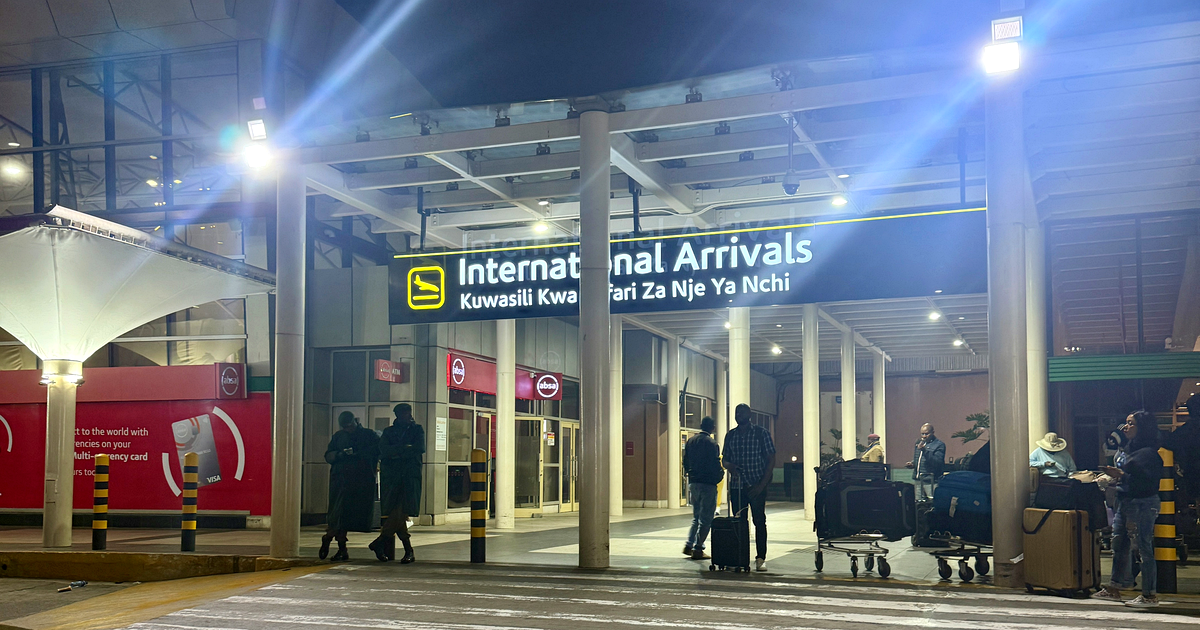
Update, 18 October 2026: Kenya has confirmed an eighth Ebola case, Director General for Health Patrick Amoth said in an interview with Citizen TV on Sunday, The Standard reported. "Today we tested 38 persons; one turned positive," Amoth said, describing the patient as a 49-year-old man, "not a direct healthcare worker", who developed fever, headache and muscle pain. Amoth said the man was a patient attendant who cleaned utensils and linens and was probably exposed to Kenya's first case, and a health ministry source said he developed symptoms on Saturday, was separated from other people in quarantine and tested positive on Sunday, Reuters reported. If that account holds, the eighth case, like the four confirmed on 17 October, was found among people already in quarantine rather than in the wider community.
Update, 17 October 2026: Kenya's health ministry confirmed four more Ebola cases on Saturday, bringing the national total to seven, including the first patient, who died. Three of the new cases are health workers, two men and a woman aged 29, 35 and 32, who treated the first patient in hospital on 3 and 4 October and had been in quarantine since 9 October; the fourth is a close male relative who had been in quarantine since 6 October, KBC reported, quoting the ministry. All four developed fever while already in quarantine, were isolated, and tested positive for Bundibugyo virus disease at both the National Virology Reference Laboratory and the Kenya Medical Research Institute, the ministry said. It said 128 of the 130 contacts identified had been traced and quarantined, that efforts to trace the remaining two were ongoing, and that there was no evidence of community transmission. Director General for Health Patrick Amoth cautioned that new cases among quarantined contacts are possible until their 21-day monitoring periods end. The infections in health workers are the first in Kenya outside the first patient's family, but because every new case so far was found inside quarantine, they do not on their own show spread beyond his known contacts. The two contacts not yet found, and any case outside quarantine, are the things to watch.
Update, 16 October 2026: Kenya's health ministry confirmed a third Ebola case on Friday, a 65-year-old woman who is a close relative of the first two patients and had been in quarantine since 6 October. She developed a fever, sore throat and malaise while in quarantine, and samples tested positive for Bundibugyo virus disease at both the National Virology Reference Laboratory and the Kenya Medical Research Institute, The Star reported. "Having been in quarantine, she was diagnosed early and is currently receiving supportive care," Director General for Health Patrick Amoth said in a statement. The ministry said 127 of the 130 contacts identified so far had been traced and quarantined, that efforts to find the other three were continuing, that the second patient was stable, and that there was no evidence of community transmission. Because she was already in quarantine when she fell ill, the case does not on its own show spread beyond known contacts. The three contacts not yet found are the gap to watch.
Update, 15 October 2026: Kenya's health ministry confirmed a second Ebola case on Wednesday 14 October, Reuters, the BBC, Al Jazeera and France 24 reported. The patient, a 39-year-old man, is a close family member of the first case and was already in quarantine when he fell ill on Tuesday, the ministry said. The first patient, a Kenyan who had lived in Congo, died in a Nairobi hospital on 5 October. "Both cases are linked, and there is no evidence of spread in the wider community," the ministry said, adding that the second patient was being treated in isolation. As of Tuesday, the ministry had listed 128 contacts of the first case and traced 113 of them, CNA reported; on 7 October it had given a figure of 57 contacts. This supersedes the 7 October report below that there had been no other infections.
WatchfulEye's read: A case found among people already in quarantine suggests contact tracing is reaching at least some of the people it should. The open question is the contacts not yet traced, 15 by the ministry's count as reported by CNA. Things to watch for are a case outside the known contact list and a WHO outbreak notice naming Kenya.
Update, 7 October 2026: Kenya's Ministry of Health said on Wednesday that 57 contacts linked to the case had been identified, and that 10 had been accounted for and placed under quarantine at the National Police Service Hospital in Nairobi while efforts to trace the rest continued. So far there have been no other infections, UN News reported after interviewing WHO's representative in Kenya, Neema Rusibamayila Kimambo. [Update, 15 October 2026: Kenya's health ministry has since confirmed a second case, a close family member of the first patient. See the 15 October update above.] The ministry said screening had been intensified at "Gate 16" for passengers arriving from Congo, Uganda and eight other countries, and Health Cabinet Secretary Aden Duale said a dedicated gate for screening such passengers had been set up at Jomo Kenyatta International Airport, Reuters reported. Uganda's health ministry said on Tuesday that the patient had a normal temperature when he was screened at Entebbe airport, and a senior Ugandan health official told Reuters that officials were trying to retrieve the digital form he would have filled in there. Jean Kaseya of Africa CDC told the BBC that the patient had driven from Buta to Kisangani, flown to Beni and driven on to Uganda before flying to Nairobi, and that border points have no rapid Ebola tests, only temperature checks. The patient was buried on Tuesday, the BBC reported. As of Wednesday afternoon, the CDC's Ebola travel notices did not list Kenya. Britain's Foreign Office added the case to its Kenya travel advice on Wednesday and told travellers to "follow the advice of local authorities". WHO had not published new Disease Outbreak News on the outbreak since 25 September.
Kenya's Ministry of Health said on Tuesday 6 October 2026 that it had confirmed the country's first imported case of Ebola, caused by the Bundibugyo virus. The patient, a Kenyan citizen who had lived in the Democratic Republic of the Congo for seven years, died late on Monday after being isolated at Nairobi Hospital, Health Cabinet Secretary Aden Duale said. Kenya had never before reported an Ebola case, AFP reported.
Kenya does not share a border with Congo. The patient travelled by road from Congo to Kampala, Uganda, and then flew to Nairobi, the ministry said. Before Kenya reported its case, there had been no active cases outside Congo since Uganda declared its outbreak over in late August, the Associated Press reported. A health worker based in Congo who tested positive on 29 September was evacuated to the Netherlands for treatment, ECDC said.
What Kenya's health ministry said
- The patient. He fell ill about a month ago and was treated in several hospitals while still in Congo, the ministry said in a statement read by Duale.
- The journey. He boarded Jambojet flight 8523 in Kampala and arrived in Nairobi on Saturday 3 October at 1.10 pm. "He underwent the normal public health screening at the Port health and immigration desk," the ministry said. A relative and a friend drove him from the airport to Nairobi Hospital, where he was isolated in the emergency department and later moved to an isolation unit. The ministry's director general, Patrick Amoth, said the patient may have passed through airport screening because medication had masked his symptoms, Reuters reported.
- The test. He had fever, chills, intense fatigue and weakness, muscle pain, painful swallowing, sore throat and bleeding under the skin at injection sites, the ministry said. Doctors suspected a viral haemorrhagic fever. A sample tested positive for Ebola Bundibugyo virus disease at both the National Virology Reference Laboratory and the Kenya Medical Research Institute (KEMRI) laboratory.
- The death. The patient was given supportive treatment but "regrettably passed on last night," the ministry said. Duale put the time at about 11.30 pm on Monday, according to AFP and The Star; the BBC reported 23:30 local time (20:30 GMT). A burial under Ebola safe and dignified burial rules was planned for Tuesday.
- The contacts. "So far we have listed 28 contacts of the deceased including family members and health workers who attended to the deceased. We are also pursuing a further 23 passengers and 4 crew members who were on the same flight with the deceased," the ministry said. Arrangements to quarantine those at risk were under way. The contacts will remain in isolation for 21 days and will be released after testing negative, Amoth said, according to the AP.
- The surveillance record. As of 6 October, Kenya had screened 652,584 travellers and tested 267 samples in five laboratories, the ministry said. "Only one test has turned positive." The ministry said it had kept a high level of alert since the outbreak began in May, had trained 4,971 health workers and had notified the World Health Organization under the International Health Regulations.
Where Congo's outbreak stands
- Size. As of 23 September, Congo had reported 7,890 confirmed cases, including 3,799 deaths, in 63 health zones across seven provinces, WHO said in its latest Disease Outbreak News on 25 September. WHO described it as "the largest Ebola disease outbreak ever recorded in the Democratic Republic of the Congo irrespective of Ebola virus species." Congo's report of 3 October, covering data to 2 October, put the totals at 8,442 confirmed cases and 4,080 deaths, the European Centre for Disease Prevention and Control (ECDC) said.
- Where it is growing. Ituri province remains the outbreak's centre, WHO said. North Kivu, which borders Uganda, accounted for 33 of the 66 new cases in Congo's 3 October report, according to ECDC. The medical charity Médecins Sans Frontières (MSF) said on Monday that the virus was spreading "like a megafire" with new hotspots in North Kivu, the BBC reported.
- The tracing gap. As of 23 September, 32,342 contacts required follow-up and 83.4% were seen in the previous 24 hours, WHO said. Jean Kaseya, director-general of the Africa Centres for Disease Control and Prevention (Africa CDC), said the more than 7,000 confirmed cases should translate to about 420,000 contacts. "But currently, we have just 30,000 people in the contact list," he said, Al Jazeera reported on 25 September.
- No approved vaccine. There are no approved vaccines or specific treatments for Bundibugyo virus disease, according to WHO and the US Centers for Disease Control and Prevention (CDC). Vaccine and treatment trials are under way in Ituri, the AP reported.
- A hard place to work. WHO said conflict, insecurity, displacement and limited access to basic services continue to hamper surveillance, contact tracing and care. A camp housing a transit centre for Ebola patients on the outskirts of Bunia, the capital of Ituri, was burned by soldiers looking for weapons, and 19,000 people fled, the United Nations reported, according to Al Jazeera. A local official of Congo's governing party was beaten to death in Butembo, North Kivu, after taking part in a radio programme to raise awareness about the epidemic, Al Jazeera reported.
- Earlier cases outside Congo. Uganda reported 20 cases and two deaths and was declared free of the disease in August, Reuters reported. WHO declared the end of Uganda's outbreak on 25 August after 42 days without a new confirmed case, according to ECDC. France reported no onward spread after an imported case detected on 24 June, WHO said. Patients evacuated from Congo have also been treated in Germany (May and July) and the Netherlands (October), ECDC said.
How the risk was rated, and what others advise
- WHO's tiers. WHO's Director-General characterised the outbreak as a public health emergency of international concern on 17 May 2026 and, after an emergency committee met on 18 August, said it remained one, WHO said. On 14 August, WHO assessed the risk as very high in Congo, high for countries sharing land borders with Congo, and low for the rest of the African region and globally, WHO said in its 25 September update.
- Kenya's own map. A Kenyan risk assessment rated as very high risk the counties that border Uganda and South Sudan or serve as international travel hubs, including Nairobi, according to a WHO situation report on Kenya for early August. The same report said Kenya's overall Ebola preparedness score rose from an estimated 66% in May 2026 to 82% after a July reassessment, while five parts of the plan, including contact tracing and rapid response teams, were unchanged.
- Africa CDC's advice on borders. In June 2026, the African Union health agency's expert advisers said travel bans and border closures "offer limited public health benefit and may be counterproductive to outbreak control". They urged member states to keep borders open while strengthening screening at points of entry.
- The United States. The CDC advises Americans to avoid all travel to Ituri and North Kivu, to avoid nonessential travel to Haut-Uélé and Tshopo, and to take enhanced precautions in Uganda and the rest of Congo. US entry is temporarily restricted for travellers who have been in Congo within 21 days, and US citizens and nationals who have been in Uganda or South Sudan, but not Congo, within 21 days must enter through designated airports for enhanced screening, the CDC says. As of Tuesday morning, the CDC's Ebola travel notices did not list Kenya. The United States announced in late September that it was releasing a further $267 million to fight Ebola, Al Jazeera reported.
Where the accounts differ
- How many countries. The AP said Kenya is the fourth country to record a case in this outbreak, counting Uganda and France. Reuters said it is the third country to record a case linked to the epidemic in eastern Congo. WHO has recorded one imported case in France.
- Who was on the flight. The ministry said 23 passengers and four crew members were being traced. The AP reported only the 23 passengers.
- How big the outbreak is. Reuters described it as the second largest on record and the BBC as the second most deadly known outbreak. WHO describes it as the largest ever recorded in Congo.
- The death toll. Figures differ by date and source. AFP, citing WHO, reported 4,082 deaths out of 8,463 cases as of 2 October, and the BBC cited the same WHO figures. Congo's report of 3 October, as summarised by ECDC, gave 4,080 deaths and 8,442 confirmed cases. Al Jazeera, citing Congolese government data released on 2 October, reported 4,018 deaths and 8,300 confirmed cases.
What we infer (analysis, not a finding)
- Analysis: the 28 contacts are the test. This is our reading, not a reported finding. A confirmed case among the 28 listed contacts, or among the 23 passengers and four crew from the flight, within 21 days of their last exposure would mean the virus has spread inside Kenya. No further cases would make this an importation that was caught and contained. As of Tuesday, the ministry said only one test had come back positive, the patient's own.
- The route matters more than the border. Kenya sat outside WHO's higher-risk tier because it does not border Congo. This case came overland through Uganda and then by a regional flight, and it passed airport screening. That points to more attention on air travellers and on arrivals from Uganda, not only from Congo. No new Kenyan screening or travel measure had been reported by Tuesday morning.
- Advisories may follow, closures are less likely. Other governments may review their travel advice for Kenya. Africa CDC's published advice argues against border closures, and Kenya's own response so far has been isolation, contact tracing and quarantine.
- More exported cases are possible. Growth in North Kivu, which borders Uganda, and the displacement around Bunia raise the chance of further cases crossing borders. One imported case does not show that this is happening now.
- The cost question widens. If neighbouring countries have to run their own contact tracing and isolation, funding and staffing for the response become a regional question, not only Congo's.
What to watch
- 24 October 2026, for the flight. The 21-day window runs from each contact's last exposure. The 23 passengers and four crew were exposed on the 3 October flight from Kampala, so their window ends on 24 October if they had no later contact with him. This end date is our own arithmetic.
- No end date yet, for the 28 listed contacts. These are family members and health workers. No last-exposure date has been reported for them, so their 21-day windows cannot be dated. For a contact last exposed at his death late on 5 October, the window would run to 26 October; an earlier last exposure would end it sooner, a later one, such as at the burial, later. This date is our own arithmetic.
- 16 to 17 November 2026. WHO used a 42-day count to declare Uganda's outbreak over. Counted from the death on 5 October, 42 days ends on 16 November if no further case is found; counted from the planned burial on 6 October, it ends on 17 November. This date is our own arithmetic. Neither WHO nor Kenya has announced a countdown.
- Kenya's updates on the 27 people from the flight. Whether all are found and how many go into quarantine.
- WHO's next update on Congo. WHO publishes its Disease Outbreak News on this outbreak every two weeks. The last was on 25 September.
- Travel notices. Whether the CDC or other governments add Kenya to their Ebola advice, and whether WHO revises its risk rating for countries that do not border Congo.
Sources
- Kenya Ministry of Health, statement read by Health Cabinet Secretary Aden Duale, 6 October 2026, as published in full by NTV Kenya, "Duale confirms Kenya's first Ebola case": https://ntvkenya.co.ke/news/duale-confirms-kenyas-first-ebola-case/
- Reuters (via CNBC Africa), "Kenya confirms first Ebola case imported from Congo", 6 October 2026: https://www.cnbcafrica.com/2026/kenya-confirms-first-ebola-case-imported-from-congo
- Associated Press (via ABC News), "Kenya confirms first Ebola case imported from Congo after patient dies in Nairobi", 6 October 2026: https://abcnews.com/Health/wireStory/kenya-confirms-ebola-case-imported-congo-after-patient-137025645
- AFP (via The Guardian), "Kenya confirms first Ebola case as virus 'surges' in DR Congo province", 6 October 2026: https://www.theguardian.com/world/2026/oct/06/kenya-first-ebola-case-death-drc
- BBC News, "Kenya confirms its first Ebola death as outbreak spreads", 6 October 2026: https://www.bbc.co.uk/news/articles/cqzrd7v1j163o
- The Star (Kenya), "Duale: 28 contacts linked to deceased Ebola patient listed, 27 more being traced", 6 October 2026: https://www.the-star.co.ke/news/2026-10-06-duale-28-ebola-patient-contacts-listed-27-being-traced
- Capital FM Kenya, "Kenya launches Ebola contact tracing after first imported case", 6 October 2026: https://capitalfm.africa/kenya-launches-ebola-contact-tracing-after-first-imported-case/
- Al Jazeera, "Kenya ministry of health confirms first imported Ebola case", 6 October 2026: https://www.aljazeera.com/video/newsfeed/2026/10/6/kenya-ministry-of-health-confirms-first-imported-ebola-case
- World Health Organization, Disease Outbreak News, "Ebola disease caused by Bundibugyo virus - Democratic Republic of the Congo", 25 September 2026: https://www.who.int/emergencies/disease-outbreak-news/item/2026-DON618
- World Health Organization, Disease Outbreak News, "Ebola disease caused by Bundibugyo virus - Democratic Republic of the Congo", 14 August 2026: https://www.who.int/emergencies/disease-outbreak-news/item/2026-DON615
- World Health Organization, Disease Outbreak News, "Ebola disease caused by Bundibugyo virus - Democratic Republic of the Congo", 28 August 2026: https://www.who.int/emergencies/disease-outbreak-news/item/2026-DON616
- European Centre for Disease Prevention and Control, "Ebola disease outbreak in the Democratic Republic of the Congo" (update of 3 October 2026): https://www.ecdc.europa.eu/en/ebola-outbreak-democratic-republic-congo-and-uganda
- World Health Organization Regional Office for Africa, Kenya Emergency Preparedness and Response Weekly Situation Report, Week 32 (2 to 9 August 2026): https://www.afro.who.int/sites/default/files/2026-09/Week%2032%20Sitaution%20Report_0.pdf
- Africa CDC, "Africa CDC Science Advisors Call for Stronger Cross-Border Preparedness as Ebola Response Intensifies", 9 June 2026: https://africacdc.org/news-item/africa-cdc-science-advisors-call-for-stronger-cross-border-preparedness-as-ebola-response-intensifies/
- US Centers for Disease Control and Prevention, Level 4 Travel Health Notice, "Ebola Bundibugyo Virus Disease in Ituri and Nord-Kivu Provinces of the Democratic Republic of the Congo": https://wwwnc.cdc.gov/travel/notices/level4/ebola-drc-provinces
- US Centers for Disease Control and Prevention, Level 2 Travel Health Notice, "Ebola Bundibugyo Virus Disease in the Democratic Republic of the Congo and Uganda": https://wwwnc.cdc.gov/travel/notices/level2/ebola-drc-uganda
- Al Jazeera, "DR Congo's Ebola outbreak spreads to two new health zones, WHO says", 25 September 2026: https://www.aljazeera.com/news/2026/9/25/dr-congos-ebola-outbreak-spreads-to-two-new-health-zones-who-says
- Al Jazeera, "Ebola death toll surpasses 4,000 as DR Congo struggles to suppress outbreak", 2 October 2026: https://www.aljazeera.com/news/2026/10/2/ebola-death-toll-surpasses-4000-as-dr-congo-struggles-to-suppress-outbreak
- Al Jazeera, "Ebola cases surpass 8,000 as DRC struggles to control outbreak", 28 September 2026: https://www.aljazeera.com/news/2026/9/28/ebola-cases-surpass-8000-as-drc-struggles-to-control-outbreak
- Kenya Ministry of Health, "Kenya Strengthens Ebola Preparedness and Contact Tracing", 7 October 2026: https://www.health.go.ke/kenya-strengthens-ebola-preparedness-and-contact-tracing
- UN News, "Kenya races to trace all contacts after first Ebola death, WHO official says", 7 October 2026: https://news.un.org/en/story/2026/10/1168542
- Reuters (via CNBC Africa), "Kenya Ebola case exposes gaps in border screenings", 7 October 2026: https://www.cnbcafrica.com/2026/kenya-ebola-case-exposes-gaps-in-border-screenings
- BBC News, "Kenya's first Ebola case: Ten people quarantined as screening concerns grow", 7 October 2026: https://www.bbc.co.uk/news/articles/c6eq3x3v11d5o
- US Centers for Disease Control and Prevention, Travel Health Notices, checked 7 October 2026: https://wwwnc.cdc.gov/travel/notices
- UK Foreign, Commonwealth & Development Office, "Kenya travel advice", updated 7 October 2026: https://www.gov.uk/foreign-travel-advice/kenya
Kenya has confirmed one case. The follow-up of his contacts will show whether it stays one.