Ukraine Starshield cap ordered from White House, sources say
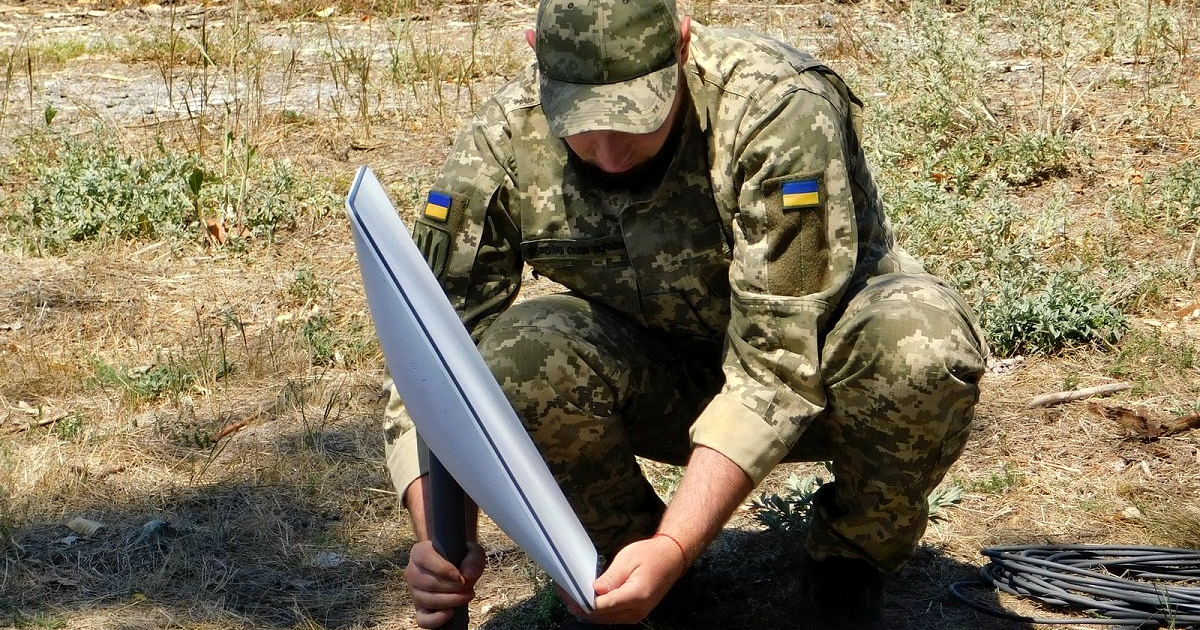
Ukraine's military-grade Starshield terminals began dropping their connection when moving faster than about 160 km/h (100 mph) overnight from Tuesday 13 October into Wednesday, presidential adviser Serhiy Beskrestnov said on Wednesday, and several missions were disrupted because Ukraine's forces had no warning. "I confirm that tonight SpaceX introduced speed restrictions on Starlink terminals while in motion," he wrote on Telegram, according to Interfax-Ukraine. On Wednesday Elon Musk wrote on X that "Starshield systems are owned and controlled by the US government" and that "Any limits on speed or usage are decided by the US military and ultimately POTUS," the Guardian reported. On 15 October Reuters reported, via The Straits Times, that the order to limit Ukraine's Starshield service "came from inside the White House," according to two US officials and a Western official briefed on the matter; Defense Department leaders "received a message" that the service "needed to be slowed." The officials did not say who in the White House decided or who implemented the order. A senior US official, asked about the order, said: "No such request was ever made by the president." The White House did not answer whether other administration officials made the request; SpaceX, the Defense Department and the Ukrainian embassy in Washington did not comment, Reuters reported. On 16 October Trump told reporters: "Well, I don't know if it was anybody because it wasn't me, and I don't think it was Elon," adding, "And from what I understand, it's the same as it's always been," CNBC reported.
What Ukrainian officials say
- Presidential adviser Serhiy Beskrestnov: the restriction applies to StarShield, the military-grade version of the service, and is set at 100 mph (160 km/h). "Our defense forces received no prior warning of such a restriction, which led to the disruption of several missions," he wrote, adding that it "cannot be a coincidence" and is linked "to the current political situation," Interfax-Ukraine reported.
- Defence ministry sources: the cut-off point varies by vehicle and unit, from roughly 72 to 161 km/h. The ministry is in contact with the United States, SpaceX and NATO partners, is collecting data from all units and is switching on backup communication channels, according to RBC-Ukraine. A ministry source told the Kyiv Independent that the limits had been found and the cause was being investigated.
- A front-line corps: "during flights, the connection could drop for 10–20 seconds at speeds of just 110–120 km/h. The drones kept moving, but these interruptions made them harder to control," Ukraine's 7th Corps, deployed in the southeast, told Reuters. The corps said a drone unit in the Huliaipole sector had to cancel missions, the Kyiv Independent reported.
What Musk said, and what Washington has reported since
Musk also wrote that "Starlink is a commercial service owned and controlled by SpaceX" and that its use "is limited to civilian or defensive activities and cannot be used for offensive military action," Newsweek reported. That is Musk's account of how the systems are owned and who decides Starshield limits. Reuters' 15 October account, attributed to anonymous US and Western officials, places the order's origin inside the White House and says Defense Department leaders were told to slow the service, without naming the decision-maker. A senior US official denied that the president made such a request. Trump has since denied on the record that he ordered it, but no official has said who did, and no written order has been published.
Serhii Sternenko, an activist and former adviser to the defence ministry, had said "SpaceX likely took these measures at the request of the Trump administration," without providing evidence, Newsweek reported. Musk's claim that Starshield limits are decided by the US military and ultimately the president partly overlaps that inference; Reuters' anonymous sourcing now reports a White House origin while a senior US official denies a presidential request. Who inside the White House ordered it remains unnamed.
Zelenskyy, restoration attempts, and Congress
Asked by Piers Morgan whether he felt betrayed by President Donald Trump over the restriction, Zelenskyy said: "Really, yes … but it's a little bit more complicated than just my emotions or my feelings." He added: "I am sure they knew what they did, absolutely. Because it was 1am at night, Starlink was blocked by SpaceX and the United States," and "This decision will bring a lot of human losses," the Guardian reported. After meeting British Prime Minister Andy Burnham, Zelenskyy said Russians were "trying to exploit problems with Starlink's operation," Kyiv Post reported.
A person in Ukraine's Defence Ministry said on 15 October that the receptors "were now working when in motion, but only at speeds of up to 160kmh," Reuters reported via The Straits Times. That is a partial restore in motion, not a full lift of the cap. On 16 October Zelenskyy said partners had told him of "signals from the White House that they would return these capabilities," but asked whether speeds were back to previous levels, said: "No. But is it coming back now? Yes," the Guardian reported. On 17 October Zelenskyy said the cap was still in place at 161 km/h, so interceptor drones that rely on Starlink could not bring down Russia's jet-powered drones. He said Ukrainian vehicles carrying the terminals had kept their connection above 180 km/h in EU countries and called the restriction "a planned operation," while SpaceX contacts had told Kyiv the problems were technical, Interfax-Ukraine and the Kyiv Independent reported. Former defence minister Mykhailo Fedorov said connectivity at speeds of up to 160 km/h was being restored and that "Removing Starshield's speed limit entirely is now critical," Kyiv Post reported.
A senior Ukrainian official said Kyiv was told, after calls on 14–15 October to the White House, State Department and Pentagon, that it was a White House decision, Reuters reported.
Sen. Thom Tillis (R-N.C.) pressed SpaceX for answers on X, writing that intentionally degrading Ukraine's ability to defend itself "might be construed as aiding and abetting a mass murderer" and asking, "Can you confirm that's not SpaceX's intent?" Fox News reported.
A bipartisan group of nine senators led by Jeanne Shaheen and Thom Tillis asked the Pentagon's inspector general on 15 October to investigate, including whether SpaceX, the Defense Department or other US government entities directed, authorized or implemented the restrictions, and whether disruptions contributed to incidents in which US diplomatic, military and security personnel in Ukraine could not reach shelter during Russian air raids, according to their letter. They asked for written confirmation of an investigation's status and an initial briefing by 1 November.
What the cap touches, and what it does not
Starlink does not work inside Russia, and the Ukrainian drones that hit Russia's oil industry use other means of communication, Reuters reported. Ukraine uses Starlink to guide drones over its own territory, including parts held by Russia. According to RBC-Ukraine's ministry sources, the problem is worst for fast drones such as interceptors and mid-range strike drones, which need speed at launch, and it also cuts into front-line logistics, reconnaissance and signal relay.
WatchfulEye's read: Musk's distinction still matters for who can decide a limit. Starlink is the commercial service SpaceX runs; Starshield, on Musk's account, is owned and controlled by the US government, with speed and usage limits decided by the US military and ultimately the president. Reuters' anonymous officials now place the order inside the White House without naming who decided it, and both a senior US official and Trump himself deny a presidential order — so the government-decision framing is stronger than when only Musk spoke, but the named actor and written order are still missing. Separately, if the earlier reporting holds, a cap on fast-moving terminals does little to the long-range refinery campaign that Trump has asked Kyiv to stop, because those drones do not rely on Starlink. It falls instead on the drones Ukraine uses over its own front line and against incoming attacks. The Kyiv Independent reported that Starlink-guided interceptor drones are part of Ukraine's defence against Russia's new jet-powered attack drones, and Reuters reported that Ukraine downed only 4 of 39 Russian missiles in the latest attack, reflecting weakened defences against fast ballistic missiles and jet-powered drones.
The same week
The cap landed during a sharp turn in relations between Kyiv and Washington. Trump lifted sanctions on Russian diesel last week, has called on Ukraine to halt attacks on Russian refineries, and announced an energy truce that neither Moscow nor Kyiv confirmed, Reuters reported (see our pages on the diesel deal and the energy ceasefire). Russian strikes overnight left some 600,000 people without power. Ukrainian officials said they received no warnings from Western partners for a second day before the attacks, while Trump said Washington was still sharing intelligence. Sources have told Reuters and other outlets that the US threatened to cut off early-warning intelligence on missile strikes to press Kyiv to suspend refinery attacks. Reuters placed the Starshield limit next to Trump's pressure on Kyiv over refinery strikes; that timing does not by itself prove the two are linked.
Poland, which pays for Ukrainian Starlink subscriptions on Kyiv's behalf, answered publicly. "Hey, @elonmusk, big man, are you playing politics with your products again?" Foreign Minister Radoslaw Sikorski wrote on X. "As your European customers, we are watching you," Reuters reported.
Open questions
- Who in the White House ordered the limit, and was it tied to the refinery-strike dispute? Reuters attributes a White House origin to anonymous officials and notes the timing next to Trump's pressure on refinery strikes; a senior US official denied that the president asked, and Trump said on 16 October that "it wasn't me." No named decision-maker or stated motive has been published.
- Does it apply only to terminals in Ukraine, and only to the military service?
- How far has the partial restore gone — Ukraine's Defence Ministry says receptors work in motion up to 160 km/h — and how much of the gap can Ukraine's backup channels cover for interceptor and strike drones?
- Will the Pentagon's inspector general open an investigation, and what will the 1 November status reply the senators asked for say?
- Will the work by European partners on an alternative to Starlink, which Zelenskyy mentioned on 17 October, produce anything usable at the front?
- Is it connected to the missing early warnings of ballistic missile launches? The cap came as questions were being raised about US intelligence sharing on those launches, the Kyiv Independent reported. No link has been shown.
Ukraine's defence ministry says it is in contact with Washington, SpaceX and NATO. Trump's denial does not say what changed or who decided. He says service is "the same as it's always been," while Zelenskyy says speeds are not yet back to previous levels. Until an official on the record or SpaceX states what changed and why, the cause rests on Ukrainian officials' accounts, Musk's attributed claim about who decides Starshield limits, and Reuters' anonymous sourcing of a White House origin — not on a published government order naming who decided.