Americas · Public record
They named the fields. They did not name Beijing's bill.
The conventional narrative is a U.S.–Venezuela oil deal. Thursday's public record is Beijing's unpaid bill.
What changed
On 4 September 2026, OilPrice carried a piece on the U.S.–Venezuela oil deal as a threat to China's oil-backed loans. The creditor numbers on that tape are not held on the live deal-term pages.
Chinese policy banks extended at least sixty billion dollars in oil-backed loans to Venezuela through 2015. About ten billion dollars remains outstanding. Several of the seventeen fields in the North American Blue Energy Partners package — Lake Maracaibo region and Orinoco Belt, about sixty-five billion barrels of proven reserves — were previously operated or targeted by Chinese state firms: CNPC, Sinopec, and China Concord Resources. China Development Bank financed the oil-for-loans Joint Fund.
The live pages already hold the deal terms. They said sixty-five billion. She said it revives the economy. holds the majority-control claim and the interim president's reply. They said one hundred years. She said twenty-five. holds the duration fight. This URL is the creditor second-order: who is owed, and which Chinese upstream names lose barrels as production rights move.
This URL is venezuela-china-loans. It is not venezuela-65bn. It is not venezuela-25-years. It is not venezuela-nabep.
Sources
OilPrice, 4 September 2026. NABEP multibillion agreement: 100-year rights over 17 fields, about 65 billion barrels proven. U.S. government 35 percent stake in NABEP's corporate parent. Preferential offtake: 20 percent of production at cost, right of first refusal on the remainder. NABEP plans up to 100 billion dollars in infrastructure; more than 200 billion dollars in Venezuelan taxes and royalties projected over 25 years.
Same OilPrice tape: Chinese policy-bank oil-backed loans of at least 60 billion dollars historically; about 10 billion dollars still owed. CNPC, Sinopec, and China Concord Resources named as firms whose operated or targeted fields sit inside the same 17-field package.
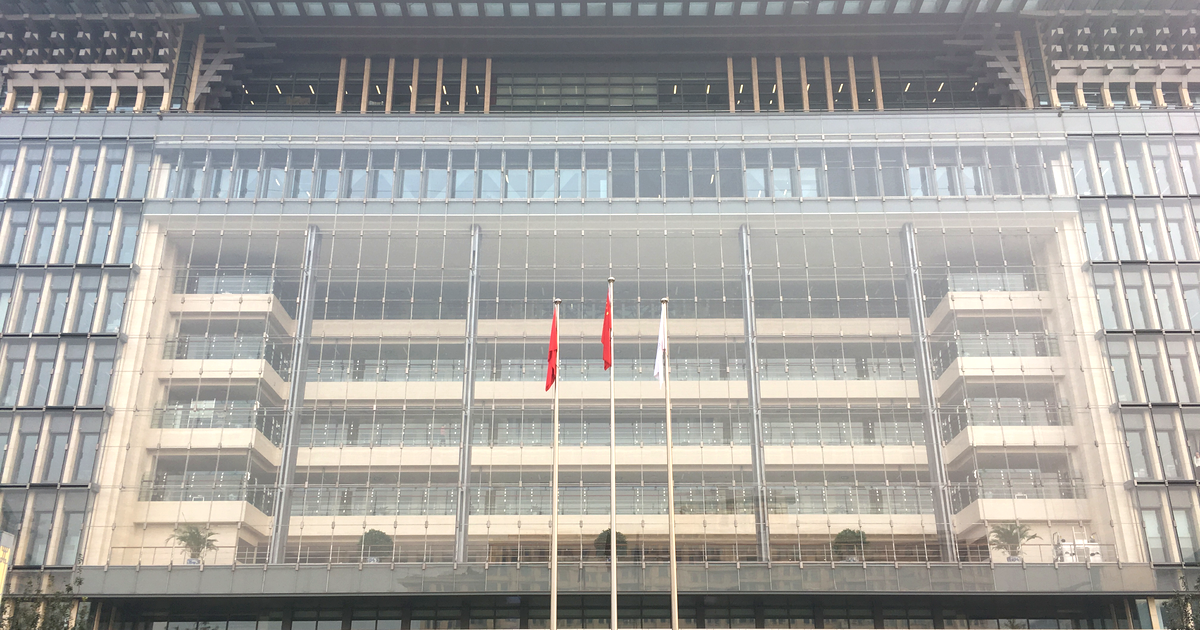
China Development Bank: the policy bank that financed Venezuela's oil-for-loans structures. Photograph used here is that bank's Beijing headquarters (Max12Max, 4 November 2016, CC BY-SA 4.0).
Independent corroboration on the core transaction and Chinese exposure: The New York Times, Asia Times, MSN, MENAFN. Projected investment and royalty figures remain forward-looking estimates.
How it is being framed
Creditor frame. Sixty billion extended. Ten billion still owed. OilPrice titled the threat to China's oil-backed loans. That is the new frame.
Displacement frame. CNPC, Sinopec, China Concord — fields previously operated or targeted, now inside the NABEP package. Upstream access and repayment barrels move together.
Deal-term frame. One hundred years, seventeen fields, sixty-five billion barrels, U.S. thirty-five percent, twenty percent at cost. Already live on venezuela-65bn and venezuela-25-years. Do not recut those pages for color.
Colonialism frame. Al Jazeera carried a colonialism line on the same deal family. That is a separate product. This page stays on the creditor numbers.
Those jobs are not the same story. The unpaid bill can be checked. The omitted creditor was the one that traveled on OilPrice.
Reporting versus inference
Reporting is: OilPrice put at least sixty billion dollars in historical Chinese oil-backed loans and about ten billion still owed against the same NABEP seventeen-field package already described on the live Venezuela pages; CNPC, Sinopec, and China Concord Resources are named as prior operators or targets on fields now inside that package; China Development Bank financed the oil-for-loans Joint Fund; the live venezuela-65bn and venezuela-25-years pages hold the deal terms and the duration fight, not the creditor second-order.
Inference, labeled as such: a redirected barrel is not yet a default, a lawsuit, or a repaid loan. Sixty-five billion barrels of reserves is not sixty-five billion barrels moving. We confirmed the creditor numbers on the public tape and that the live deal-term pages do not name Beijing's remaining ten billion.
What may follow
Reasoning, not a forecast.
If the creditor frame is right, the next checkable fact is a Chinese policy-bank or ministry statement on debt restructuring or legal action naming the displaced fields. If the displacement frame is right, CNPC or Sinopec names a field it lost, or Sinovensa appears in an official product. If the deal-term frame is the wrong merge, venezuela-65bn and venezuela-25-years stay as they are. If NABEP's investment claim is right, physical development spending lands in Lake Maracaibo or the Orinoco within a named window.
What remains unresolved
Whether the remaining ten billion is still oil-repayable under the new concessions. Which named fields were Chinese-operated versus Chinese-targeted. A Chinese official product answering OilPrice by name. Physical NABEP spend. Maduro NY immunity is still a motion, not a ruling.
Related
They said sixty-five billion. She said it revives the economy.
They said one hundred years. She said twenty-five.
Corrections
If a source, a frame, or an inference on this page is wrong, we correct it here. contact@watchfuleye.us.
See how the story is framed, why it matters, and what happens next.