They said sixty-five billion. She said it revives the economy.
WatchfulEye ·
The conventional narrative is the biggest oil deal in world history. Friday and Saturday brought a majority-control claim on sixty-five billion barrels, and an interim president who said it revives the economy.
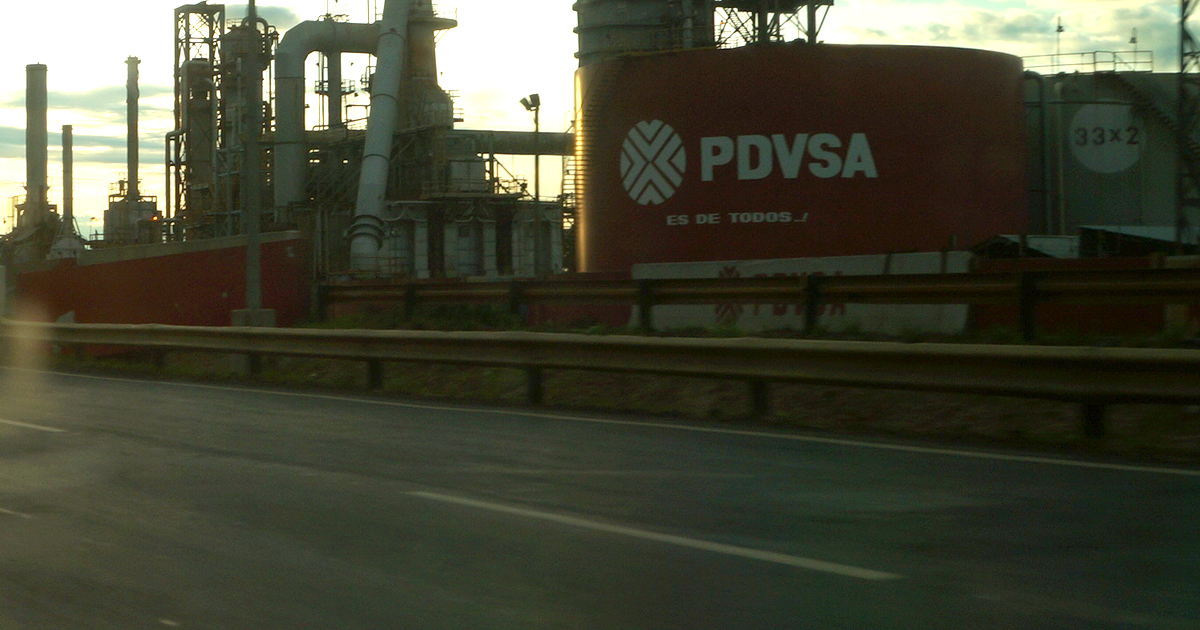
What changed
On Friday 28 August 2026, CNBC reported that President Trump announced a deal granting the United States majority control of more than 65 billion barrels of Venezuelan oil reserves. Trump, in an evening social-media post, described it as the biggest oil deal in world history and said it came at no cost to U.S. taxpayers. He said the agreement more than doubles American oil reserves and would lower gasoline prices. CNBC said U.S. officials coordinated with Venezuelan government leaders and used a partnership with unnamed private businesses. AAA, as cited by CNBC, put the U.S. average at about $4.09 a gallon on Friday, up 27 percent year over year.
The same evening, AP published the announcement as negotiated by Secretary of State Marco Rubio, Defense Secretary Pete Hegseth, and Venezuela's acting president Delcy Rodríguez. Rodríguez's government, AP reported, said the deal involves the development of 17 fields with a proven potential of 65 billion barrels, could draw $100 billion in investment, and yield over $209 billion in taxes. Rodríguez said on Telegram that it would have a significant impact on the nation's revival. A U.S. official familiar with the contours, speaking anonymously to AP, said the United States would partner with an unnamed private operator to create a new company, that Rodríguez granted 100-year rights, and that the United States would have 55 percent effective output including an ownership stake and rights to buy oil at cost. The same official said the company would be the second-largest corporate holder of proven reserves after Saudi Aramco.
On Saturday 29 August 2026, BBC published the same announcement as a historic deal to control more than 65 billion barrels of proven reserves. BBC reported Rodríguez hailing the agreement as one that would help her nation's economic revival, and Rubio calling it a huge win that would bring nearly $100 billion in private investment and support thousands of high-paying jobs. A U.S. official told BBC's media partner CBS News that the U.S. government would retain 55 percent control of a joint venture with an experienced private operator, and that Rodríguez gave the venture a 100-year concession. Details, BBC wrote, have not been released.
The Guardian also reported majority control of 65 billion barrels and said the terms of the agreement remain to be seen. AP, in a report published by Fortune, reported the biggest-deal quote and the January capture of Nicolás Maduro.
CNBC, AP and BBC reported Trump's Friday announcement of majority U.S. control of more than 65 billion barrels. Rodríguez said the agreement would have a significant impact on the nation's revival and named 17 fields, more than $100 billion in investment, and more than $209 billion in taxes. AP and BBC quoted a U.S. official putting the structure at 55 percent U.S. control and a 100-year concession. The identity of the private operator, the legal finality of the concession, and any timetable for barrels to move are not confirmed.
Sources
CNBC, 28 August 2026. Trump: majority U.S. control of more than 65 billion barrels; biggest oil deal in world history; no cost to taxpayers; more than doubles American oil reserves; unnamed private-business partnership. AAA: about $4.09 a gallon Friday, up 27 percent year over year. Department of Energy data, as cited by CNBC: Strategic Petroleum Reserve at lows not seen since the 1980s.
AP, 28 August 2026. Negotiators named as Rubio, Hegseth, and Rodríguez. Rodríguez government: 17 fields, 65 billion barrels proven potential, $100 billion investment, over $209 billion in taxes. Rodríguez on Telegram: significant impact on the nation's revival. U.S. official, anonymous: unnamed private operator, 100-year rights, 55 percent effective output including ownership and buy-at-cost; second-largest corporate holder after Aramco as the official described it. AAA: about $4.09 versus $3.21 a year earlier. EIA, as cited by AP: Venezuela about 303 billion barrels, about 17 percent of world supply; produces about 1 percent of world oil. Experts quoted by AP: a substantial production boost will not happen quickly.
BBC, 29 August 2026. Historic deal; more than 65 billion barrels of proven reserves. Trump: more than doubles American oil reserves; increases supply; lowers gas prices. Rodríguez: helps economic revival; 17 strategic fields; more than $100 billion investment; more than $209 billion in taxes. Rubio: huge win; nearly $100 billion private investment; thousands of high-paying jobs. U.S. official to CBS News: 55 percent U.S. government control of a joint venture; 100-year concession. Details not released. Venezuela's proven reserves, per BBC: an estimated 303 billion barrels.
Other reports, 28 August 2026. Guardian: majority control of 65 billion barrels; terms remain to be seen. AP, published by Fortune: biggest-deal quote; January capture of Maduro; Strategic Petroleum Reserve below 300 million barrels in early August as AP framed it. The Hill headline: majority U.S. control of a large slice of Venezuela's oil reserve.
How it is being framed
Biggest-deal frame. World history. No cost to the taxpayer. Trump's post.
Majority-control frame. Sixty-five billion barrels. CNBC, AP, BBC.
Revival frame. Nation's revival. Seventeen fields. One hundred billion in investment. Two hundred and nine billion in taxes. Rodríguez.
Official-mechanics frame. Fifty-five percent. One-hundred-year concession. Unnamed private operator. AP and BBC quoting a U.S. official.
Price frame. Four dollars and nine cents. Doubles American reserves. Lower gas. AAA, cited by CNBC.
Those jobs are not the same story. A reader who sees only the biggest-deal frame reads barrels already in hand. A reader who sees the official-mechanics frame reads an unnamed operator and a concession that has not been published. Those statements were made. Nothing confirms that majority control, a signed contract, and barrels at the pump are the same fact.
Reporting versus inference
Reporting is: CNBC, AP and BBC published Trump's 28 August announcement of majority U.S. control of more than 65 billion barrels of Venezuelan oil, described as the biggest oil deal in world history and at no cost to taxpayers; AP and BBC reported Rodríguez on revival, 17 fields, more than $100 billion in investment and more than $209 billion in taxes; AP and BBC quoted a U.S. official on 55 percent U.S. control and a 100-year concession with an unnamed private operator.
Inference, labeled as such: the biggest-deal frame and the revival frame are being sold in the same hour as one completed transfer. A reader who sees only sixty-five billion reads a doubling of American reserves. A reader who sees the unnamed operator and the unpublished details reads a claim that still needs a contract. The reports were published. The operator, the legal instrument and a production timetable are not confirmed.
What may follow
Reasoning, not a forecast.
If the majority-control frame is right, the next fact to check is a named contract, a congressional notification, or a named private operator. If the revival frame is right, the next fact is a Rodríguez or PDVSA statement that names fields, first barrels, or tax receipts. If the official-mechanics frame is right, the next fact is a public text that sets out the 55 percent share and the 100-year concession. If the price frame is right, the next fact is a gasoline price that moves after the announcement, not before it.
What remains unresolved
The identity of the private operator. The published legal text. Whether 55 percent is ownership, output, or a right to buy at cost. Whether the 100-year concession survives a Venezuelan court or a later government. Whether 65 billion barrels are recoverable on any timetable named in the reporting cited here. Whether U.S. majors return after ExxonMobil's chief, as AP reported in January, called the country un-investable. A production number for this deal. None of the reports cited here gave an export-volume figure.
Corrections
If a source, a frame, or an inference on this page is wrong, we correct it here. contact@watchfuleye.us.
See how the story is framed, why it matters, and what happens next.