

A discipline for reading the news at speed.
WatchfulEye is built on one commitment: never separate a claim from the evidence, the frame, and the uncertainty that give it meaning.
The context deficit
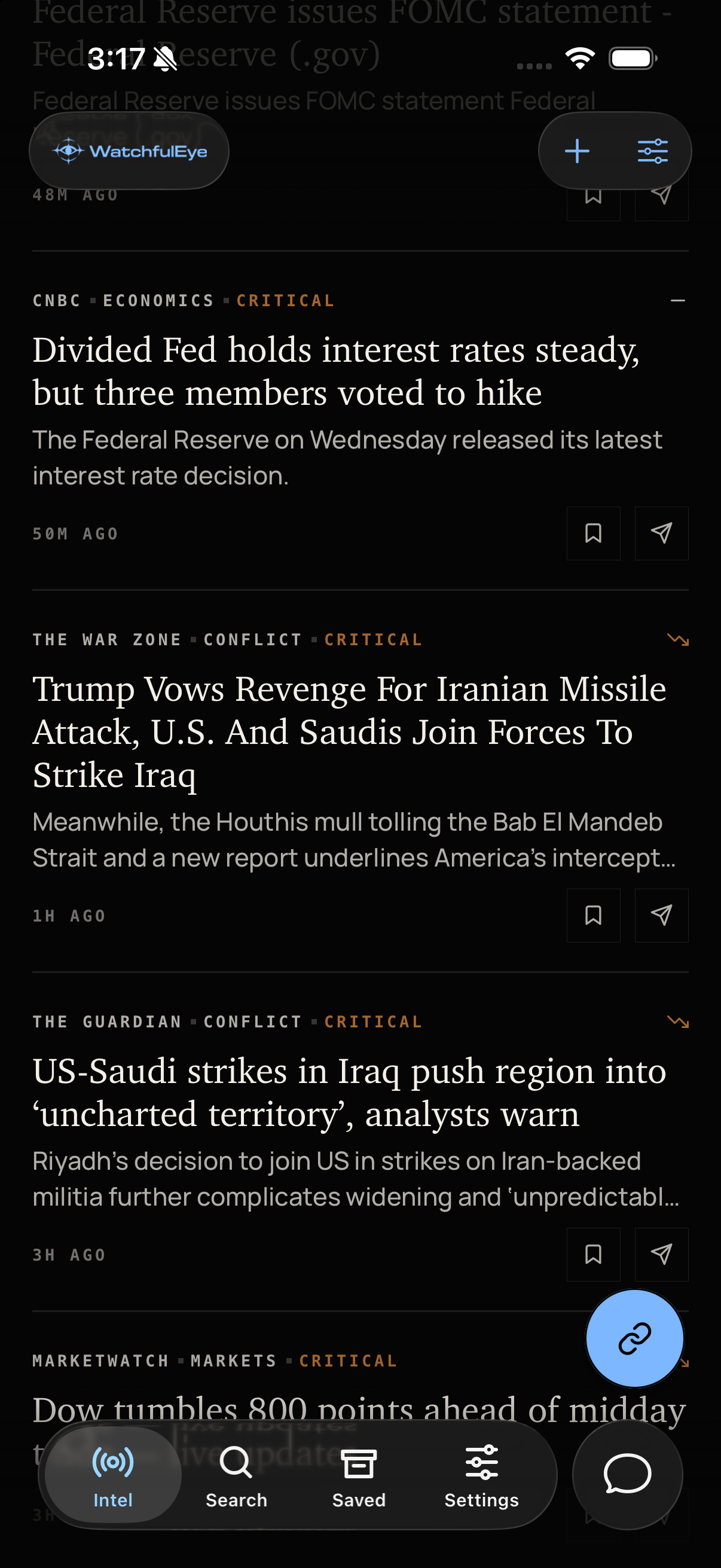
The problem was never access. Any event now reaches you within minutes, from more directions than you can read. What arrives with it is thinner than it looks: a headline, a number, a confident sentence about what it means.
A headline is not context. It tells you that something happened without telling you how well established it is, which parts are reported and which are inferred, or what a careful reader should still be unsure about. The distance between an event and its context is where judgment quietly goes wrong.
That distance is not closed by reading more. It is closed by keeping the supporting material attached to the claim, so you can see the shape of what is known.
Evidence must stay attached
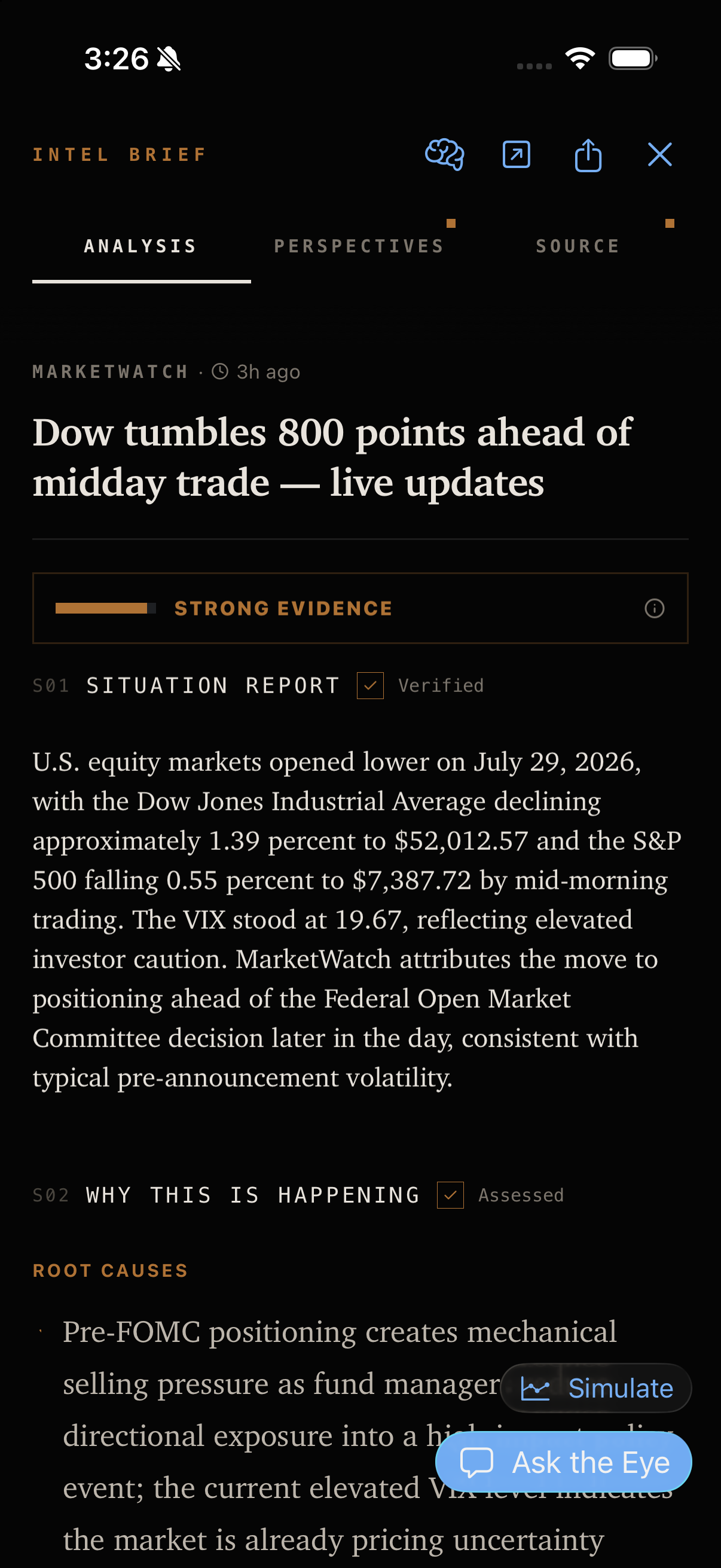
Reporting and interpretation should remain distinguishable. When they blur into a single confident voice, you lose the ability to tell a verified fact from a reasonable guess—and you lose it precisely when the difference matters most.
So WatchfulEye keeps them apart and keeps them together: the assessment, the strength of the evidence behind it, the sources it draws on, and the signals that point the other way all stay visible in the same view. Confidence is stated rather than implied, and where the record is thin, it says so.
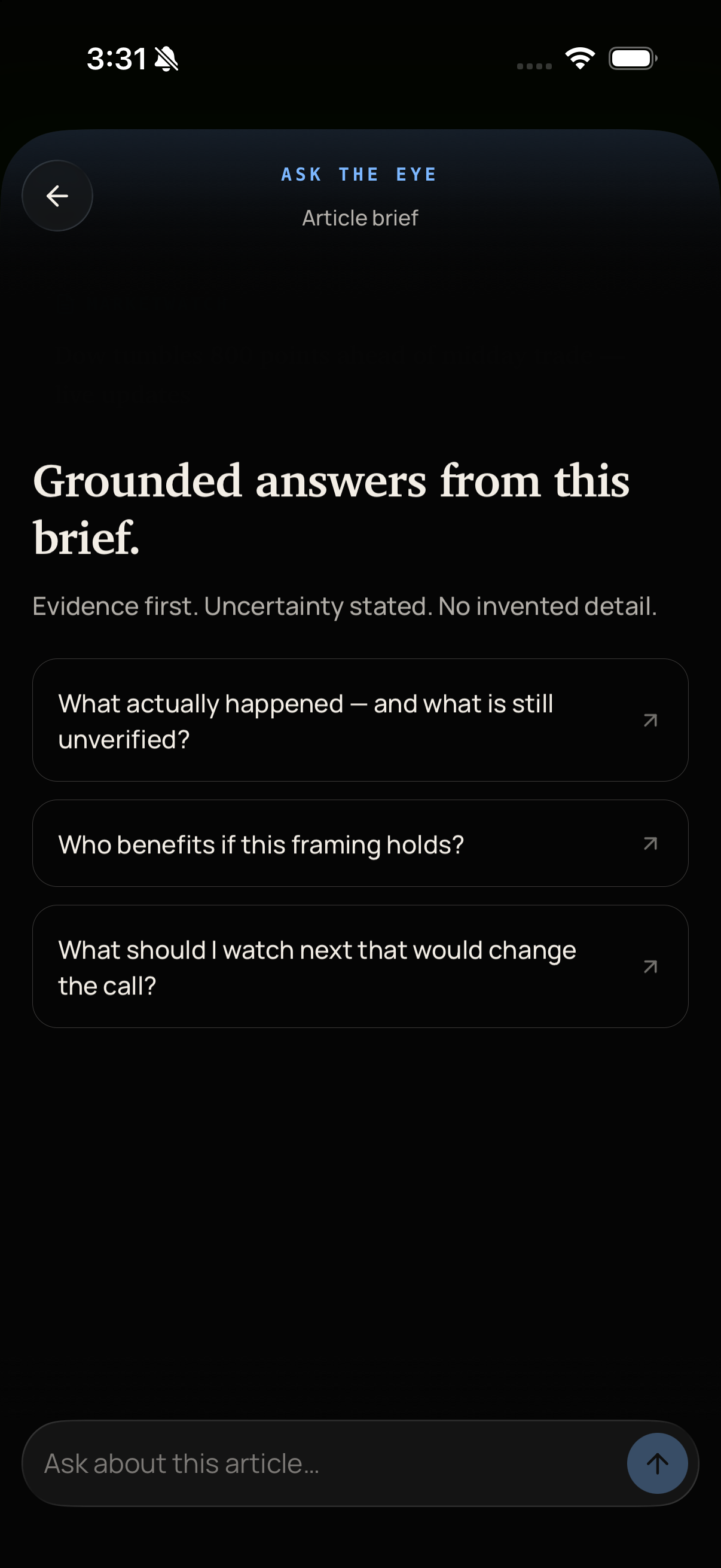
A conclusion you cannot interrogate is not much use. One you can trace back to its sources—including the awkward ones—is something you can actually reason with.
Every story has a frame
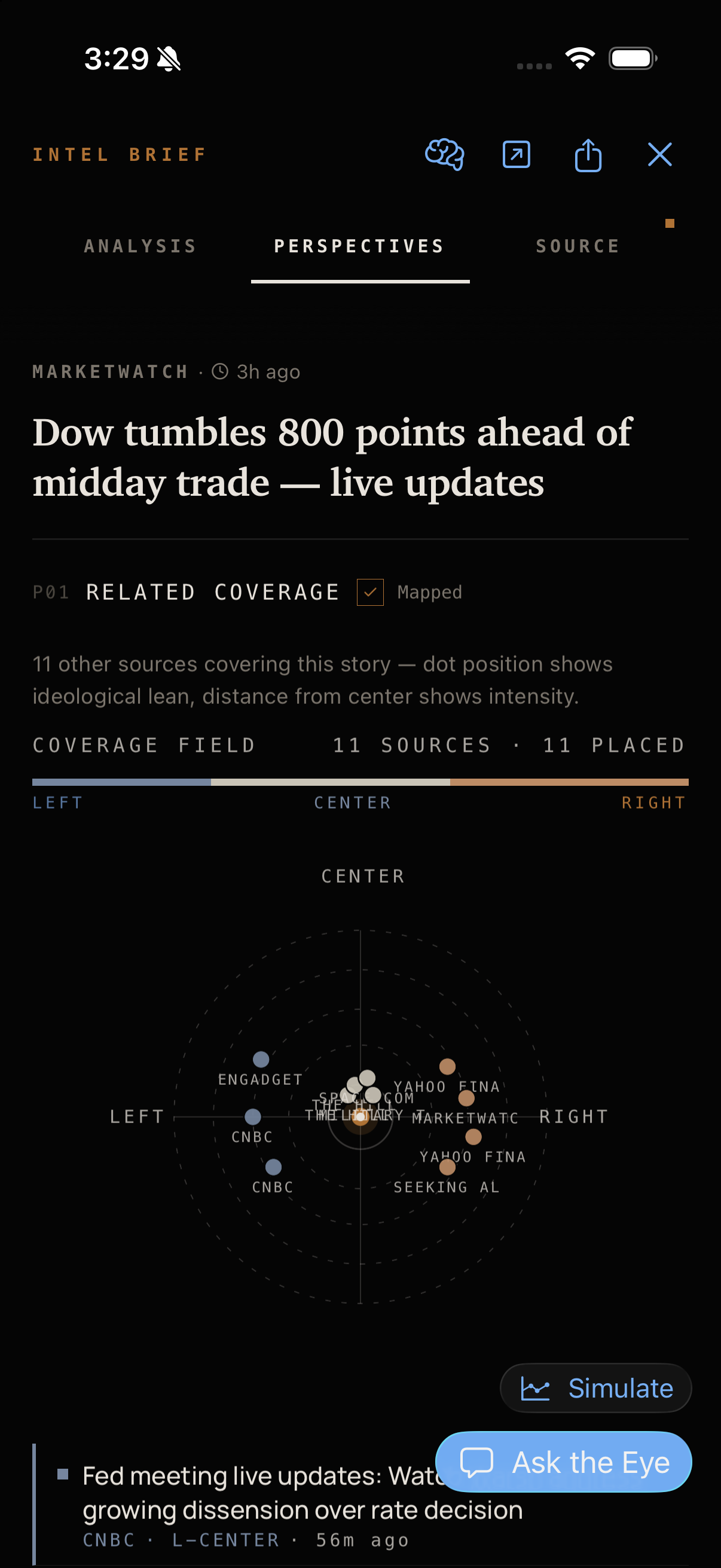
There is no view from nowhere. Every account is assembled by someone with a vantage point, an audience, a set of incentives, and a decision about what to leave out. That is not a scandal; it is how reporting works.
Pretending otherwise is the actual problem. WatchfulEye shows how coverage of the same event distributes across sources, regions, and leanings—so the framing becomes something you can see and weigh rather than something you absorb without noticing.
The world will not slow down. Your judgment should not have to become careless to keep up.
Keep the record open
Conclusions should change when the evidence changes. Most coverage has no mechanism for this—the story is filed, the cycle moves, and whatever was asserted stays asserted regardless of what happened next.
Claims and predictions should stay connected to outcomes. Confidence should be revised in public when the record moves against it. Questions that were not settled should remain visibly unsettled instead of quietly disappearing.
This is the part that is easy to promise and hard to keep. It is also the part that decides whether any of the rest is worth trusting.
A better discipline.
No omniscience, and no false neutrality. Separate reporting from interpretation. Show the uncertainty. Expose the frame. Keep the record open.
Judge WatchfulEye by one thing: whether it actually helps you understand events and make better decisions.